

The full guide
A guide to shipping a car to Alaska
Alaska is reachable by road and by sea, and the season matters more than anywhere else. Here is how the two routes work, how the season changes them, what paperwork you need, and how the car reaches you at the end.
By road or by sea
Alaska is the only state you can drive to from the lower 48 only by crossing another country, and that shapes the two routes.
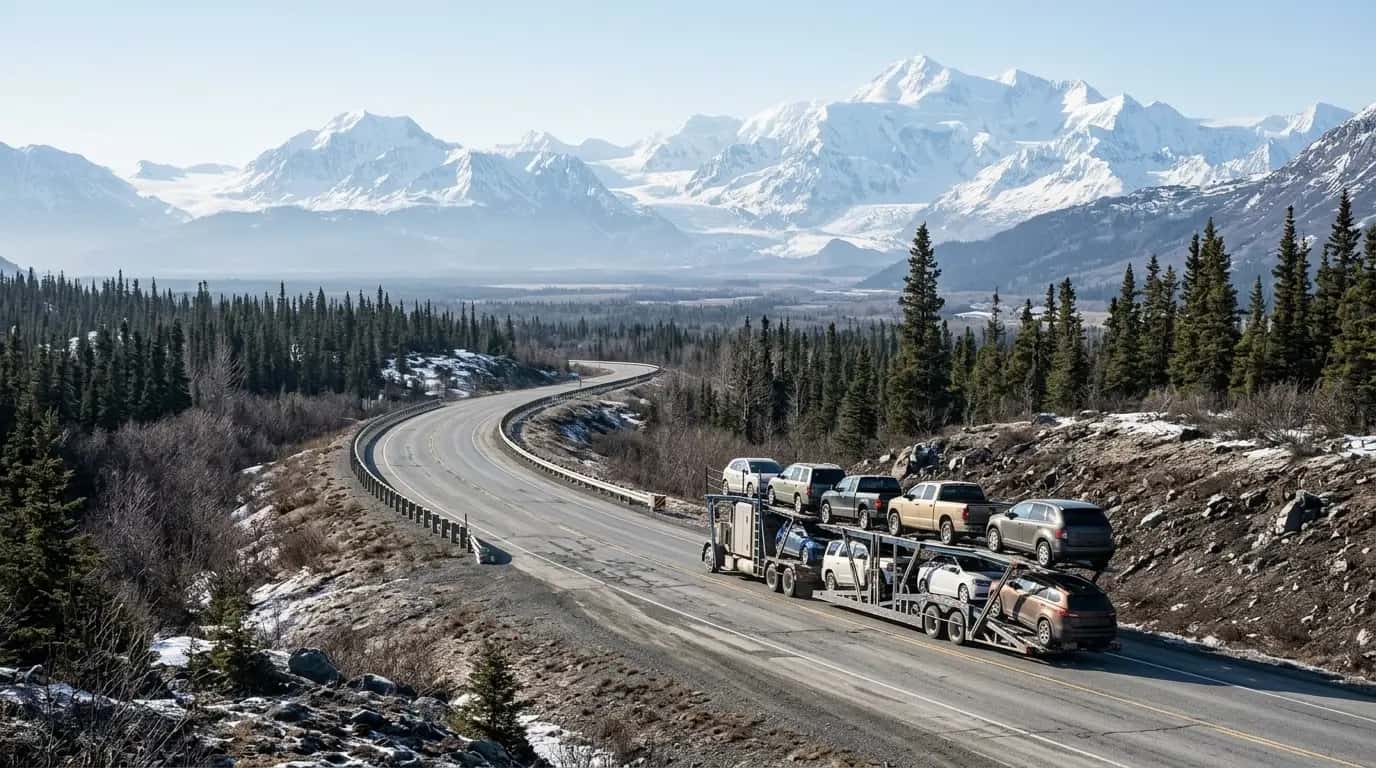
By road. A carrier drives the car north through Canada, usually up the Alaska Highway, which runs from northern British Columbia through the Yukon into Alaska. It is a long trip, with long stretches between towns, and fewer carriers run it, especially in winter, so it can take longer to assign. It can deliver to your address in many parts of Alaska on the road system.
By truck and ship. A carrier drives the car to a port in Washington, usually in the Tacoma area, where it is checked in and sails to Anchorage. The sailing itself usually takes about three to seven days. From Anchorage the car can be released to you at the port, or carried on by road to Fairbanks, the Kenai Peninsula, the Mat-Su Valley and other towns on the road system.
Which fits depends on where the car starts and ends, and on the season. A car from the West Coast to Anchorage usually suits the sea route. A summer move to a town well beyond Anchorage may suit the road. Your coordinator prices the options and explains the dates.
Some places, such as Juneau, Ketchikan and much of rural Alaska, have no road link to the rest of the state. Those moves need a different sailing or a barge, and your coordinator can tell you what is possible.
On the road route the car crosses into Canada and back. The carrier handles the crossing, which is why the car's paperwork must be complete before pickup.
Timing and the season
Season matters more on an Alaska move than anywhere else in the country.
Summer is the busy season. From May through September, people move north for jobs, military assignments and the season itself, and service members on PCS orders add to the rush. Roads are at their best and both routes run well, but lanes fill and dates stretch, so book early.
Winter changes the road. The Alaska Highway stays open, but snow, ice, short daylight and deep cold slow everything down, and fewer carriers drive it. A winter road move can take longer to assign and longer to complete, which is why the sea route is often the steadier choice from fall to spring.
The sea route runs all year on a regular schedule. Each sailing has a cutoff for checking in at the port, so the road leg to Washington is planned backward from it.
Spring brings its own quirk. As the ground thaws, some Alaska roads post weight limits that can affect trucks on smaller routes, and your coordinator plans around them.
The simplest way to plan is to give your coordinator the date the car must be in Alaska and work back from there, allowing for the road leg, the sailing or the long drive, and a few days of margin.
Paperwork
An Alaska move needs a little more paperwork than a move within the lower 48, especially on the road route through Canada.
Have the title or current registration and a government photo ID ready. If the car is financed or leased, ask the lender or leasing company for a letter allowing it to go to Alaska and, on the road route, through Canada. These letters can take a week or more.
On the sea route, the port usually checks the same documents and asks for a signed authorization if someone else drops off the car.
On a military move, check with your transportation office first, since the government may ship one vehicle to Alaska for you. The military car shipping page has more.
Once you arrive, Alaska expects you to apply for registration within 10 days of establishing residency or starting a job in the state. A visitor can drive on another state's registration for up to 60 days.
Your coordinator confirms the document list for your route when you book.
Delivery or release
How the move ends depends on the route and the town.
On the sea route, the car is released at the port in Anchorage, usually a day or more after the ship arrives, once it has been unloaded and processed. Your coordinator and the emails on your order page tell you when it is ready. Bring your photo ID, the booking number and a signed authorization if someone else is collecting it.
If you live beyond Anchorage on the road system, a carrier can take the car on to your address, adding a short road leg after the sailing. Ask your coordinator when pricing.
On the road route, the car is delivered to your address as far as the roads allow. In a rural area, the driver may ask to meet in the nearest town.
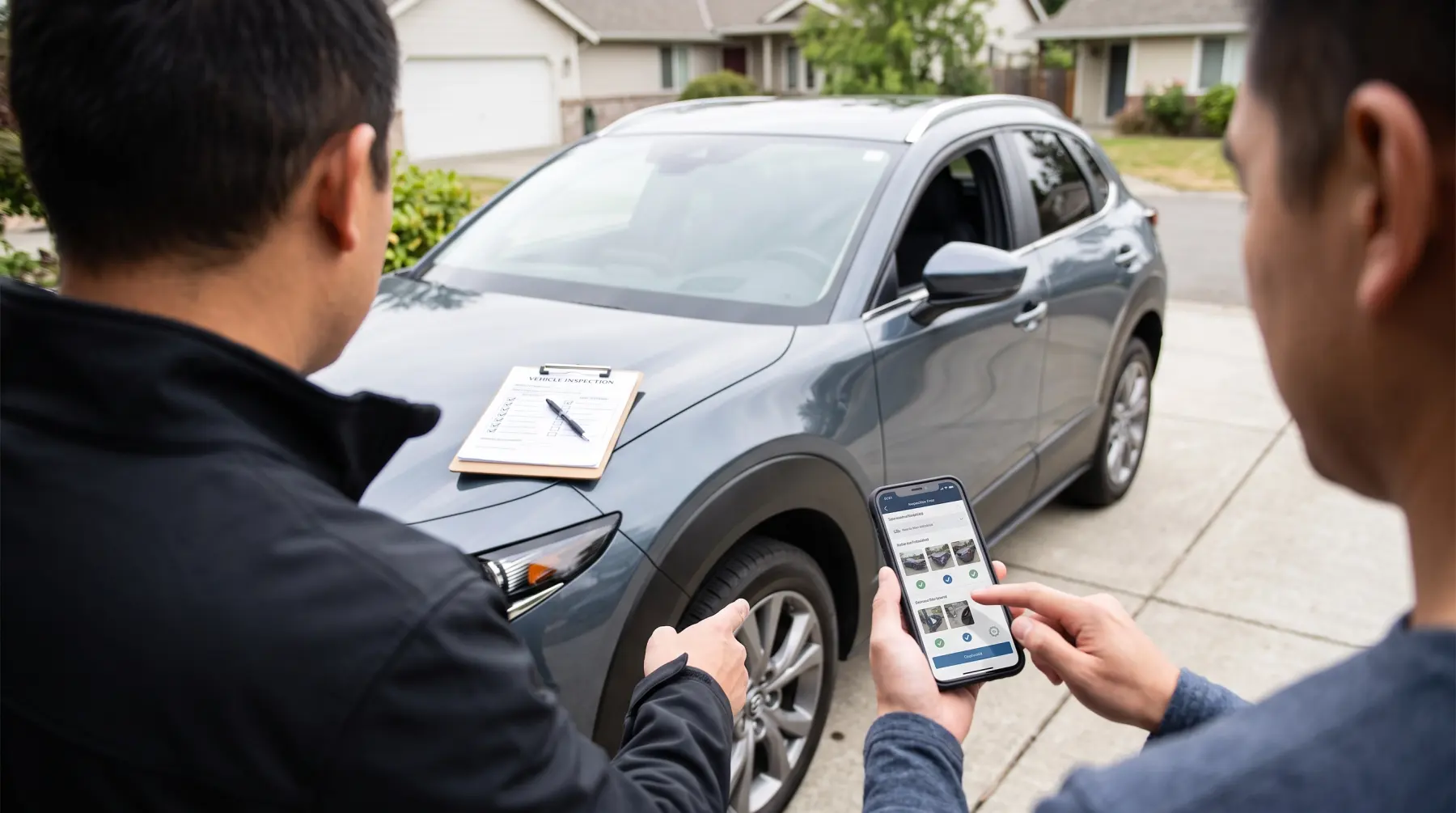
Wherever the car ends up, walk around it before you sign or drive away. Compare it with the pickup photos on your order page, note any new damage on the bill of lading or the port release paperwork, and photograph it. Damage not noted at delivery cannot be claimed later, and the written claim goes in within 15 days.