

The full guide
A guide to shipping a car you bought online
Buying a car you have not seen in person is common now. Here is what to settle before you pay, how the handover works with each kind of seller, what happens with plates and title, and how to check the car on delivery day.
Before you pay the seller
The driver photographs what can be seen, from scratches, dents and chips to the state of the interior. What the driver cannot tell you is how the car runs, what is under it or whether the paperwork is clean. Settle those before you pay, because once money changes hands, your leverage goes with it.
Get it inspected locally. Many mechanics offer pre-purchase inspections, and some will go to the seller's driveway. They check the engine, transmission, brakes, suspension and frame, and look for signs of past accidents or flooding. A seller who will not allow an inspection is telling you something.
Check the history. A vehicle history report run on the VIN shows past accidents, owners, odometer readings and title brands such as salvage or rebuilt. The National Insurance Crime Bureau's free VINCheck shows whether the car has been reported stolen or as a total loss by insurers that report to it.
Check the title. Ask for a photo of it before you pay. The name should match the seller's ID, the VIN should match the car, and any lien should be paid off and released. If a lender still holds the title, ask how and when it will be released to you.
Get the deal in writing. A bill of sale should show the price, the VIN, both names and the date, with a note of the pickup day and who will hand over the car.
Then book, and send us the seller's details and the date. This is a buyer's checklist, not legal advice. Your state's DMV sets the rules for your purchase.
Arranging the handover
Once you have paid, the handover comes down to who, where and when, and each kind of seller handles it a little differently.
A private seller is usually the easiest to reach and the hardest to schedule around work. Send us their name, phone and the hours they can be home. Your coordinator tells them who is coming and the pickup window, and the driver calls them the day before and again when close. The seller, or someone they name, walks around the car with the driver and signs the bill of lading. Remind them to hand over every key and fob.
A dealer releases the car from its lot during lot hours, often through one person in sales or the business office. Ask who releases sold cars and whether they need a written release or proof of payment, then send us that name and the lot hours. Some dealers hold a car until the funds have cleared.
An online retailer, or a dealer selling online, may keep cars at a hub or a third-party lot rather than a showroom. Find out exactly where the car sits, how it is released and whether an appointment is needed, since the address on the listing is not always the right one.
In every case, the person handing over is the person who signs at pickup, so make sure they know that and have the time.
Plates, title and registration
The car can ship without plates, and the driver does not need or carry the title. The paperwork travels separately, between you and the seller.
Plates. In most states, the plates belong to the seller and come off when the car is sold. In a handful, including California and Oklahoma, the plates stay with the car. Ask the seller what their state requires before pickup day, so nobody is surprised when the truck arrives.
Title. A private seller signs the title over to you, then hands it over or mails it. A dealer usually handles the title paperwork and sends it on or files it for you. Either way, confirm how and when you will receive it, because you need it to register the car.
Temporary tags. A dealer often issues a temporary tag so the car can be driven before it is registered. If you bought privately and plan to drive the car before registering it, you may need a temporary permit from your own state's DMV.
Registering at home. Once the car arrives, register it in your state within its deadline. Many states collect sales tax at registration rather than at the sale, and some require a safety or emissions inspection, or a VIN check for a car brought in from another state.
Every state sets its own rules and fees, so check your DMV's website before the car arrives. A short look now saves a second trip to the counter.
When the car arrives
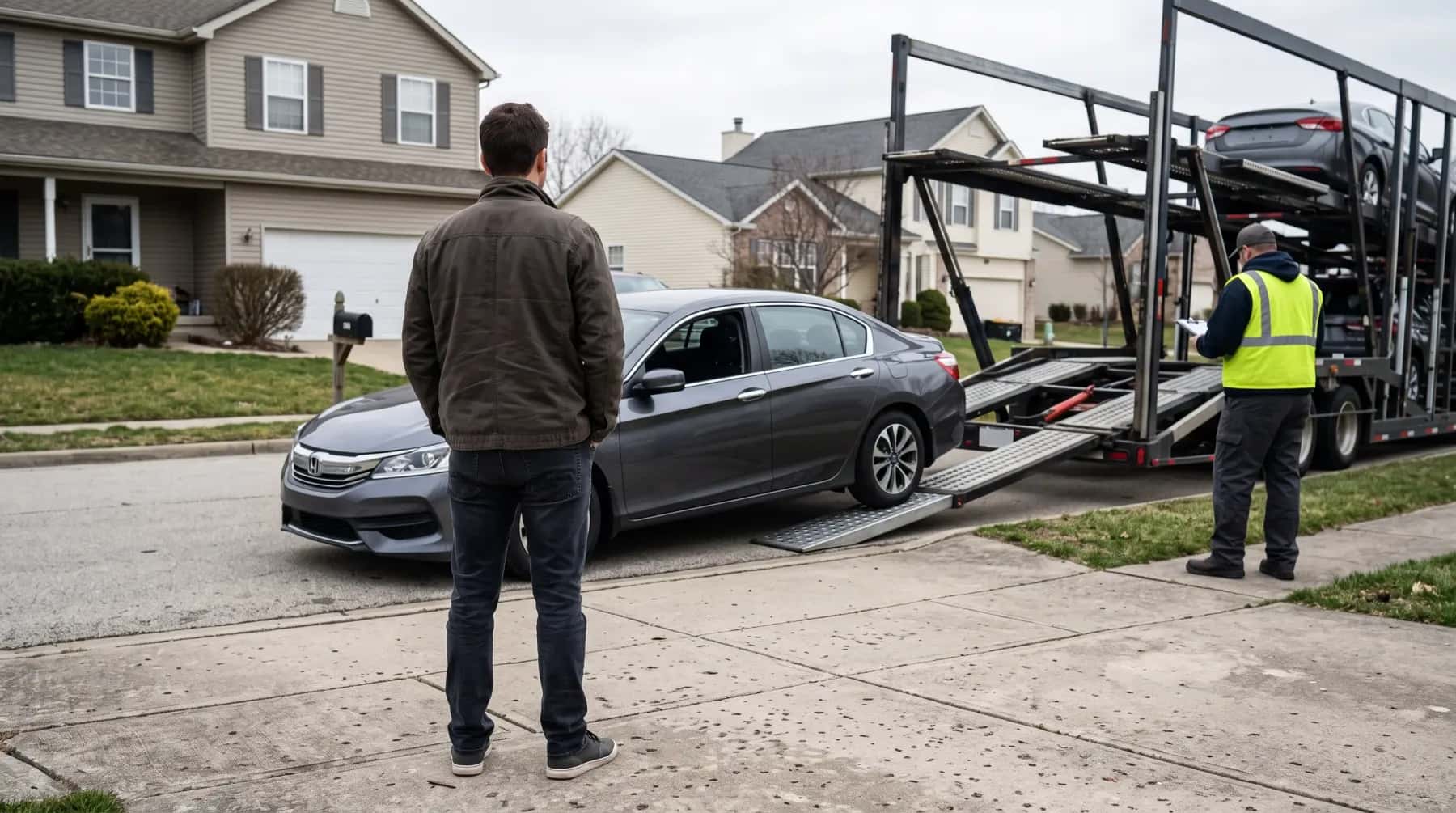
Delivery is your first chance to see the car in person, so give it a proper look.
Walk around the car with the driver before you sign anything. Compare it with the pickup photos on your order page, panel by panel, and with the listing photos too. The pickup photos are the ones that count for transport, since they show the car as it left the seller.
If there is new damage, anything not in the pickup photos, write it on the bill of lading and photograph it before the driver leaves. Damage not noted at delivery cannot be claimed later. Send the claim in writing within 15 days. It goes to the carrier and its insurer, and we give you the carrier's registration and insurance details to make it.
A problem that was already there at pickup is a matter between you and the seller, and the pickup photos are your record of it.
When the car checks out, sign the bill of lading and pay the driver the COD to Carrier. Then take it round the block and book your registration.