

The full guide
A guide to dealer transport
Dealer moves are routine until one goes wrong at a gate. This guide covers dealer trades, auction buys, delivering a sold car, and what to put in place so every move runs the same way.
Dealer trades
A trade has two lots, two contacts and a short clock. The other store wants its car as soon as you want yours.
Send us both stores, the stock number, year, make and model of each car, and the name and hours of the contact at each end. If two cars are swapping in opposite directions, say so. On some lanes one carrier can take both.
We book the next checked carrier on the lane, and you see its pickup window the same day. If a car has to leave on a set day, add the guaranteed pickup date.
The driver checks in with your contact, walks the car with them and photographs it. The photos and the bill of lading go on the car's order page, and you can send that link to the other store.
Auction buys back to the lot
An auction buy is the auction pickup service with your lot as the delivery address. Three things decide how fast it moves.
The release. A yard lets a car go once it is paid in full, including the auction's fees, and the driver must hold the release for that lot. Send it to your coordinator as soon as you have it.
Storage days. Most yards hold a car free for only a few days after the sale. Book the day you win, even before the release arrives, so the order reaches carriers while the free days run.
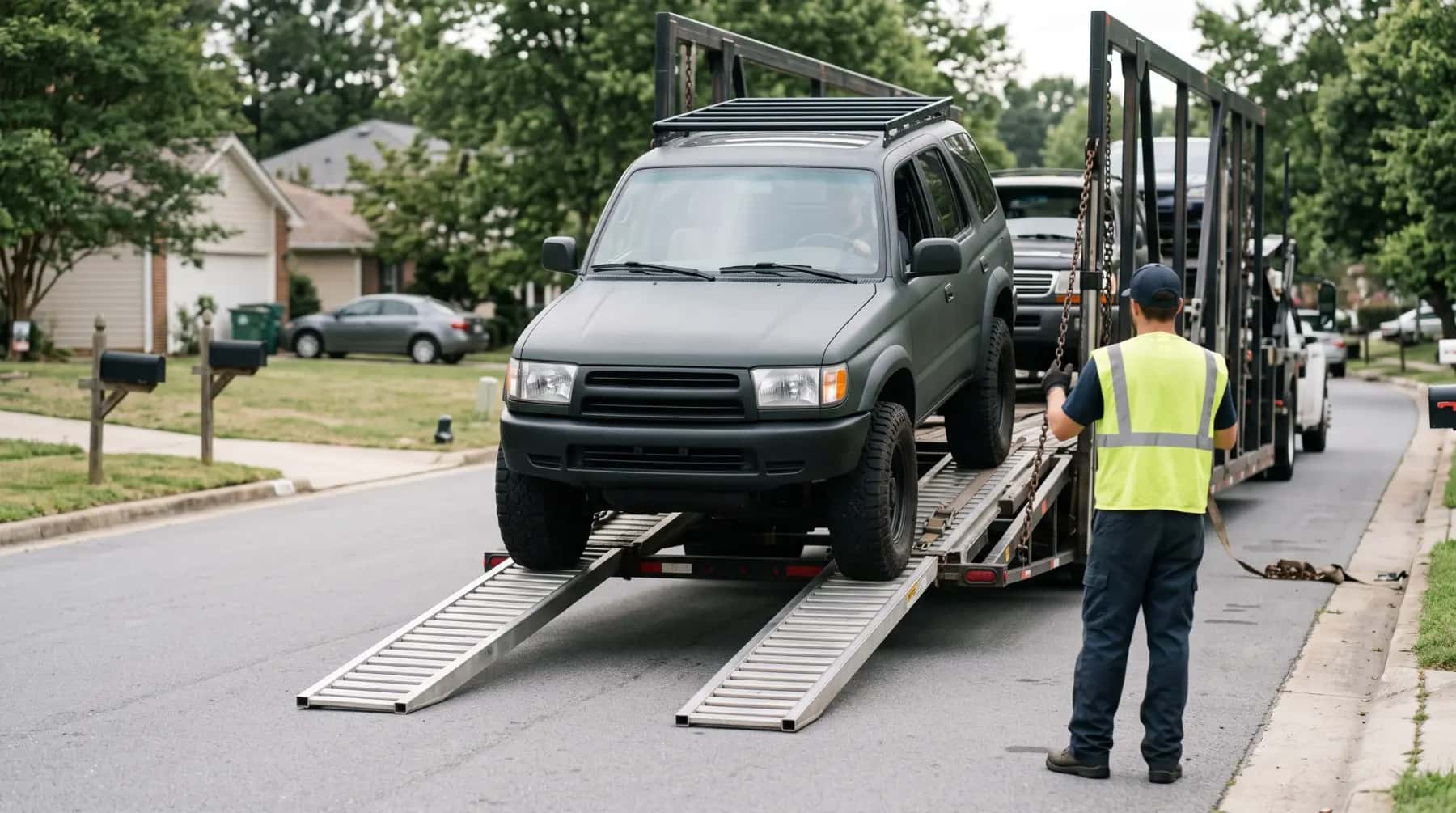
Condition. Tell us whether each car runs, rolls and steers. A car that does not run goes to a carrier with a winch.
Auction pickupDelivering a sold car
When a sold car goes to the buyer's door, the driver is the person the buyer meets from your store.
Give us the buyer's name, phone number and address, and the days that suit them. The driver calls ahead and walks around the car with the buyer at delivery.
The buyer compares the car with the pickup photos from your lot and signs the bill of lading. The signed copy and the delivery photos stay on the order page as your record of the handover.
If the buyer notes damage, it goes on the bill of lading before the driver leaves. The claim is made in writing within 15 days, and we give you the carrier's registration and insurance details to make it.
Regular volume
A store that moves cars every week needs the same steps every time. Tell us roughly how many cars you move in a month and on which lanes.
For several cars at once, send one list by email with the stock number, year, make, model, both addresses and whether each car runs. Each car still gets its own order page.
Cars going the same way together price as one load, which usually costs less per car than moving them one at a time.
Your coordinator agrees with you how lists come in and how you pay before the first load, so every move after that runs the same way.