

The full guide
A guide to shipping a car to Hawaii
A Hawaii move is two trips on one order. Here is how the road leg and the sailing connect, what paperwork the port needs, how to prepare the car so it sails, and what to expect when you collect it on the island.
Two legs, one order
A car bound for Hawaii makes two trips, one by road and one by sea, and your order covers both.
The road leg runs from your door to a West Coast port. Cars for Hawaii sail mainly from Long Beach and Oakland in California, with some sailings from San Diego. A carrier that passed the Trustline Standard picks up the car, photographs it with you and delivers it to the port, where it is checked in for its sailing. From most of the lower 48 that is a long road leg at about 400 to 500 miles a day, and your coordinator times it to the sailing.
The sea leg runs from the port to the island. Vessels sail to Honolulu on Oahu regularly, and the crossing itself takes about a week. Cars bound for Kahului on Maui, Nawiliwili on Kauai, or Hilo and Kawaihae on the Big Island often connect through Honolulu, so they can take noticeably longer, sometimes several weeks. Your coordinator gives you dates for each leg when pricing.
Shipping from Hawaii to the mainland works the same way in reverse. You drop the car at the island port, it sails to the West Coast, and a carrier delivers it to your door.
One order page carries both legs. It shows the carrier and driver, the pickup photos, the port check-in, the sailing and the arrival, with an email at each change.
Because sailings run to fixed schedules, the road leg is planned backward from the sailing date. Tell your coordinator the date you need the car on the island, and leave room for the connection.
Paperwork
The sea leg has paperwork the road leg does not, and a missing document at the port can mean a missed sailing.
Ocean carriers usually ask for proof of ownership, either the title or the current registration, and a government photo ID for whoever drops off the car. If someone else delivers it to the port for you, a signed authorization from the owner is usually needed too.
A financed or leased car needs a letter from the lender or leasing company allowing it to be shipped to Hawaii. These letters can take a week or more, so ask for one as soon as you book.
On a military move, check with your transportation office first, since the government may ship one vehicle for you. The military car shipping page has more.
Once the car arrives, Hawaii gives you 30 days to act. On Oahu that means either registering the car in Hawaii or getting an out-of-state permit that keeps your mainland plates valid until they expire. Either way you need a Hawaii safety inspection, Hawaii insurance and the shipping receipt showing the arrival date. Each county runs its own registration office, so check the rules for your island.
Your coordinator confirms the document list for your sailing when you book, since each ocean carrier sets its own.
Preparing the car
Ocean carriers are strict about what goes aboard, and a car that breaks their rules can be turned away at the port.
Fuel. The tank must be a quarter full or less, and the port checks.
Empty the car. Everything comes out except factory-installed equipment, including luggage, boxes, child seats, loose tools, phone mounts and toll tags. Under the transport agreement, anything left in the car travels at your own risk, and the port can refuse a car that is not empty.
Clean it inside and underneath. Hawaii guards its islands against pests and foreign soil, and a car caked in mud or carrying plant matter can be held for cleaning. Wash the underside and wheel wells, and vacuum the interior.
Keys. Hand over one working key or fob, and keep the spares with you.
Alarm. Turn it off or disconnect it, so it does not sound in the hold.
Condition. The car should run, with working brakes and no major leaks, since it is driven on and off the ship. A car that does not run needs special handling, so tell your coordinator.
Size. Standard sailing rates cover cars of ordinary size. A lifted truck, a large van or a car with a roof rack may be priced differently, so mention it.
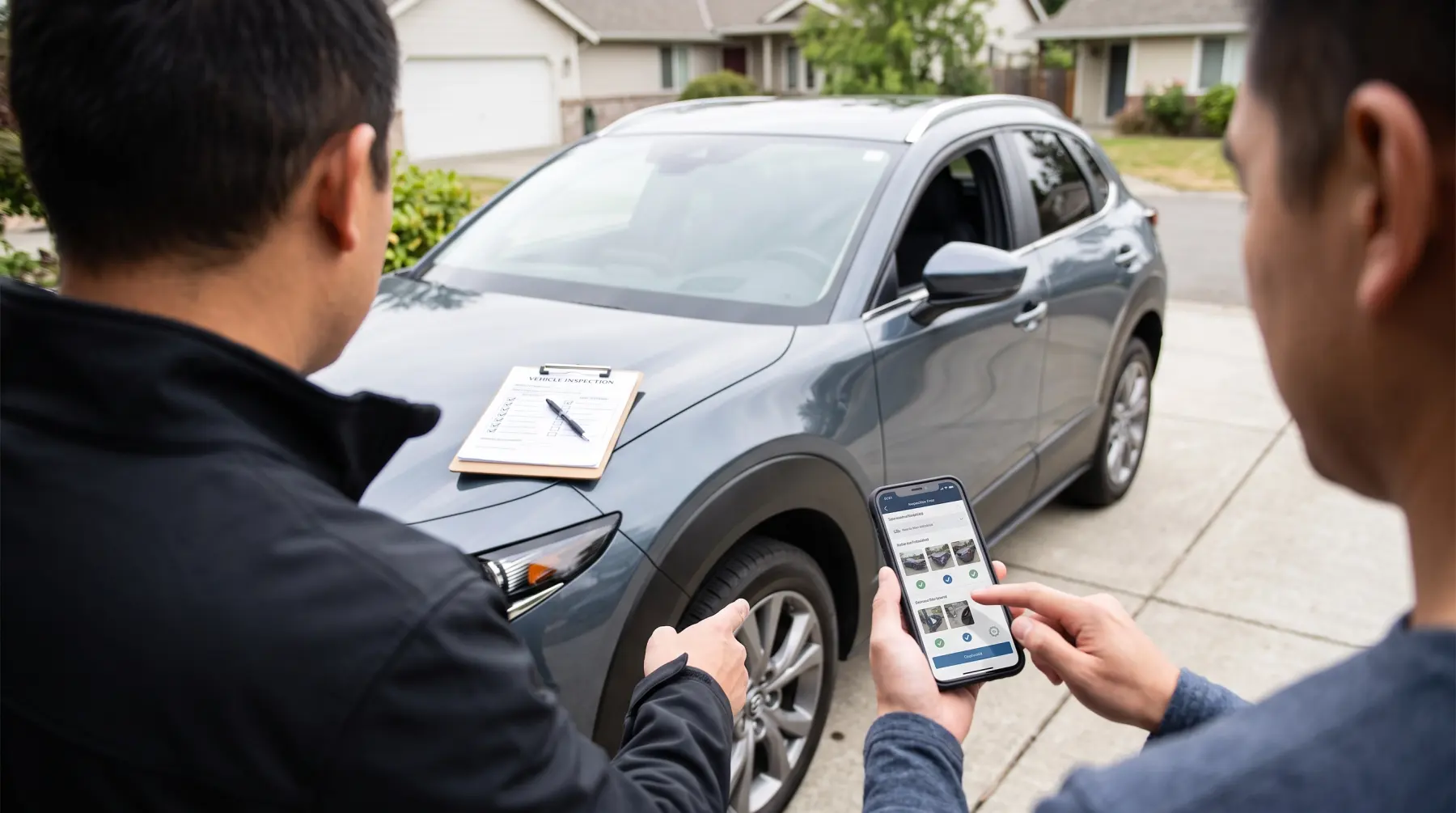
Photos. Take your own the day before pickup and keep them until the car is collected on the island.
Collecting the car on the island
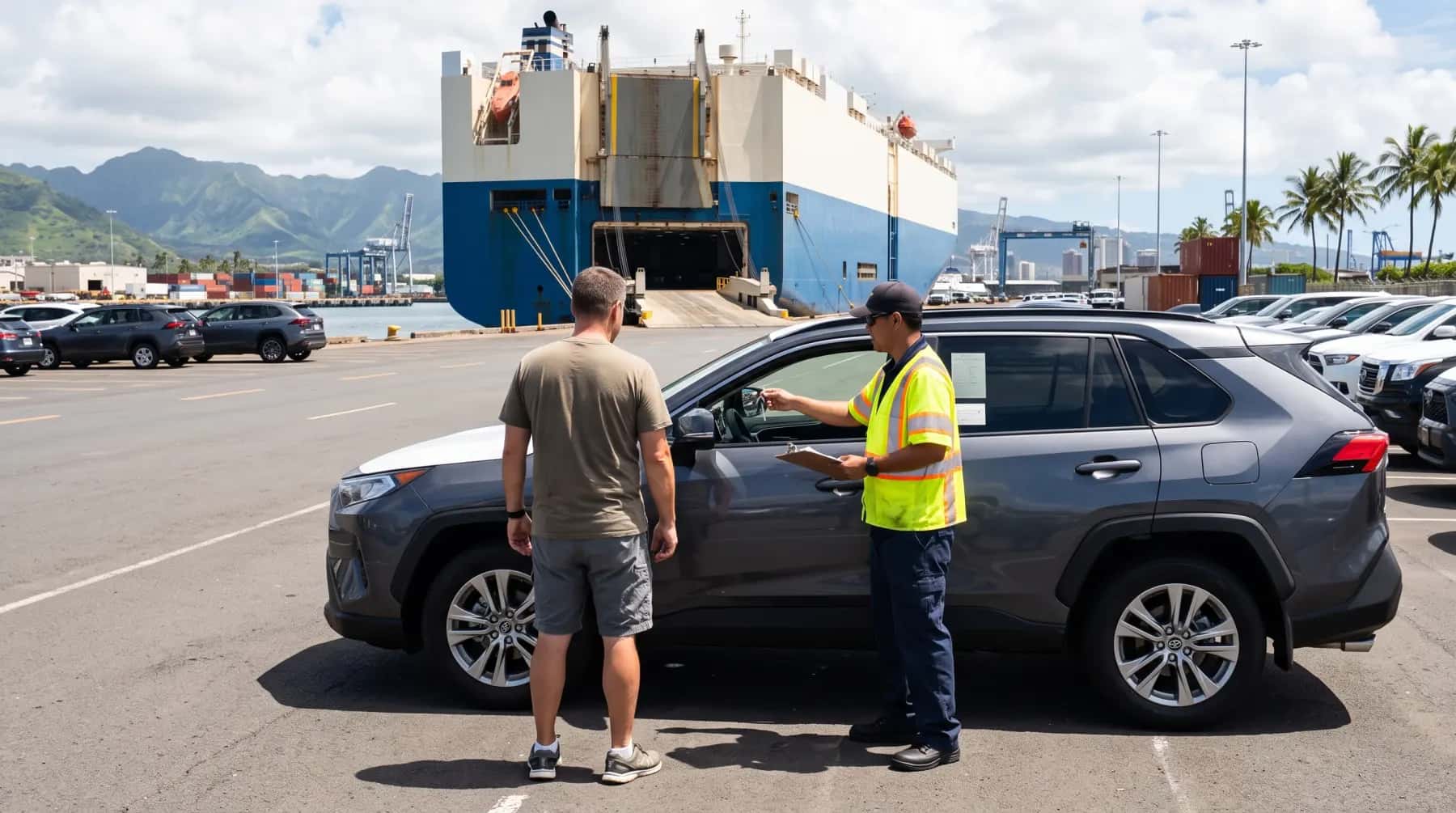
Your car is released at the island port. When the vessel arrives, the car is unloaded and processed, which usually takes a day or more before it can be collected, and your coordinator and the emails on your order page tell you when it is ready.
Bring your photo ID, the shipping paperwork or booking number, and a signed authorization if someone else is collecting it. Check the port's hours, since some island lots keep limited ones.
Before you drive away, walk around the car and compare it with the pickup photos on your order page. Note any new damage on the release paperwork at the port and photograph it before you leave, since damage not noted at collection can be hard to claim later. The written claim goes in within 15 days.
Then plan your first days on the island. You have 30 days to register the car or get an out-of-state permit, and you need a safety inspection and Hawaii insurance first. Book the inspection early, since stations can be busy.