

The full guide
A guide to shipping a boat
Boats move by road more often than people think. Here is how to measure yours, when it can ride its own trailer and when it needs a hauler, what makes it a wide load, and how to prepare it for the highway.
Measuring the boat
Three numbers decide which truck comes and what the move costs, and getting them right is the most useful thing you can do.
Length overall. Measure from the tip of the bow, including any bow pulpit or anchor roller, to the back of the transom or swim platform. Add the outboard or sterndrive if it sticks out behind the boat when tilted up. Advertised length often leaves these out.
Beam. The width at the widest point of the hull, including the rub rails. This is the number that decides whether the boat is an oversize load.
Height on the trailer. Measure from the ground to the highest fixed point with the boat sitting on its trailer, including a T-top, hard top, tower, arch, radar dome, antennas and windshield. A trailer lifts a boat about a foot and a half off the road, and that is often what turns a legal load into a tall one.
Anything that folds or comes off should be measured both ways, standing and lowered, so your coordinator can see what removing it would save. Tell us the make, model and approximate weight too, and send a photo or two. Accurate figures mean an accurate price and no surprise at pickup.
Its own trailer or a boat hauler
How a boat moves depends mostly on whether it has a trailer fit for the road.
Towed on its own trailer. A boat on a road-ready trailer can be hitched to a carrier's truck and towed, the same way you would tow it to the ramp. It is usually the simplest option for small and mid-size boats, but the trailer must be up to the trip. Before pickup, check the tires for cracks and pressure, the wheel bearings, the lights and wiring, the brakes if it has them, the coupler and safety chains, and the tie-downs. A trailer that has sat for a season often needs attention, and a failed bearing on the highway can strand the boat.
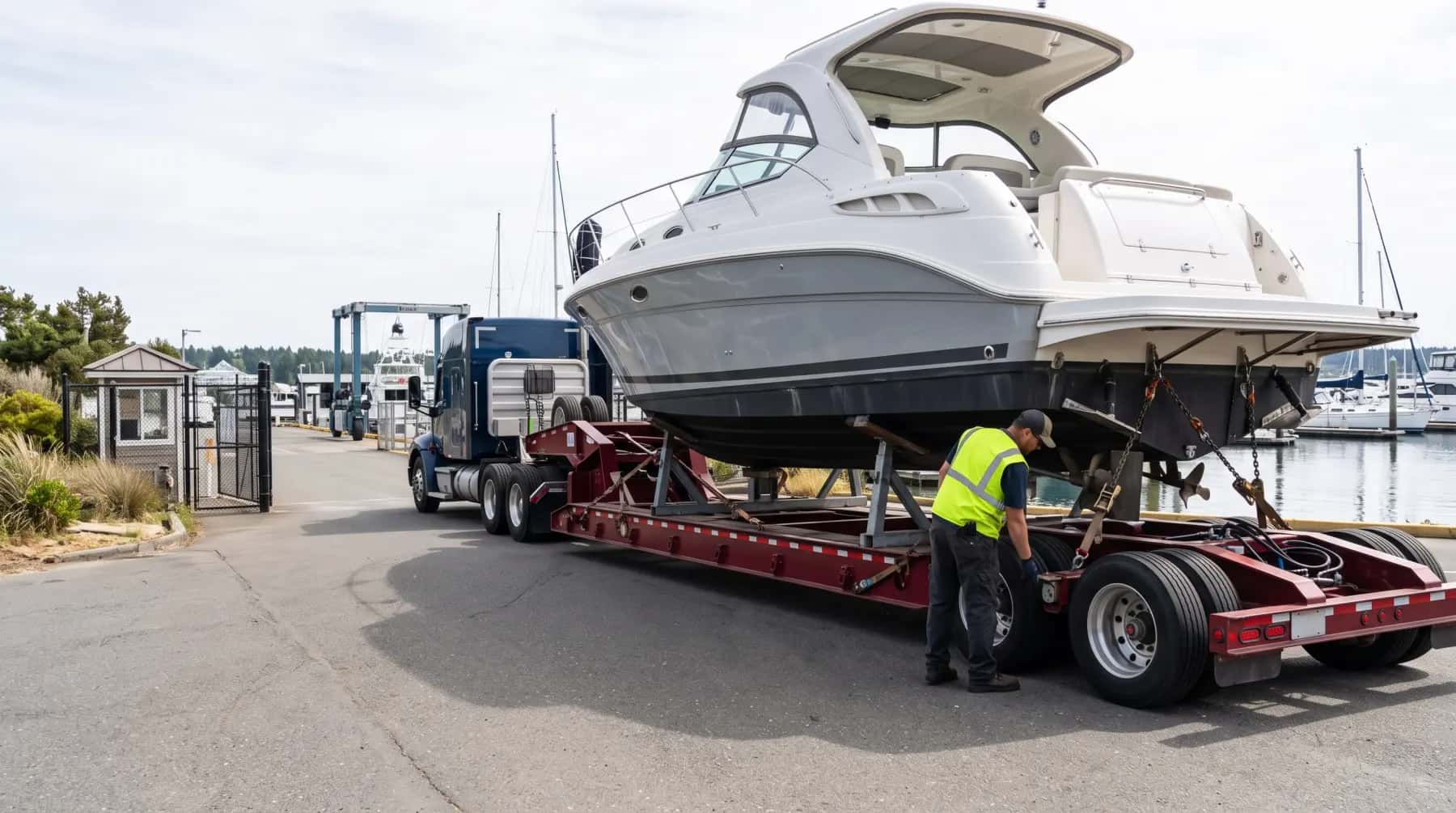
On a hydraulic boat hauler. A boat without a trailer, or on one that is not road-ready, rides on a hydraulic hauler, a trailer with adjustable arms and pads that lift the boat and support the hull along its length. It can load a boat from a cradle, a stand or the ground, and set it down the same way.
Cradles. Larger boats, especially sailboats with keels, often travel in a cradle built to fit the hull, or on a hauler set to the same shape. Tell us if your boat has its own cradle.
If you are unsure whether your trailer is up to a long trip, say so, and your coordinator prices the hauler option alongside.
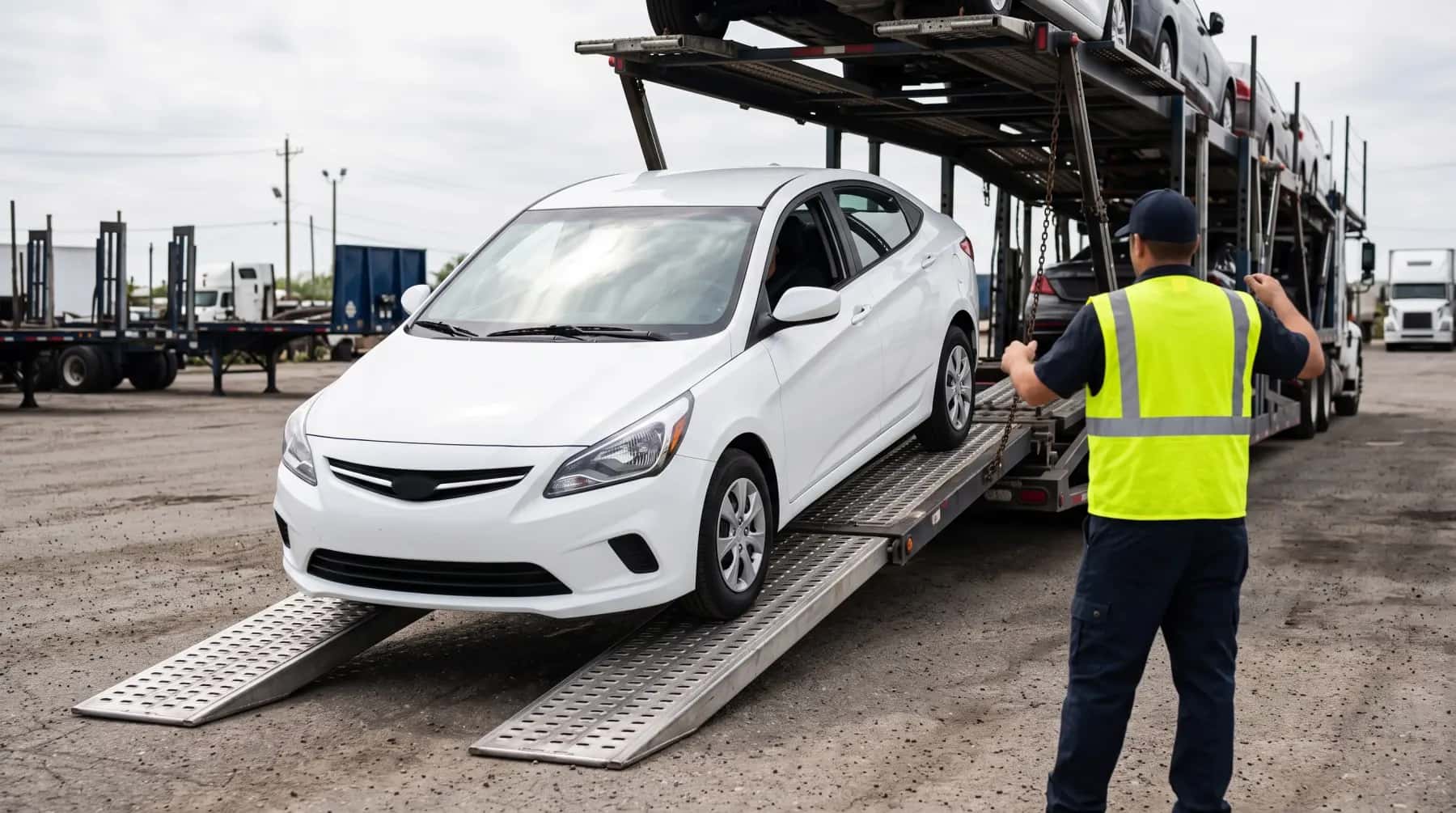
Wide loads and permits
Width is what turns most boats into a special load. On interstates and most major highways the legal limit is 8.5 feet, or 102 inches, and any boat with a beam over that is an oversize load in every state it crosses.
An oversize load needs a permit from each state on the route. The permit sets the route, the signs and flags the truck must carry, and when it may travel. Many states limit wide loads to daylight hours and keep them off the road on weekends and holidays, which can add days to a long trip.
As the width grows, so do the requirements. Depending on the state, once a load passes about 12 to 14 feet wide, one or two escort vehicles, often called pilot cars, must travel with it, and some states require police escorts in certain places.
Height matters too. A boat that is tall on its trailer may need a route around low bridges and overpasses, and some states require a height permit as well.
The carrier gets the permits, arranges the escorts and plans the route around them, and the cost is in the price your coordinator emails you.
If the boat is close to a limit, ask whether lowering or removing something, such as a tower or an antenna, would bring it under. It can save permits, escorts and days.
Preparing the boat
A boat on the highway faces wind at road speed for hours at a time, so preparation is mostly about removing what can blow away and draining what can leak.
Drain everything. Pull the drain plug and empty the bilge, live wells, fresh-water tanks and holding tanks. Water adds weight and can freeze or slosh.
Winterize if needed. If the trip crosses cold country in winter, winterize the engine and plumbing first, as you would for storage.
Fuel. Leave no more than half a tank, and less is better.
Canvas and covers. Remove bimini tops, canvas and enclosures, or fold and strap them down tightly, since road wind shreds canvas that flaps.
Electronics and antennas. Take off removable electronics, and lower or remove antennas, outriggers and anything that sticks up.
Batteries. Disconnect them so nothing drains or shorts on the trip.
Loose gear. Remove or tie down everything on deck and below, from cushions and anchors to fenders and coolers. Personal items are not covered by the carrier's cargo insurance.
Shrink-wrap. For a long move or an open cockpit, shrink-wrap keeps out road grime and rain, and a marina or boatyard can do it before pickup.
Photos. Photograph the hull, deck, running gear and interior in daylight the day before.