The full guide
A guide to shipping a car that doesn't run
A car that does not run can still ship, as long as the right truck comes for it. Here is what the driver needs to know, which trucks can take it, how to get it ready, and what happens on delivery day.
Why rolls, brakes and steers matter
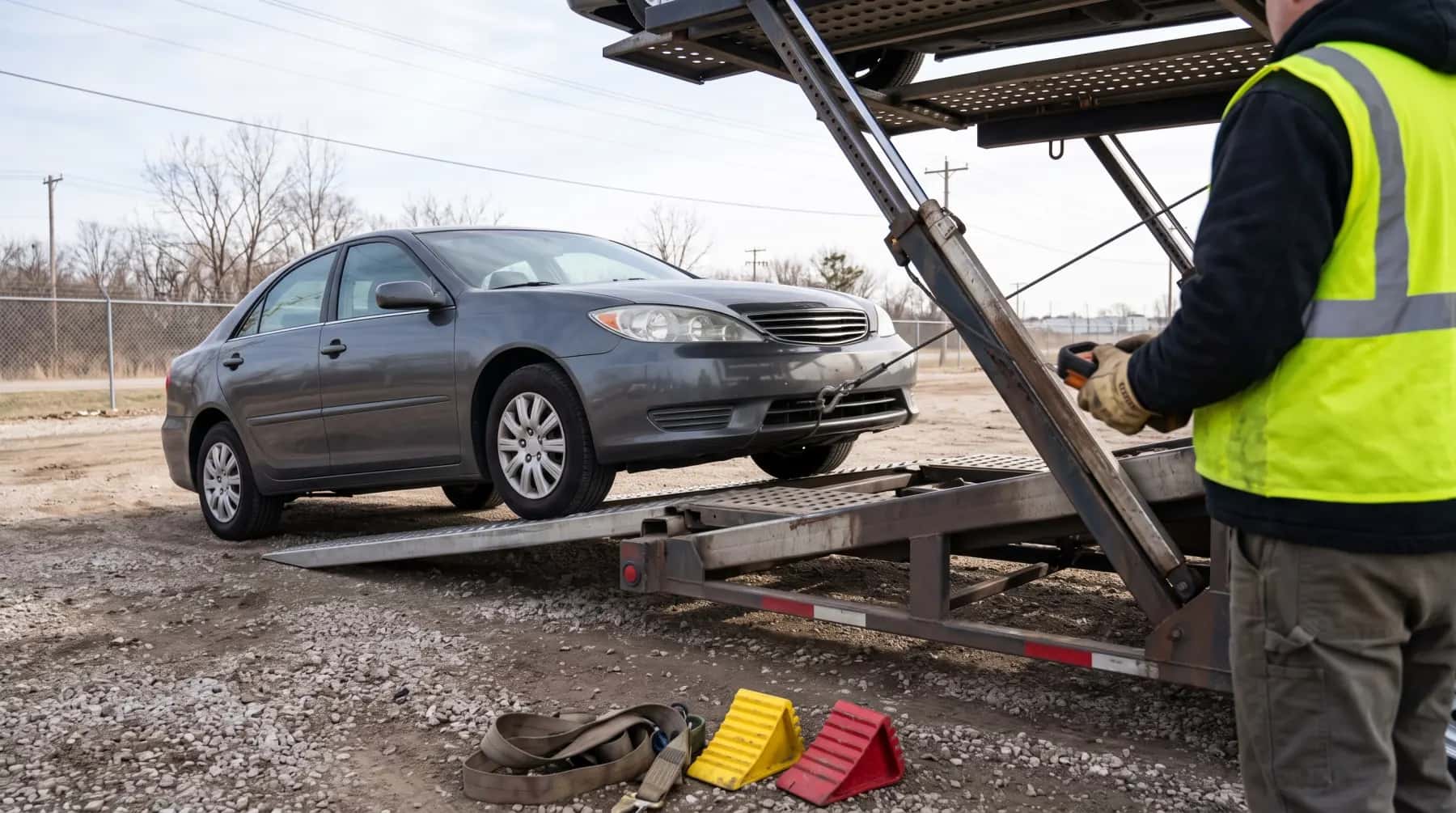
A winch does one job. It pulls a car up the ramp. Everything else, keeping it straight, stopping it and getting it off at the other end, depends on the car. That is why the driver asks three questions.
Does it roll? All four wheels need to turn freely. A flat tire still rolls once it is pumped up, but a tire that will not hold air, a seized wheel bearing or brakes rusted onto the rotors can lock a wheel, and a locked wheel drags rather than rolls. A car that has sat for years often has at least one of these.
Does it brake? On the ramp, the driver needs a working brake pedal or parking brake to hold the car once it is aboard and to control it on the way down. A car with no brakes at all needs different handling.
Does it steer? Turning the wheel must turn the front wheels. A steering lock engaged without a key, a broken tie rod or a wheel bent under the car means it cannot be guided straight up a narrow ramp.
A yes to all three means a standard winch load. A no to any of them means a forklift, a rollback with a tilt deck or other equipment at one or both ends, and that changes which carriers can take it. Say so before you book, so the coordinator plans for it and the driver is not surprised at your curb.
Which trucks can take it
Not every car carrier has a winch, and the ones that do are a smaller share of the trucks on any lane. A big open carrier loaded with running cars has little use for one, so winch trucks tend to be smaller rigs, wedge trailers and some enclosed carriers.
That shows up in timing. Fewer trucks able to take the car means fewer offers, so assigning a carrier can take a little longer than for a running car. A few days of slack on the pickup date helps here more than almost anywhere.
It shows up in the price too, a little. Winch loading takes the driver longer and limits which carriers can take the load. When you choose "it does not run" on the price screen, that is built in, so there is no surprise at pickup.
What we tell the carrier matters as much as the truck. Your coordinator passes on whether the car rolls, brakes and steers, whether the keys are with it, where it sits and how far it is from the street. A driver who knows all that arrives with the right equipment, and that is the difference between a ten-minute load and a wasted trip.
Getting the car ready
A little work before pickup makes a non-running car much easier to load, and protects you from extra fees.
Tires. Pump up every tire, even one that will not hold air for long, and do it the morning of pickup if a tire leaks slowly. A flat can still roll, but it drags and makes the car hard to steer up a ramp.
Keys. Find them, even though the car will not start. Many cars lock the steering or stay stuck in park without a key, and the driver may need it to open the doors or release the parking brake. If the keys are gone, say so before you book.
Access. The driver needs a clear, firm path from where the car sits to the truck. If it is in a garage, a backyard or down a long gravel drive, tell us how far it is from the street and what the ground is like. A winch line only reaches so far, and soft ground can stop a car.
Leaks. Under the agreement, a car that leaks oil, coolant or fuel can face extra fees or be refused, so tell us about any leak and put a tray under it beforehand if you can.
Loose parts. Remove or tie down anything that could fall off, such as a loose bumper, trim or a hood that will not latch. Personal items stay out, apart from up to 200 lb in the trunk, and the tank holds no more than half.
Delivery day
A car that does not run cannot drive itself to its spot, so delivery takes a little more planning than usual.
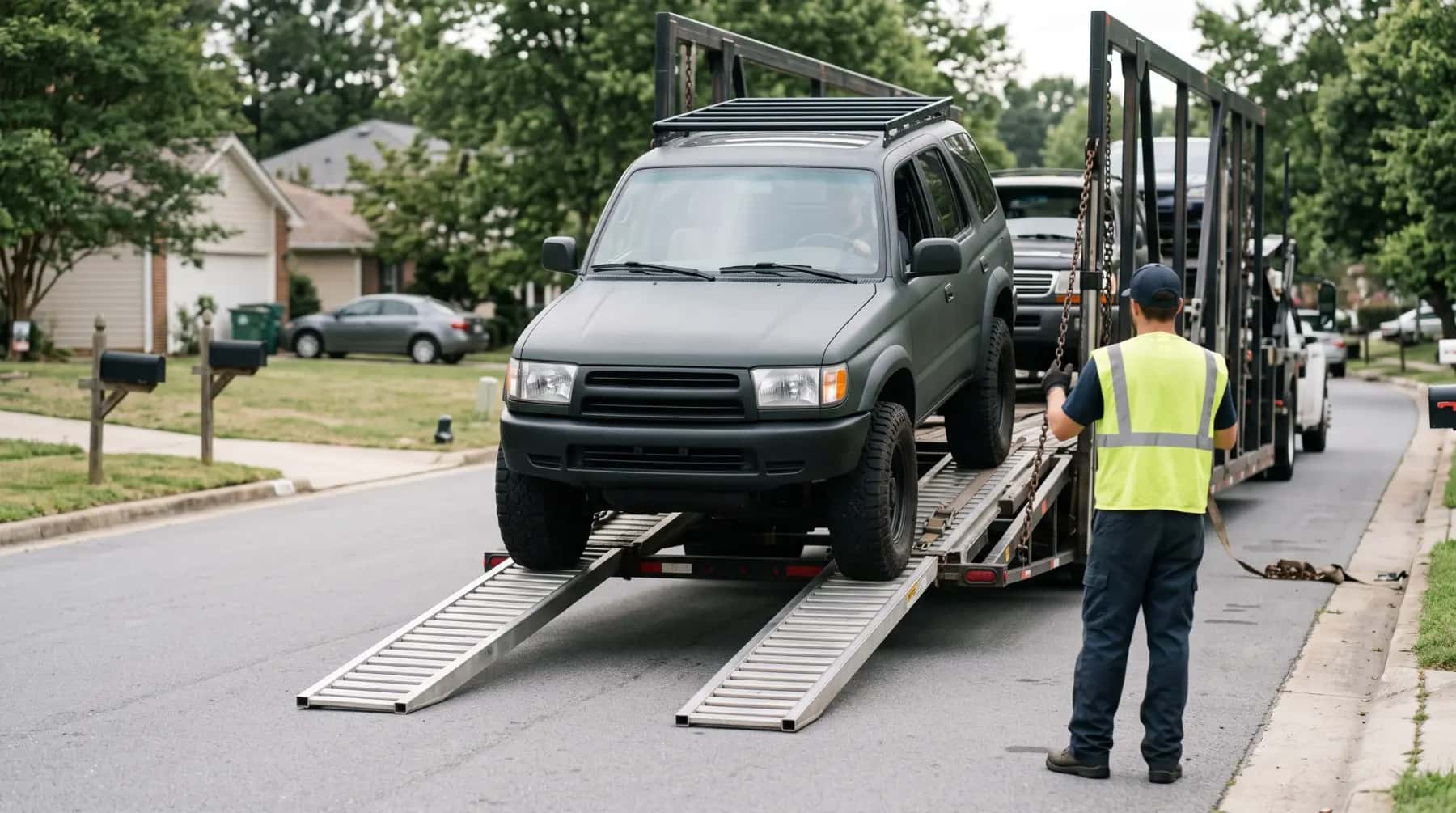
Decide where the car goes before the truck arrives, and clear the way to it. The driver winches or rolls it down the ramp, but once it is on the ground it has to be pushed. Have one or two people there to help steer and push it into place, ideally along a level path.
If the car is going into a garage or a shop, check that the door is open and the space is clear. If it is going to a mechanic, tell them it is coming, since many shops receive cars only at set hours.
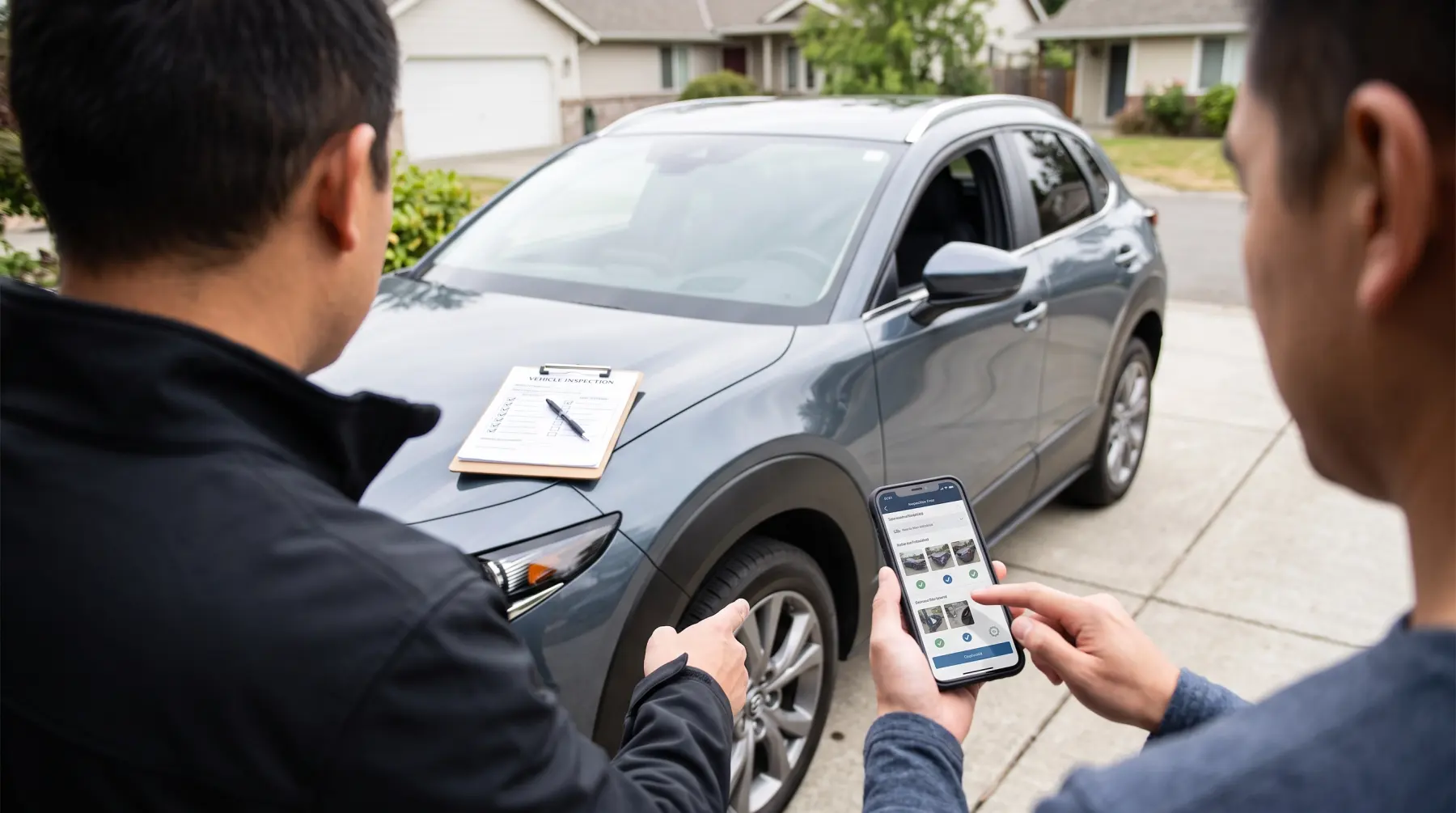
Then inspect it as you would any delivery. Walk around the car with the driver and compare it with the pickup photos on your order page. Note any new damage on the bill of lading before the driver leaves, because damage not noted at delivery cannot be claimed later.
When it checks out, sign the bill of lading and pay the driver the COD to Carrier. The delivery photos land on your order page, and the last email of the order reaches your inbox.