

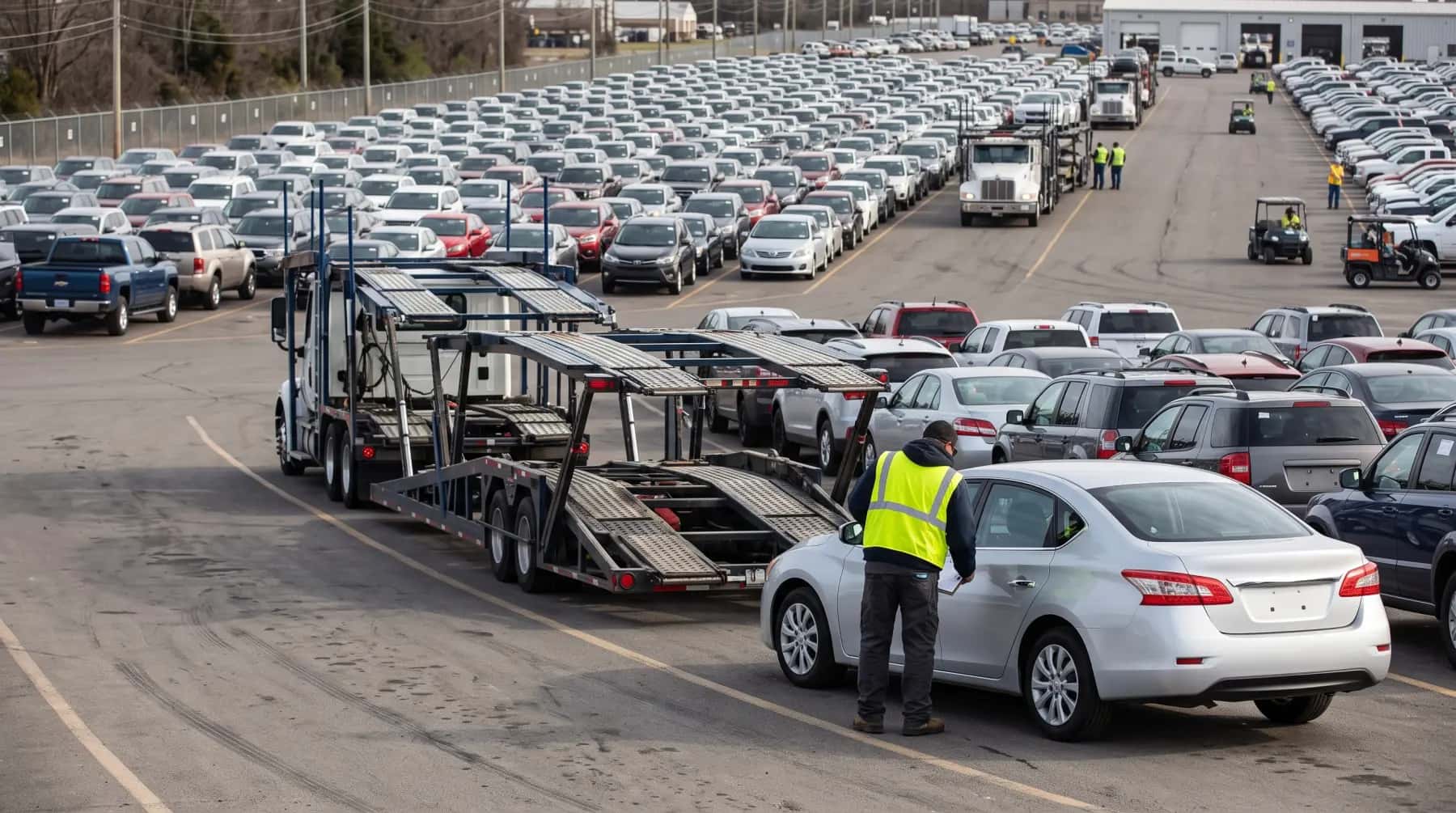
The full guide
A guide to auction pickup
Getting a car out of an auction yard is mostly paperwork and timing. Here is what the yard needs from you, how storage deadlines work, what happens with a car that will not start, and how to read the yard photos.
What the yard needs from you
Every auction yard releases a car on the same two conditions. The car is paid for in full, including the auction's own fees, and the driver at the gate holds the right release for that car. Get both in order and pickup is routine. Miss one and the driver is turned away, which costs a day and sometimes the carrier.
The release has a different name at each auction.
At Copart, each car you win has its own Gate Pass PIN, shown on your Payments Due page and in the win email. From Payments Due, you can send the lot to a transporter, and Copart emails the driver the PIN and lot number. The driver then books a pickup appointment in Copart's transportation app and checks in on arrival.
At IAA, a release with pickup instructions arrives once your payment posts, and at many branches that email serves as the release form. Some branches also show a gate pass in your purchase history.
At Manheim, the release is called the Vehicle Release, formerly the gate pass, and you manage it in the post-sale section of Manheim.com. Most Manheim gates expect a barcoded release in the driver's hand.
At ADESA, the gate pass and vehicle release form come from the Purchases page once payment is received, and you can download them or email them to the carrier.
Whatever the auction, send us the release or PIN, your buyer or member number, the lot or stock number, and the yard's address and pickup hours as soon as you have them. We put them on the order and the carrier brings them to the gate. For a car at a dealer or a private yard, a signed release from the seller does the same job.
Auction rules change and can vary from one yard to the next, so check your own invoice and win email for anything specific to your lot.
Storage fees and deadlines
The day you win, a clock starts. Most yards hold a car free for a short window after the sale, then charge storage for every day it stays.
The window is short, and it varies. At Copart, it is commonly about 3 business days, counting the day of sale. IAA branches commonly allow the day of the award plus 2 to 4 days, and can move a car that is not collected within 5 business days to another yard, with fees. Manheim and ADESA set pickup windows by location. Your invoice or win email shows the real deadline for your lot, so check it first.
What helps most is booking the day you win, even before the release arrives. That puts your car in front of carriers on your lane while the free days are still running. Paying the auction promptly matters just as much, because the release only comes after payment posts.
We cannot change a yard's free days, its storage rates, its gate hours or how fast it processes payment, and any storage is charged to you by the auction.
What we can do is start looking for a carrier straight away, pass your release to the driver the moment you send it, and tell you the same day if the pickup window moves. That leaves you time to decide whether the guaranteed pickup date option is worth it before the free days run out.
Cars that don't run
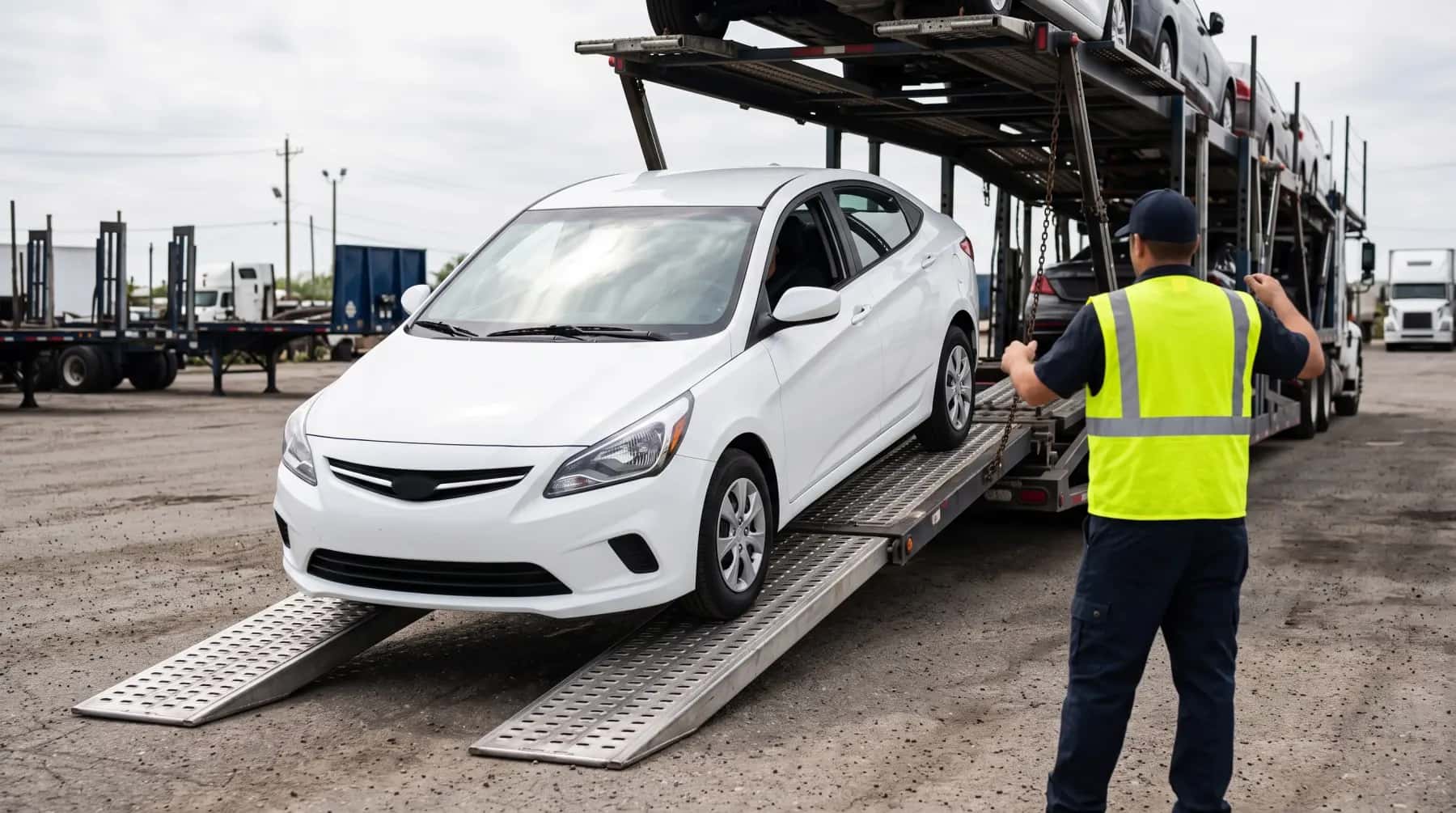
Plenty of auction cars do not start, and that does not stop them from shipping. What matters is whether the car rolls, brakes, and steers.
If it does, a carrier with a winch pulls it onto the trailer and off again at your door. Choose "it does not run" when you get your price, so the order goes only to carriers with a winch and the price includes it. A car booked as running that does not run at pickup adds $150, so if you are unsure, book it as not running.
If it does not roll, brake, or steer, tell your coordinator before you book. A locked or missing wheel or a seized steering column cannot be winched, and needs a forklift or a rollback at one or both ends. Many yards help load with their own equipment, but a driveway has no forklift.
Auction listings help here. Copart and IAA describe condition with labels such as Run and Drive or Starts, which reflect the yard's check on the day it looked, and a car can change between the listing and the pickup. Send us the listing link so the coordinator sees what you saw.
Missing keys matter too. A car without keys may roll in neutral, but some cannot be steered or shifted out of park.
For more on cars that will not start, see the inoperable vehicles page.
Inoperable vehiclesWhat the yard photos tell you
For many auction buyers, the driver's pickup photos are the first real look at the car. The listing photos were taken by the yard, sometimes weeks earlier. The pickup photos are taken the day the car leaves, and the driver notes its condition on the bill of lading.
Read them against the listing. Check the panels the listing showed and the ones it did not, the glass, the tires and wheels, and the interior. Look for damage the listing missed and for parts that were there before and are now gone.
A car that is not as described is a matter for the auction. Each auction sets its own rules for raising a dispute, often with short deadlines, so act quickly and attach the yard photos and the bill of lading as your record of the car as it left the gate.
At delivery, compare the car with those same photos. Anything new since the yard is a transport question, noted on the bill of lading before the driver leaves and claimed in writing within 15 days. Anything already in the yard photos was there before the truck arrived.