

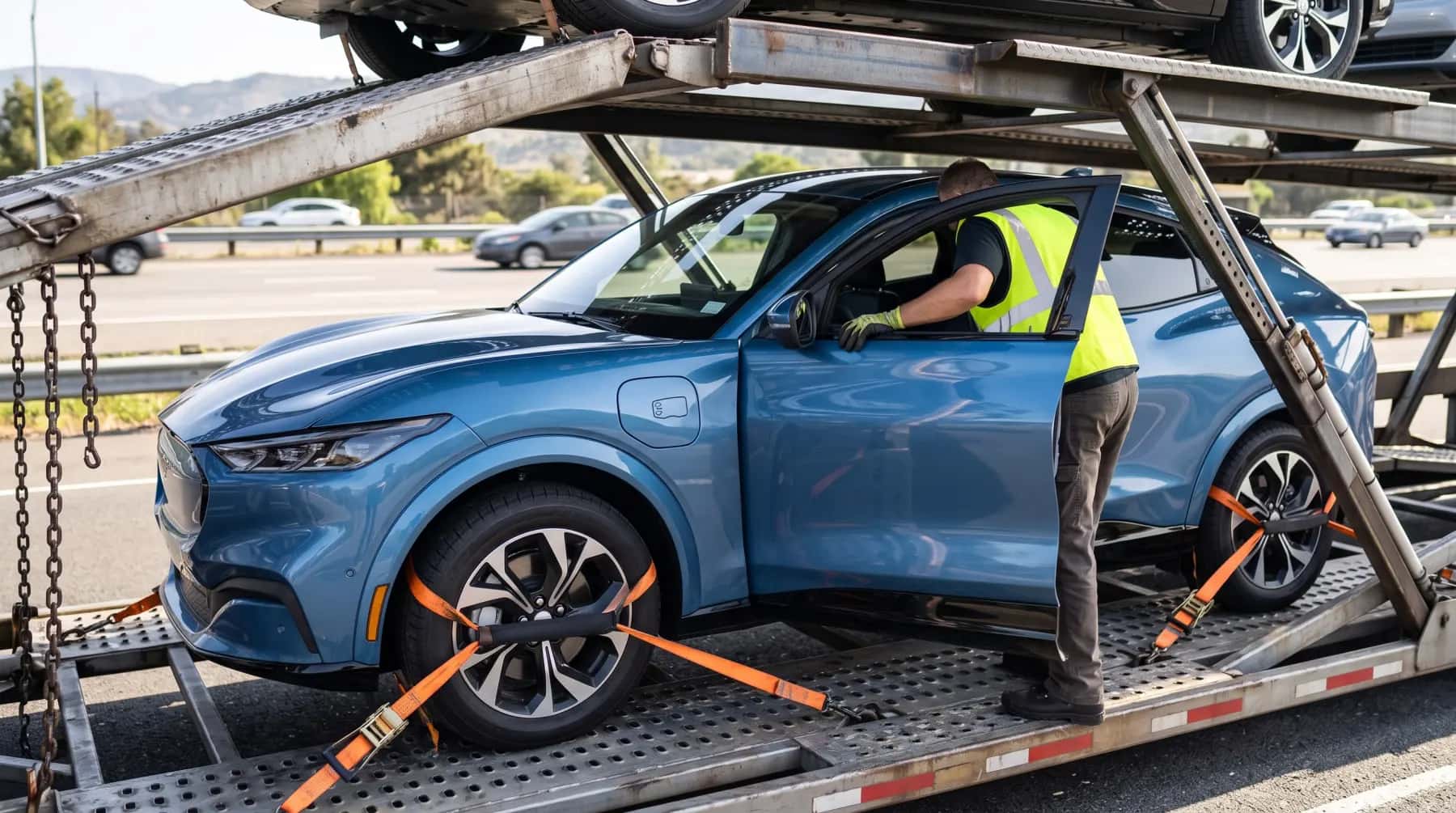
The full guide
A guide to shipping an electric car
Electric cars ship on the same trucks as every other car. Here is how much charge to leave, what to do about phone keys and alarms, why the weight matters, and what changes if the car will not power on.
How much charge to leave
The driver drives an electric car on and off the truck, so it needs charge at both ends. Somewhere between a third and a half is the right range.
Not full. A full battery adds nothing to the trip, since the car only needs to cover a few hundred feet at each end, and many makers advise against leaving a battery at a very high charge while a car sits for days.
Not empty. A car that arrives flat cannot be driven off, and an EV with a dead battery can be hard to move at all. The car also uses a little power while it sits, and features left running use more.
Cold weather matters too. A battery loses usable range in the cold, and a winter trip across the northern states can leave less at delivery than you expect, so lean toward half in winter.
If the charge is low at delivery, plug the car in before you drive anywhere.
Keys, apps and alarms
Many electric cars treat your phone as the key. That works when you are standing next to the car and fails the moment you hand it to a driver, because a phone key only works with your phone nearby. The driver needs a physical key that works without you.
Tesla. Leave a key card or a key fob. Turn off Sentry Mode, which keeps the cameras running while the car is parked until the battery falls to about 20 percent. If you use PIN to Drive, turn it off or give the driver the code, and turn on Valet Mode if you want to limit speed and lock away your settings.
Rivian. Leave the key card or key fob, and turn off Gear Guard, the camera and alarm system, so it does not record or sound as the truck moves or the driver works around the car.
Other makes. Most electric cars, from Ford, GM, Hyundai, Kia, Lucid, Polestar and others, come with a fob or card key alongside the phone key. Leave it with the car, and turn off any camera, alarm or motion-sensing mode that could drain the battery or go off in transit.
Unplug the car, close the charge port and take the charging cable out. A cable left loose can rattle and mark the interior, and it is not covered by the carrier's cargo insurance.
Makers update these features often, so check your owner's manual or app for the current steps before pickup. Then leave the driver a short note on anything unusual, such as a door handle that needs a press or a screen that needs waking.
Why weight matters
A car carrier is limited by weight as well as space. The truck and its load must stay under federal and state limits, so every carrier plans a load around what the cars weigh, not only how many fit.
Electric cars are heavier than their gas counterparts because of the battery. A Tesla Model Y weighs roughly a thousand pounds more than a gas compact SUV of similar size. A Ford F-150 Lightning runs about 6,000 to 6,900 pounds, against roughly 4,000 to 5,000 for a gas F-150. A Rivian R1T is about 6,314 to 6,585 lb, and a GMC Hummer EV pickup about 9,000.
That changes the load. A heavy EV takes a bigger share of the carrier's weight limit, so a carrier may carry fewer cars that trip or place yours on a particular deck, and some lighter trucks cannot take it at all.
That is why the model matters when you book. Year, make and model tell the carrier what to plan for, and your price is built for the weight. Heavy electric trucks and SUVs often price like a larger vehicle, while lighter electric sedans usually price close to their gas equivalents.
If the car will not power on
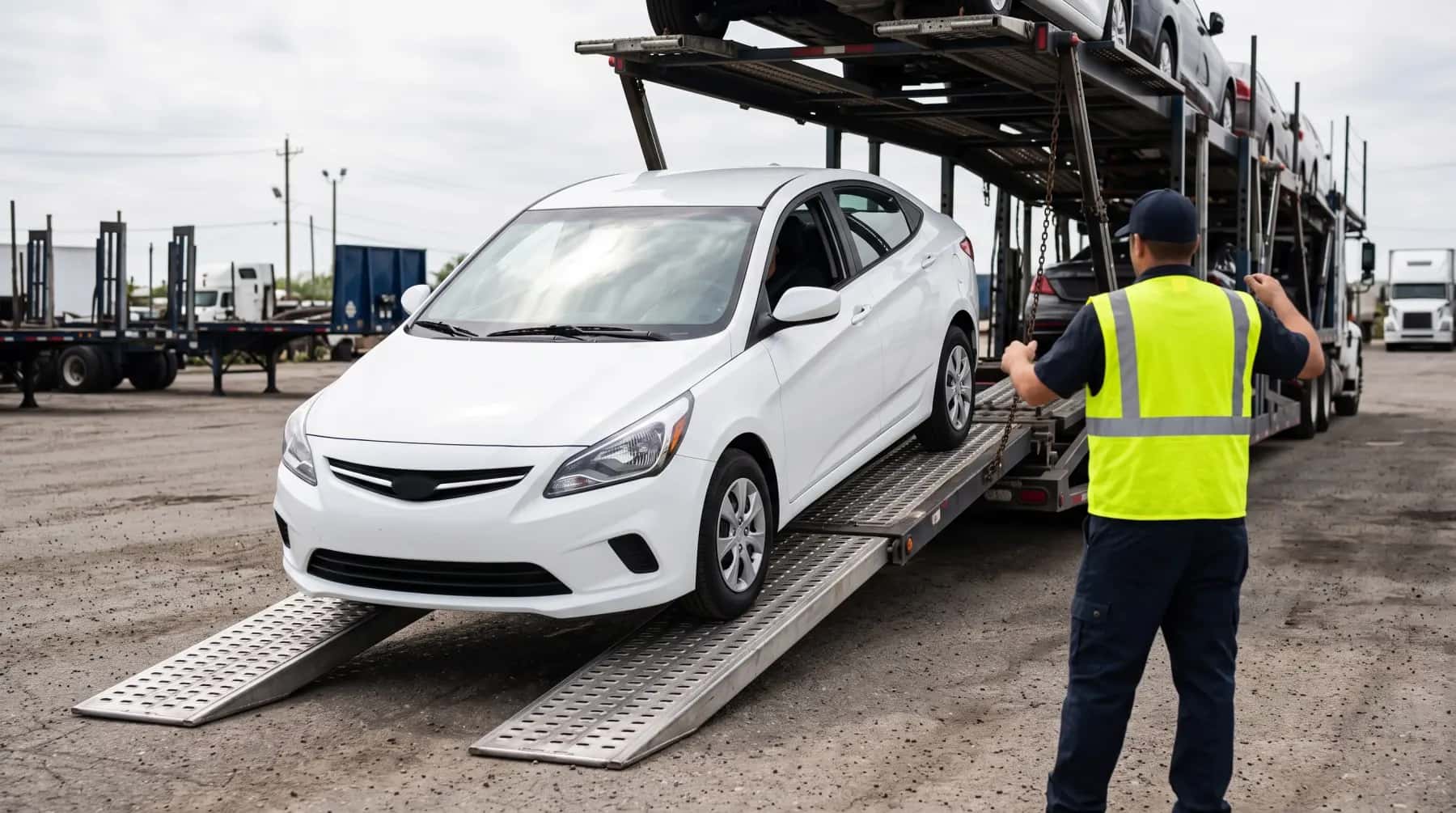
An electric car that cannot be driven needs a winch, and like any non-running car it must roll, brake and steer to be winched. Electric cars add a wrinkle. Many will not roll freely until a transport or tow mode is set, because the parking brake is electronic and the car holds itself in park.
Tesla calls it Transport Mode. With a key detected and the brake pedal held, it sits on the touchscreen under Controls, Service, Towing. It keeps the parking brake released so the car can be rolled or winched slowly, at walking pace, and it needs 12-volt power to work.
Rivian publishes a tow operator guide for its trucks and SUVs, and other makers have their own procedures, usually in the owner's manual under towing or transport. Many need the 12-volt battery working to release the parking brake.
That small 12-volt battery is the usual problem. It runs the car's computers, locks and brakes, separate from the large drive battery, and when it dies the car may not unlock, power on or shift out of park, even with a charged drive battery. A jump pack on the 12-volt system often brings it back long enough to set transport mode.
Tell us before you book if the car will not power on, will not charge or shows a battery fault. Your coordinator assigns a carrier with a winch, and the driver arrives knowing what to expect. A damaged or recalled battery may come with its own shipping rules, so mention it.