

The full guide
A guide to shipping your car when you move
A move to another state has a hundred moving parts, and the car is one you can settle early. Here is when to book it, how to fit it around the movers, what can travel inside it, and what to do in your new state.
When to book the car
Book the car when you book the movers. Both depend on the same dates, and a car order placed early gives more carriers the chance to take it.
Summer is moving season. From late spring through August, families move between school years and leases turn over, and car carriers feel the rush alongside the moving companies. If you are moving in those months, book as soon as your moving date is set.
The most useful thing you can give us is a flexible first day. A car that can go any time in a window of three or four days fits far more carriers' schedules than one that must leave on a set morning, and that flexibility tends to mean an earlier truck and a better price. If the date truly cannot move, the guaranteed pickup date option fixes it.
Your price screen shows a realistic pickup window for the date you choose, so you can see how it lines up with the movers before you book. If your moving date changes later, reply to any email from us and your coordinator adjusts the order.
Booking the car early also takes one decision off a list that is already too long. Once it is done, your order page carries the rest, from the carrier's name to the day it arrives.
Fitting it around the movers
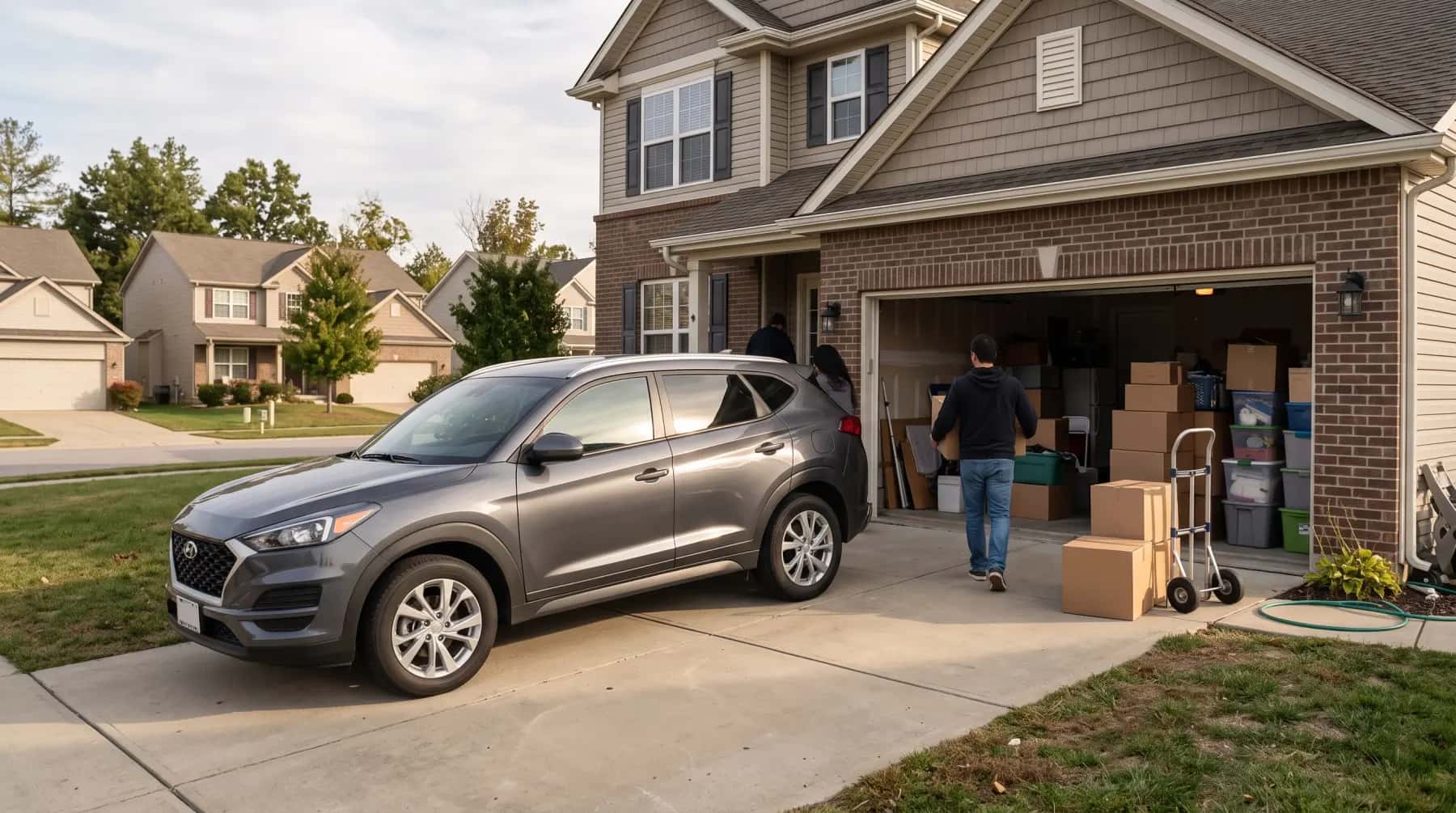
Most people want the car to arrive the day after they do. They want to be there to receive it, and they would rather not drive across the country on top of everything else. The order that usually works is movers first, then you, then the car.
Pick the first day the car can go, usually a day or two before you leave, once you no longer need it. The price screen shows a realistic pickup window around that day, and once a carrier is assigned, your order page shows the dates it gives.
On a short move of a few hundred miles, the car may spend only a day or two on the truck. Los Angeles to Phoenix, about 437 miles, is 1 to 2 days. Keep the car until close to moving day, and expect it soon after you arrive.
On a cross-country move, the car spends longer on the road. Chicago to Austin, about 1,189 miles, is around 3 days, and coast to coast usually takes 6 to 9 days at 400 to 500 miles a day. Hand the car over earlier, before the last frantic days, and plan a rental or a ride for the end of the move.
If you cannot be at either end, name someone who can. A friend or neighbor can hand the car over at the old address after you leave, and someone at the new address can receive it if it arrives first. They walk around the car with the driver and sign the bill of lading for you, and the photos still reach your order page.
If your moving date shifts, tell your coordinator as early as you can, and the pickup window moves with it.
What can go in the car
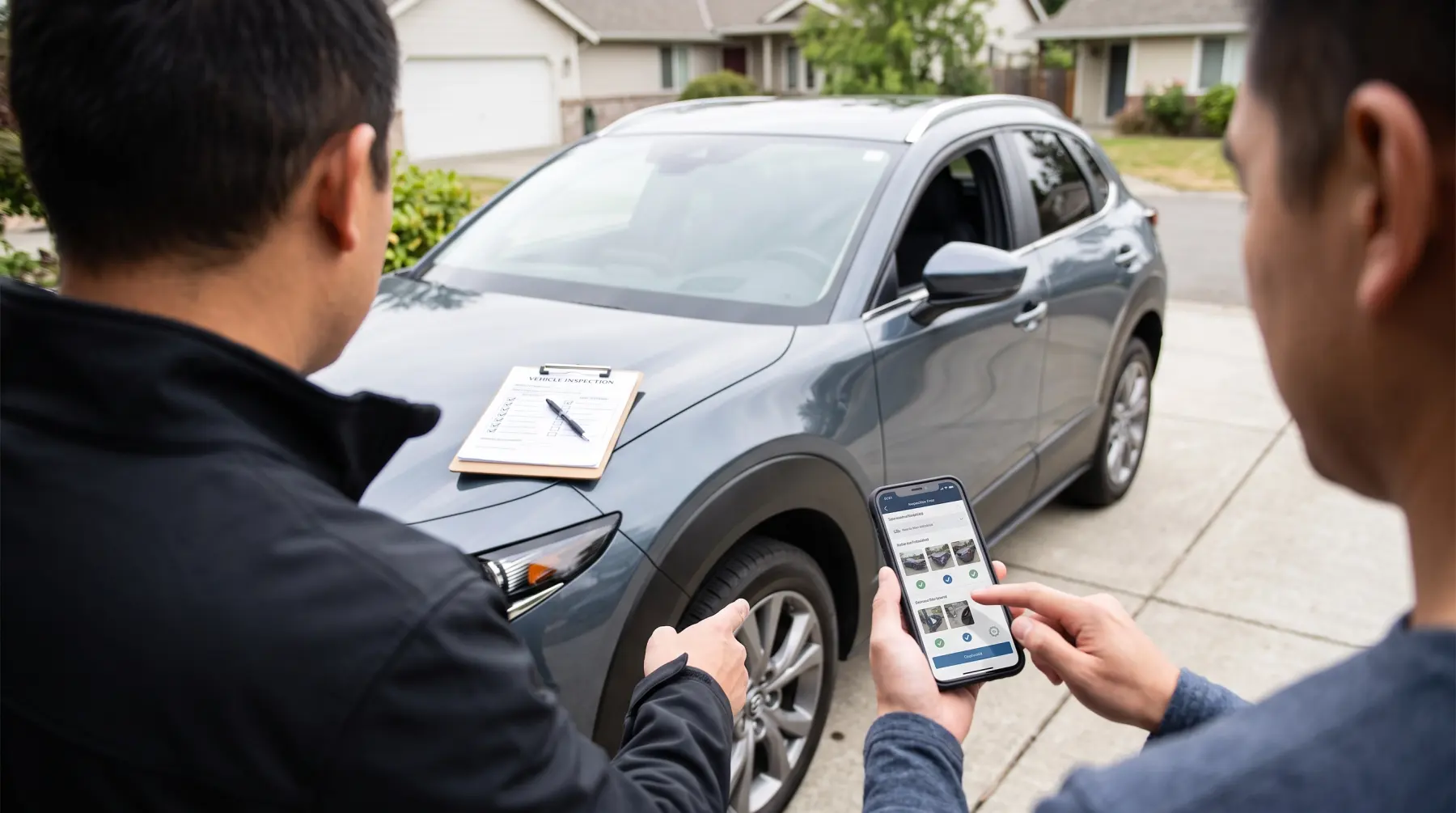
Carriers move cars, not household goods, which is why the car should travel as empty as you can make it.
There are two reasons. The first is weight, since every pound in the car counts against the truck. The second is insurance, since the carrier's cargo policy covers the car and not what is inside it, so anything you pack travels at your own risk.
Under the transport agreement, you can leave up to 200 lb of personal items in the trunk, and only the trunk. Nothing goes on the seats or in the footwells, where it could shift, break a window or block the driver's view.
Some things never go in at all. Anything hazardous or flammable, such as propane, paint or cleaning supplies, stays out. Firearms and ammunition travel with you. Valuables, documents, medicine and anything you would hate to lose belong in your carry-on.
Before pickup, take out toll tags, which can bill you as the truck passes through toll lanes, and garage openers, which belong with the house. Leave no more than half a tank of fuel.
Registering the car in your new state
Once you settle in, your new state expects you to register the car there, and usually to change your driver's license too. The clock starts when you become a resident, not when the car arrives.
Most states give new residents 30 to 60 days to register a car. A few allow as little as 10 days, and some as many as 90. Your new state's DMV website gives the exact deadline on its new-resident pages, and it is worth checking in your first week.
The steps are similar everywhere. Bring the title, or your lender's details if the car is financed, along with your out-of-state registration, proof of your new address, proof of insurance in the new state and your driver's license. Many states also want a VIN check, a safety inspection or an emissions test before they issue plates, and booking one can take a few days.
Change your car insurance first. Minimum cover is set by each state, and most insurers need your new address to issue a policy the DMV will accept.
Fees vary widely, from the title fee to registration and, in some states, a tax based on the car's value. Your old plates are handed in or kept according to your old state's rules.
Every state sets its own rules, so treat this as a map and the DMV as the source.