

The full guide
A guide to open car transport
Open transport is how most cars cross the country. Here is what the trailer is, who it suits, how long a move takes, why the price shifts week to week, and what happens on the day the truck arrives.
What an open carrier is
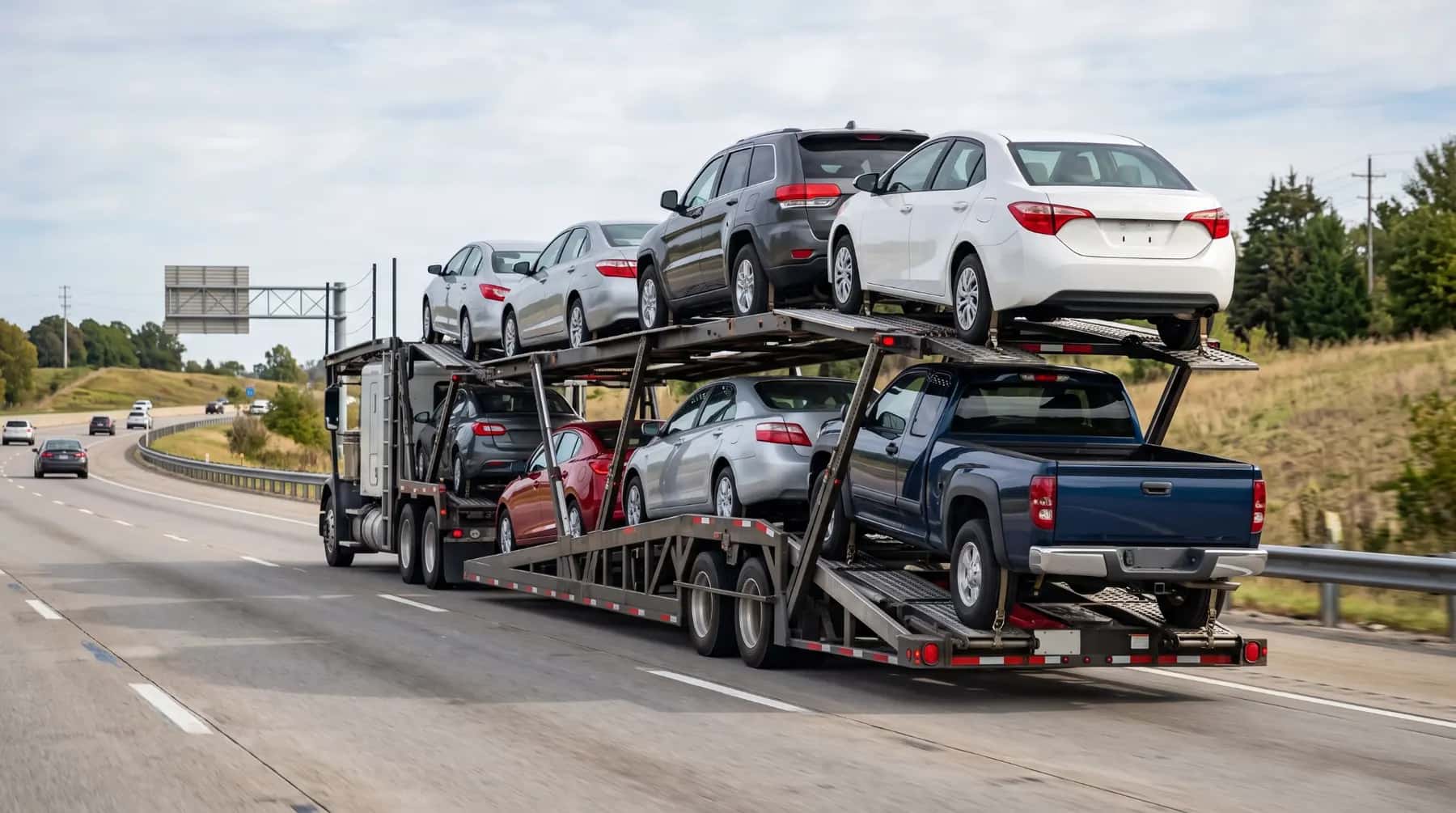
An open carrier is the trailer you pass on the interstate with cars on two levels. It is how new cars reach dealers and how used cars cross the country, and it is what most car shipments ride on.
Three kinds run most lanes. The long two-level trailer, often called a high-mount or stinger, carries the most cars and works the long interstate routes. A wedge trailer is shorter, usually pulled by a heavy-duty pickup, and handles smaller loads. A pickup with a flat three-car trailer covers shorter runs and tighter streets. Which one comes for your car depends on the lane and the carrier assigned.
Each car is driven or winched aboard, then held by straps over the tires or chains at fixed points. With the wheels locked down, the car rides on its own suspension, much as it would on the road. The engine stays off, so the odometer barely moves beyond the few yards of loading.
What reaches the car on an open trailer is what reaches it on a highway drive. Rain, road dust, sun and the odd small stone. A car on the bottom deck can also catch a drip from the one above, which is one reason the walk-around at pickup matters so much.
For a car that already lives outdoors, none of that is new.
Who it suits
Open suits the cars people drive every day, from sedans and SUVs to minivans, pickups and most used cars. A simple test is where the car lives. If it sits in a driveway or a parking lot through rain and sun, the trip on an open trailer asks nothing new of it.
Open also suits a tight date. More open trucks run every lane, so a carrier is usually assigned sooner and picks up sooner. When you are moving house, collecting a car you bought online or sending one to college, that speed is often worth more than a cover.
Look at enclosed instead if the car is a classic, an exotic, a new car you want delivered spotless, or anything low enough to scrape on a ramp. Enclosed costs more and can take longer to assign, but the car travels covered and loads by lift gate or low ramps.
If you are torn, price both. The price screen shows open and enclosed side by side, so you can weigh the difference in dollars before you choose.
Enclosed car transport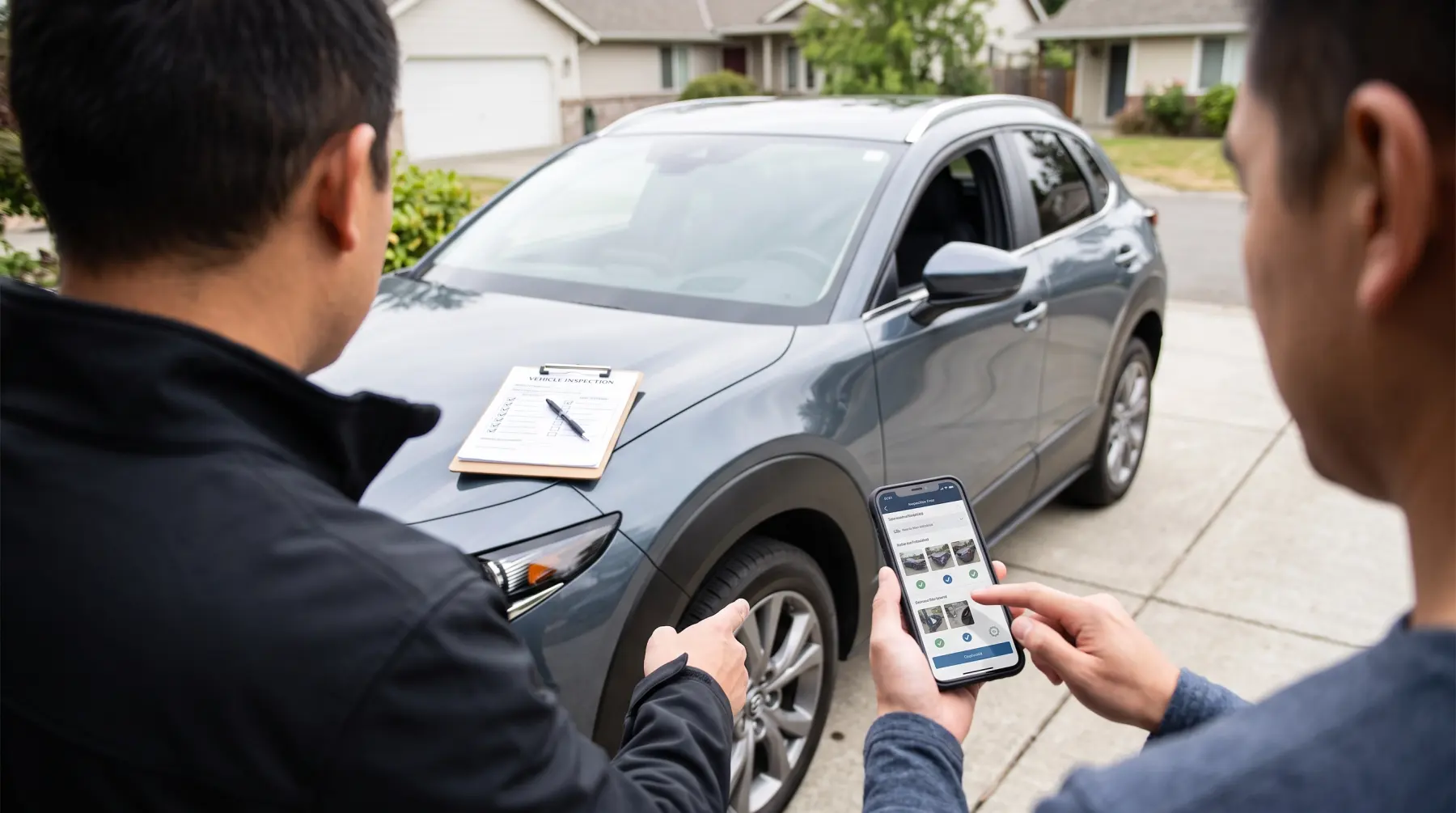
How long it takes
Two clocks run on every open transport order, and it helps to know which one you are waiting on.
The first is getting a carrier. Once you book, your car is offered to carriers running your lane, and on most lanes one is assigned in 1 to 5 days. Carriers usually pick up 1 to 3 days after the load is posted. Busy interstate lanes between large cities move fastest, and your price screen shows a realistic pickup window for your lane before you book.
The second clock starts when the car is loaded. A carrier covers about 400 to 500 miles a day, so distance sets the time on the truck. Los Angeles to Dallas, about 1,513 miles, takes around 4 days. Chicago to Atlanta, about 713 miles, takes around 2. New York to Los Angeles, about 2,988 miles, takes 6 to 8.
A few things stretch the first clock. A rural pickup, far from the interstate, needs a carrier willing to leave its route. Snowbird season fills the lanes between the North and the Sun Belt from October to December and again from March to May. A narrow date gives fewer carriers the chance to say yes, while a few days of slack widens the field. When the date cannot move, the guaranteed pickup date option fixes it.
If your window does shift, you hear the same day, and your order page always shows the dates your carrier gives.
Why the price moves from week to week
Your price is built from what carriers were actually paid to move cars like yours on your lane in the last 90 days. That is why it can differ this week from last.
The biggest factor is the balance on the lane. When more cars want to move than there are trucks to carry them, carriers can choose their loads and rates rise. When trucks outnumber cars, rates fall. A lane into a busy region can cost more than the trip back out, because trucks gather at one end and need loads to leave.
The season shifts that balance. Snowbirds heading south in the fall and north in the spring fill those lanes, and the summer moving months add to it.
Fuel is one of a carrier's highest running costs, so when diesel climbs, rates tend to follow. Size counts too, since a full-size pickup or large SUV takes more deck space and weight than a compact sedan, and the carrier gives up room for it.
Then there is where the car starts and ends. A pickup near a major highway slots easily into a carrier's route. A rural address adds miles off the interstate, and that time is built into the price.
To see how these factors add up for your car, read the pricing page or get your price.
PricingPickup and delivery day
The driver calls the day before pickup and again when close. A loaded open carrier runs about 75 feet, so on a narrow street, a cul-de-sac or a road under low branches, the driver may ask to meet at a nearby lot. You, or someone you name, need to be there at both ends.
At pickup, walk around the car together. The driver notes every chip, scratch and dent on the bill of lading and takes photos, which go on your order page. Take your own photos as well, inside and out. If the car needs a trick to start, tell the driver now. Read the bill of lading before you sign it, keep your copy, and hand over the keys.
At delivery, repeat the walk-around before you sign anything, in daylight if you can. Compare the car with the pickup photos on your order page, panel by panel. The roof, the lower bumpers and the wheels are the places people forget to check.
If something is wrong, write it on the bill of lading and photograph it before the driver leaves, because damage not noted at delivery cannot be claimed later. Then send the claim in writing within 15 days of delivery. It goes to the carrier and its insurer, and we give you the carrier's registration and insurance details to make it.
When the car checks out, sign the bill of lading and pay the driver the COD to the carrier. Your order page marks the car delivered, and the last email of the order lands in your inbox.