

The full guide
A guide to shipping an RV
RVs come in every size, and each moves a different way. Here is how an RV is towed, carried or driven, what its size means for the route, how to prepare it, and what to expect at a storage lot or campground.
Towed, carried or driven
An RV is not one kind of vehicle, so there is no single way to move one. Your coordinator matches the method to the RV and explains it before you agree.
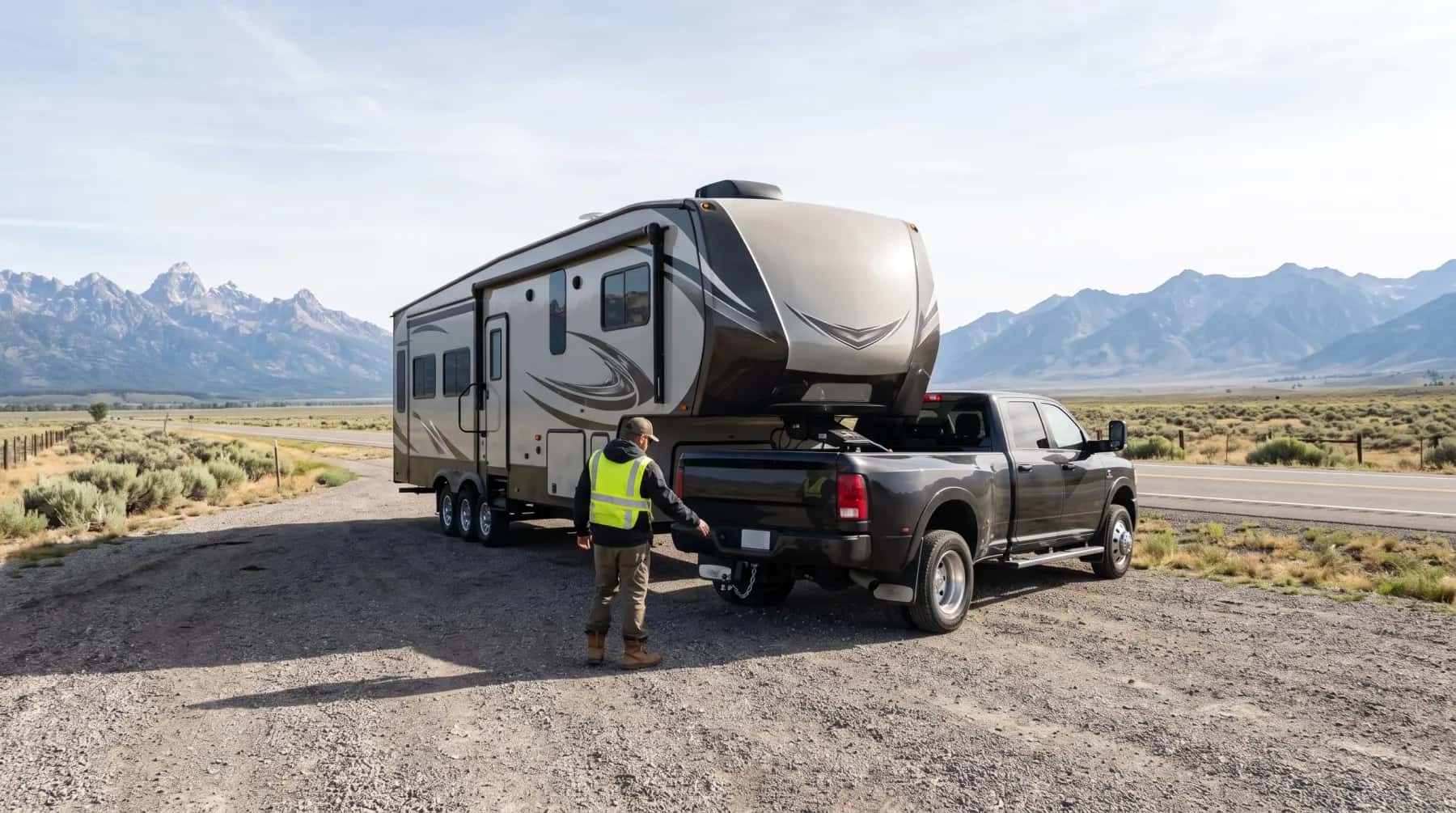
Towed. Travel trailers, fifth wheels, pop-ups and toy haulers have no engine of their own, so a carrier hitches them to a heavy-duty truck, with a ball hitch for a travel trailer or a fifth-wheel hitch in the bed for a fifth wheel, and tows them to the new address. Your own truck stays home, and the miles go on the carrier's truck. It is the usual way to move a towable RV.
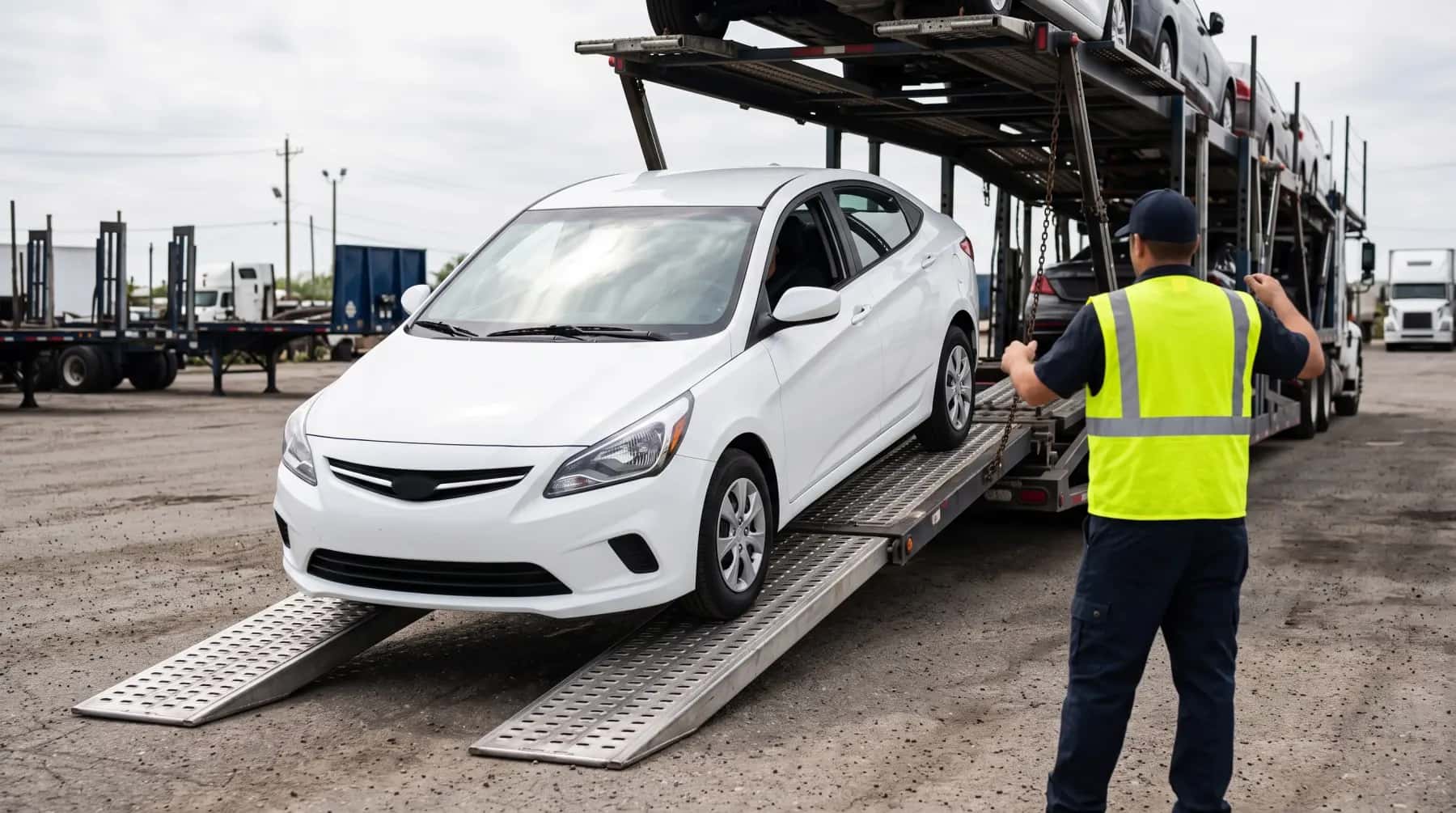
Carried. A smaller motorhome, a camper van or a truck camper can ride a flatbed or a lowboy trailer, with its engine off and its own tires and drivetrain at rest. It suits a shorter Class B or Class C, and it is the way to move an RV that does not run.
Driven. A large Class A motorhome is too tall and too heavy for most trailers within height limits, so a licensed, experienced driver drives it to the new address. This is called driveaway. It adds miles to the odometer and some wear, so your coordinator explains the trade-off and the route first, and nothing is driven without your agreement.
A truck camper can come off the truck and ride a flatbed, or travel mounted, depending on what you want.
Tell us the RV's type, length, height and whether it runs, and the coordinator chooses the method and prices it. If you prefer another method, say so, and you will hear whether it can be done.
Size, weight and permits
Every road limits how big a load can be, and an RV is often close to those limits.
Width. On interstates and most major highways, the federal limit is 8.5 feet, or 102 inches. Most RVs fit within it, but awnings, mirrors and slide-outs that do not fully retract can push one over.
Height. States set height limits, commonly between 13.5 and 14 feet. A large motorhome or fifth wheel can stand 12 to 13 feet tall on its own wheels, so lifting it onto a trailer deck can take it over the limit. That is why large motorhomes are usually driven, and why a carried RV is planned around its height.
Length and weight. A long Class A, or a fifth wheel with its tow truck, makes a long combination, and states limit overall length. Weight limits apply too, especially on bridges and smaller roads.
When an RV goes over a limit on a route, it becomes an oversize load. The carrier gets the permits from each state it crosses, which can set the days and hours it may travel and sometimes require escort vehicles, and plans the route around low bridges and tight turns.
Measure your RV before you ask for a price, from the ground to the highest point, including air conditioners and antennas, and from bumper to hitch. Accurate figures mean an accurate price.
Preparing the RV
You know your RV better than any driver, so a little preparation before pickup makes the trip smoother and protects it.
Tanks. Empty the fresh, grey and black tanks. Water adds weight and can leak, and a full black tank is the last thing anyone wants on the highway.
Propane. Turn it off at the tanks and close the valves, since carriers expect the propane off for the trip.
Slide-outs and awnings. Retract every slide-out and awning fully and lock them. A slide that creeps out on the road can catch a sign or a passing vehicle.
Cabinets, drawers and doors. Latch them all, and tape or tie any that tend to open. Remove or secure dishes and anything on the counters.
Fridge and appliances. Empty and clean the fridge, prop its doors slightly open with the power off, and turn off the water heater and furnace.
Batteries. Charge them, then switch off the battery disconnect if your RV has one, so nothing drains on the trip.
Tires. Check the pressure and condition, especially on a trailer that has sat. Old or cracked tires are a common reason a towed RV breaks down.
Belongings. Take out valuables, since personal items are not covered by the carrier's cargo insurance.
Photos. Photograph the RV inside and out the day before, roof included if you can reach it.
Delivery to a lot or a campground
An RV often goes somewhere other than a driveway, such as a storage lot, a campground, an RV park or a dealer. Each has its own rules, and delivery runs best when those are known in advance.
Tell your coordinator the address and the kind of place, the gate or office hours, and the name and phone of whoever will receive the RV. Many lots and campgrounds take arrivals only during office hours, some need a reservation or a site number, and some want notice that a commercial driver is coming.
Whoever receives the RV, you or someone you name, walks around it inside and out with the driver, compares it with the pickup photos and signs the bill of lading. Park or lot staff can sign only if you name them on the order.
Delivery ends when the RV is parked at the address. Leveling, hooking up water, power and sewer, and setting up camp are not included, so plan to do them yourself or arrange help at the park.
If the RV is going into storage, ask the lot where it should be parked and whether a driver may back it into the space.