

The full guide
A guide to snowbird car shipping
A snowbird car makes two trips a year, each on the busiest lanes of its season. Here is when to book each leg, how delivery works in a gated community, how someone else can hand over the car, and the routes that fill first.
When to book each leg
The snowbird year has two rushes, and each runs one way.
The fall rush heads south. Demand starts to build in October, as the first cold snaps reach the Northeast and Midwest, and peaks in November and early December, when most people want to be settled before the holidays. In those weeks, carriers on the southbound lanes can choose their loads, prices rise, and pickup windows stretch.
The spring rush runs the other way. Northbound lanes fill from March, and April and May are the peak, as winter residents head home. Between the two, the lanes are calmer, which is why the side of the season you ship on can matter as much as the distance.
For the fall leg, book as soon as your departure date is firm, ideally before October. A car leaving in mid-October usually finds more carriers and an easier price than one leaving the week before Thanksgiving. For the spring leg, book once your return date is set, and do not wait for March, because the people heading home with you are booking too.
Two habits help on either leg. A few days of slack on the pickup date lets more carriers fit your car in, which tends to mean an earlier truck and a better price. And if a date truly cannot move, the guaranteed pickup date option fixes it.
Your price screen shows a realistic pickup window for the date you choose, so you can see the season's effect before you book.
Delivering to a gated community or condo
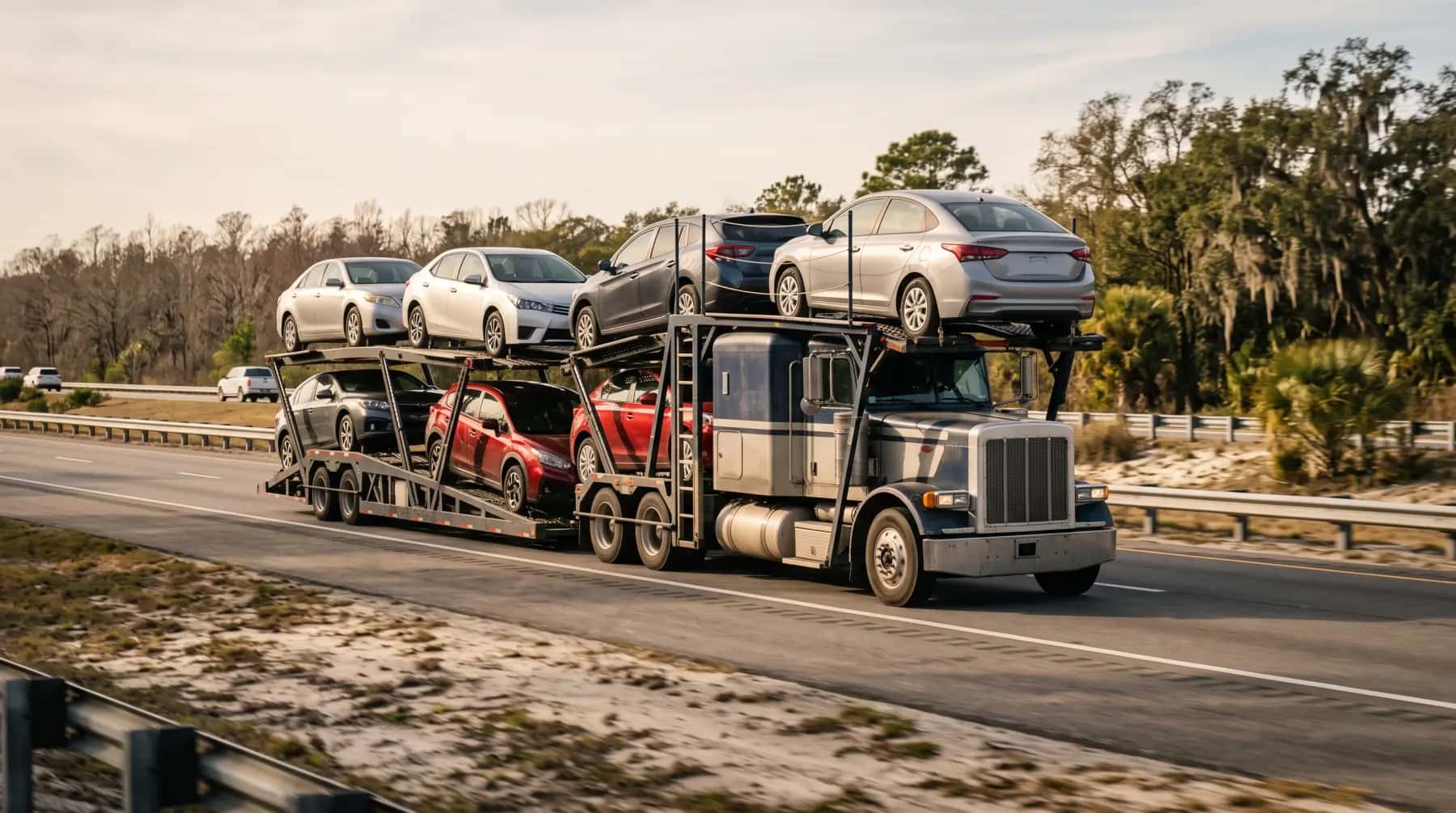
Most winter addresses were not built with a car carrier in mind. A loaded truck runs about 75 feet, and many communities have a gate, a guard, speed bumps, low trees, tight turns, or HOA rules that keep commercial trucks out altogether.
Tell us about your community when you book. The useful details are whether there is a gate and how visitors get through, any rules on commercial vehicles or delivery hours, and whether the streets leave room for a big truck to turn.
If the truck cannot get in, the driver arranges a meeting point nearby, usually a shopping center or another large lot a short drive away, and calls ahead with the time. You, or the person receiving the car, meet the driver there, do the walk-around, and drive the car the last stretch home.
Condos raise a different question, which is where the car goes once it arrives. If your building has a garage or assigned spaces, make sure whoever receives the car knows where to put it and has the fob or permit to get in.
Whoever receives the car must be someone you name on the order, with a phone the driver can reach. That person checks the car against the pickup photos, notes any damage on the bill of lading, and signs it.
Handing over without being there
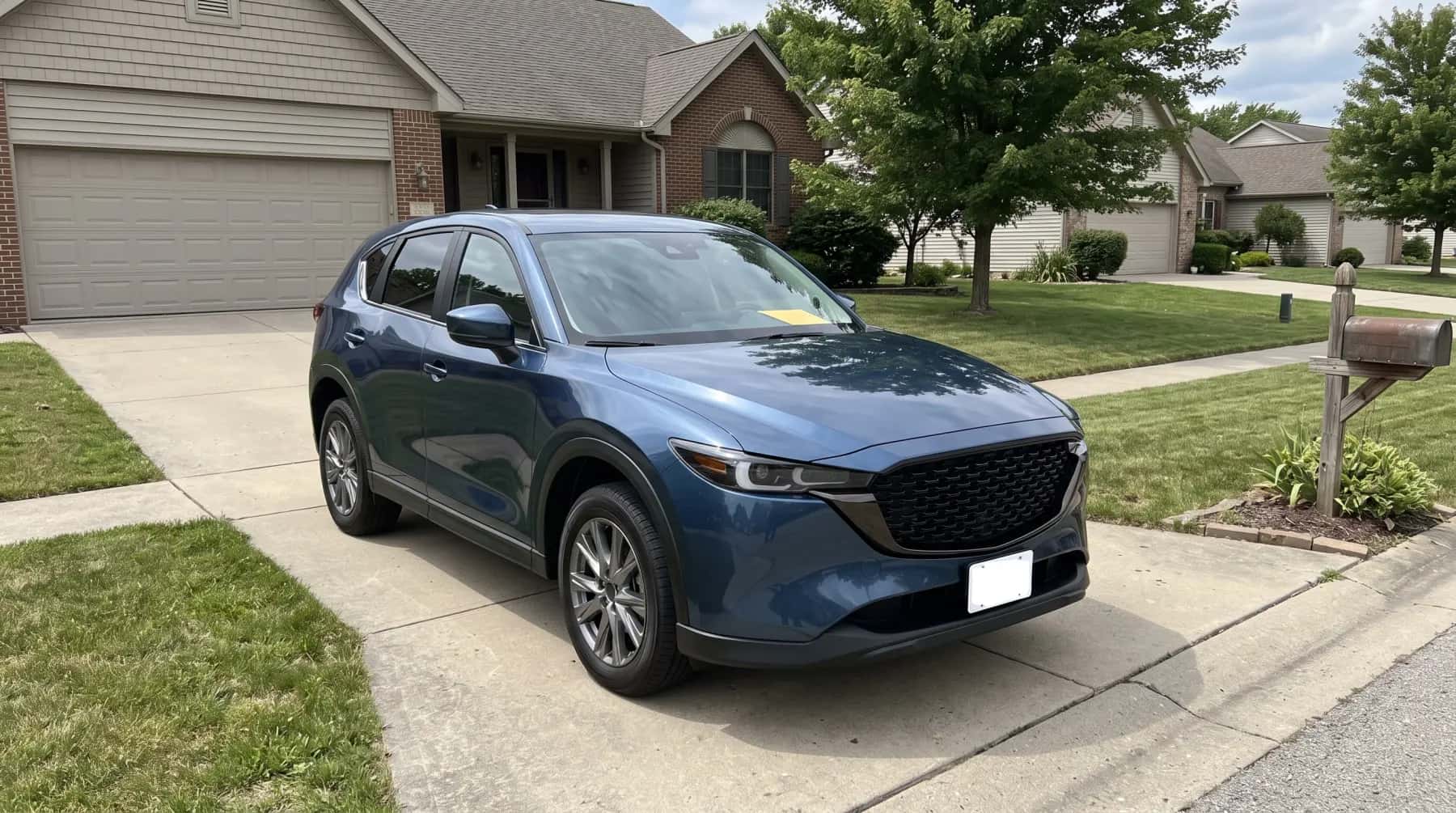
You do not have to be at either end. Plenty of snowbirds fly south before the car leaves, or stay north until after it arrives. When you book, name the person who will stand in for you at pickup, at delivery or both, with a phone number the driver can reach.
That person walks around the car with the driver, watches the photos being taken, and signs the bill of lading on your behalf. Leave the keys with them, along with any gate code, garage fob or alarm instructions the driver will need.
You see everything anyway. The pickup and delivery photos and the signed bill of lading land on your order page, and an email reaches you at every status change, wherever you are.
If something looks wrong at delivery, the person on site has to note it on the bill of lading before the driver leaves, so choose someone who will take a careful look.
The busy winter routes
The snowbird routes run from the Northeast and the Midwest to three winter destinations, Florida, Arizona and Texas, and each has its own pattern.
Florida draws the most. The I-95 corridor carries cars from New England, New York, New Jersey and Pennsylvania to both coasts of the state, and the I-75 corridor brings the Midwest, from Michigan and Ohio, down to Tampa, Sarasota and Naples. Boston to Naples, about 1,549 miles, is around 4 days on the truck. Detroit to Sarasota, about 1,268 miles, is 3 to 4.
Arizona draws the upper Midwest and the mountain states into Phoenix, Mesa, Scottsdale, and Tucson. Minneapolis to Mesa, about 1,549 miles, is around 4 days.
Texas, especially the Rio Grande Valley around McAllen and Harlingen, pulls from the central states. Chicago to McAllen, about 1,497 miles, is 3 to 4 days.
On all of them, the busiest weeks are the same. Southbound in late fall and northbound in spring, and prices follow. A lane from a big city on a main interstate fills fastest but also has the most carriers, while a small town far from the highway can take longer to assign in peak weeks.