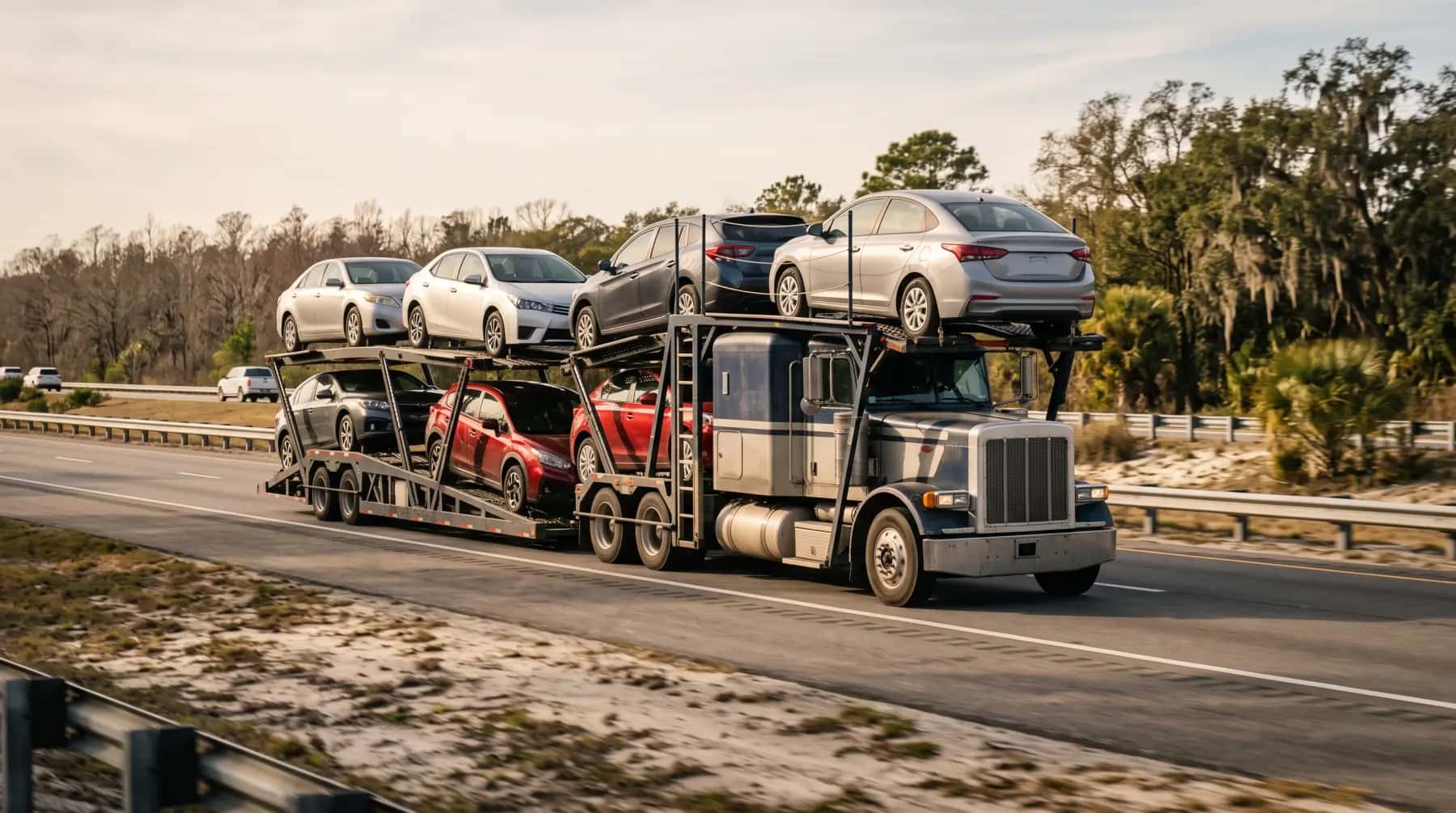
Car shipping has seasons. Some months fill the lanes, some slow the roads, and a few do both. If your date is flexible, knowing the calendar helps you pick a pickup window that holds.
Snowbird season
From October through December, cars head south to Florida, Arizona and the Texas Gulf Coast. In March, April and May they head north again. In each direction the lane has more cars than trucks for a few weeks, so prices rise and pickup windows stretch.
The busy lanes are the ones from New York, New Jersey, New England, Chicago and Michigan down the East Coast and the I-75 corridor to Florida. Book each leg as soon as your date is firm, before October for the fall and before March for the spring. A car leaving in mid-October finds more carriers and an easier price than one leaving the week before Thanksgiving.
Summer
Summer brings house moves, PCS orders and students heading home. Demand is high across the country from late May through August, and the first and last days of each month are the busiest, because leases turn over then. Book 3 to 4 weeks ahead for a fixed summer date, and if your date can move, aim for the middle of the month.
Hurricane season in the South
Hurricane season on the Atlantic and Gulf coasts runs from 1 June to 30 November, with the busiest weeks from mid-August to October. A storm closes roads, shuts ports and keeps trucks off the coast for a few days, and pickups and deliveries in its path move back until it has passed.
When a storm is forecast on a route, carriers hold trucks inland and we tell you by email and by phone what it means for your dates. A car waiting for pickup in a storm's path is safer in your garage than on a trailer, so we do not rush it. Once the roads reopen the lane catches up over a week or so.
Winter routes north
Snow and ice slow the northern interstates and the mountain passes from December through March. A truck that would do 500 miles on a dry day does 300 on a bad one, and a pass closure costs a day. Transit on a northern or mountain lane can run a day or 2 longer in winter, and the price screen's window allows for it.
Road salt is the other winter cost. A car on an open trailer across the Midwest in January arrives with salt on it, and a wash within a day or two of delivery is worth doing. An enclosed trailer keeps the salt and the grit off, which is why some owners choose it for a winter move even for an everyday car.

The quieter months
Outside the peaks, lanes have more room. On most routes, late January to early March and September are the quietest, between the holiday return and the northbound rush, and between the summer moves and the southbound one. Pickup windows tend to be shorter then and prices lower. If your date can move, those are the easier months to plan around.
 Trustline CarriersLicensed broker · MC 1661496