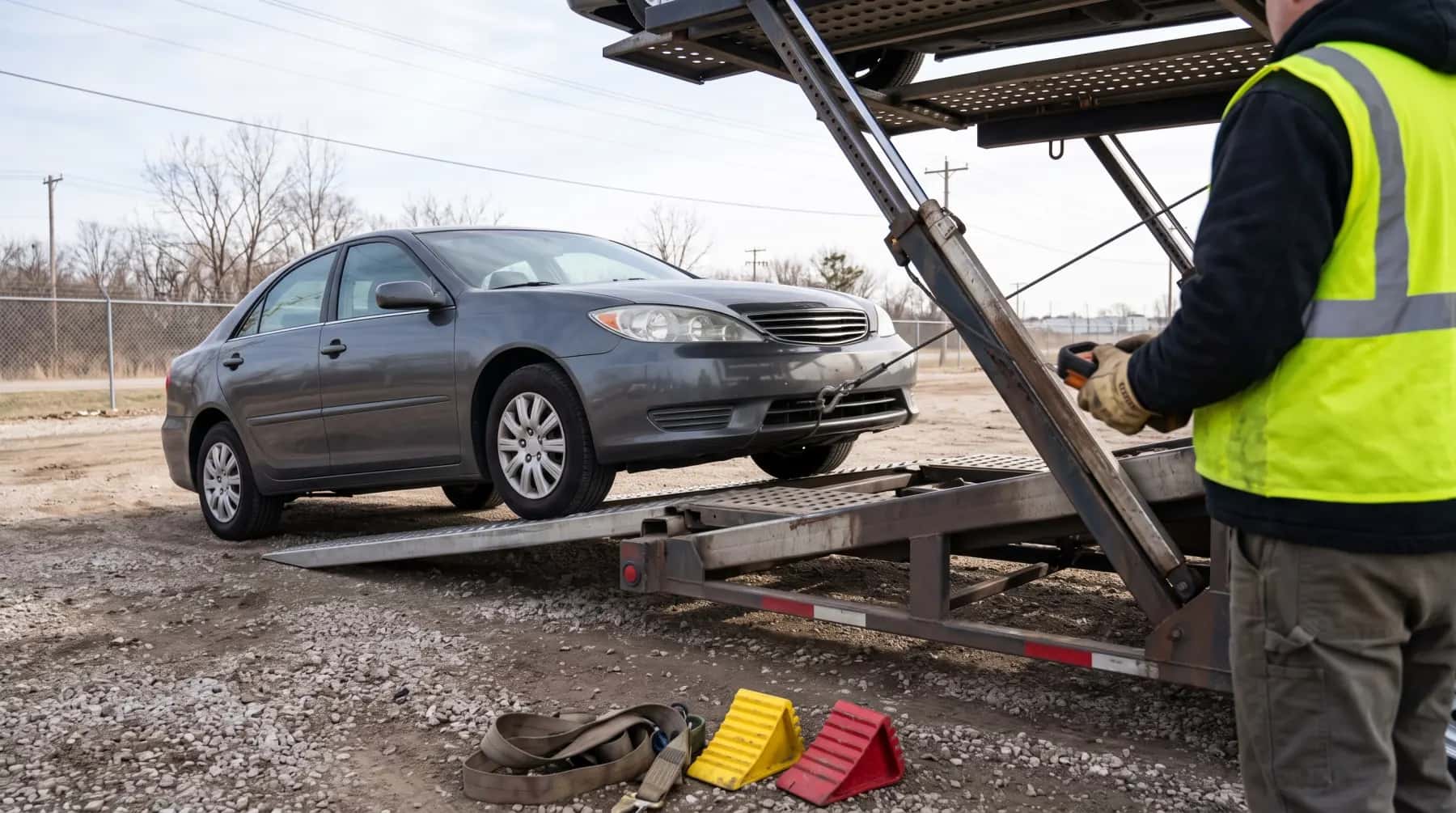
Most cars travel on open trailers, the same trucks that deliver new cars to dealers. An enclosed trailer keeps the car out of weather and road grit, and costs more. This guide helps you choose.
Open transport
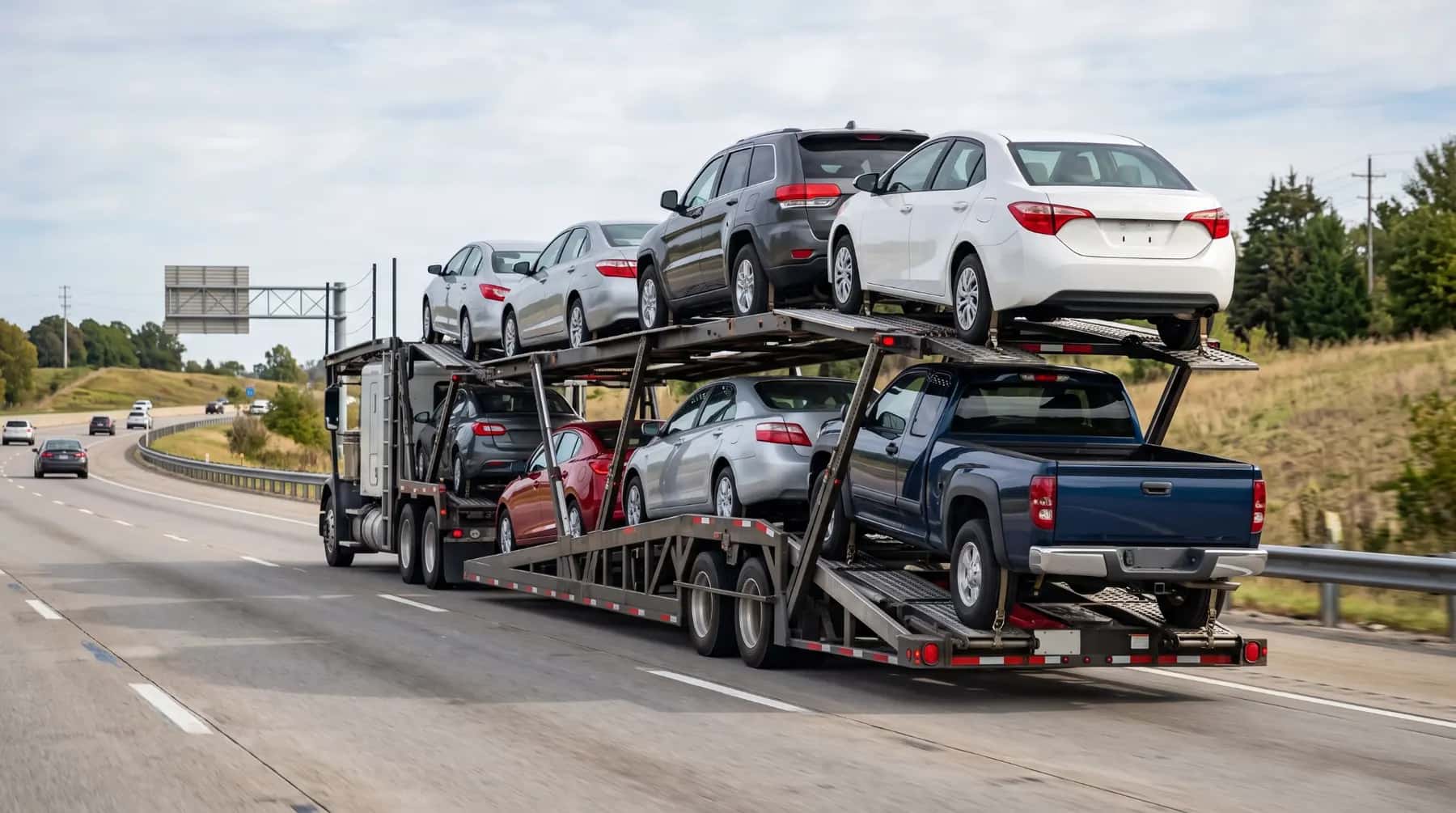
An open carrier takes several cars on two decks, usually 7 to 9 on a full-size rig. It is the most common way to ship a car, and there are more open trucks on every lane, so pickup windows are usually shorter and the price is lower.
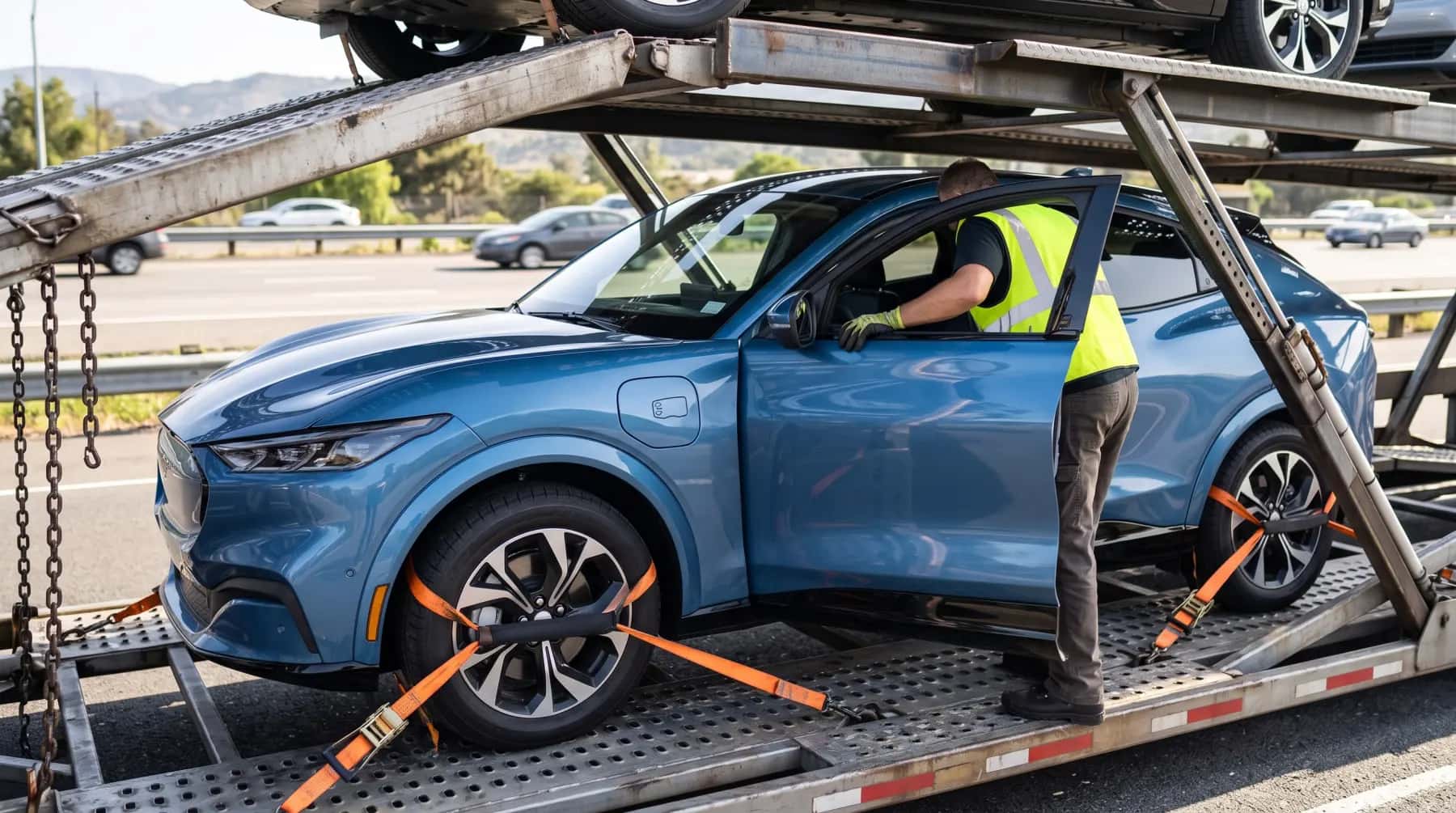
The car rides outside. It sees the same rain, sun and road dust as it would on a long drive, and arrives needing a wash. It is strapped at the wheels, inspected and photographed at both ends, and covered by the carrier's cargo insurance like any other load. For an everyday car, a work truck or a family SUV, open is the right choice and the one most people make.
Enclosed transport
An enclosed trailer carries fewer cars, typically 2 to 6, fully covered. Nothing touches the paint on the way: no rain, no road grit, no stone from the truck ahead. The cars are strapped with soft straps over the tires rather than chains, and many trailers have a lift gate, so a car that sits low drives onto a flat platform instead of up a ramp.
Fewer trucks run enclosed, so the pickup window can be a little longer, and the car arrives as clean as it left. Drivers who run enclosed tend to specialise in it and handle cars that cost more than the truck every week.
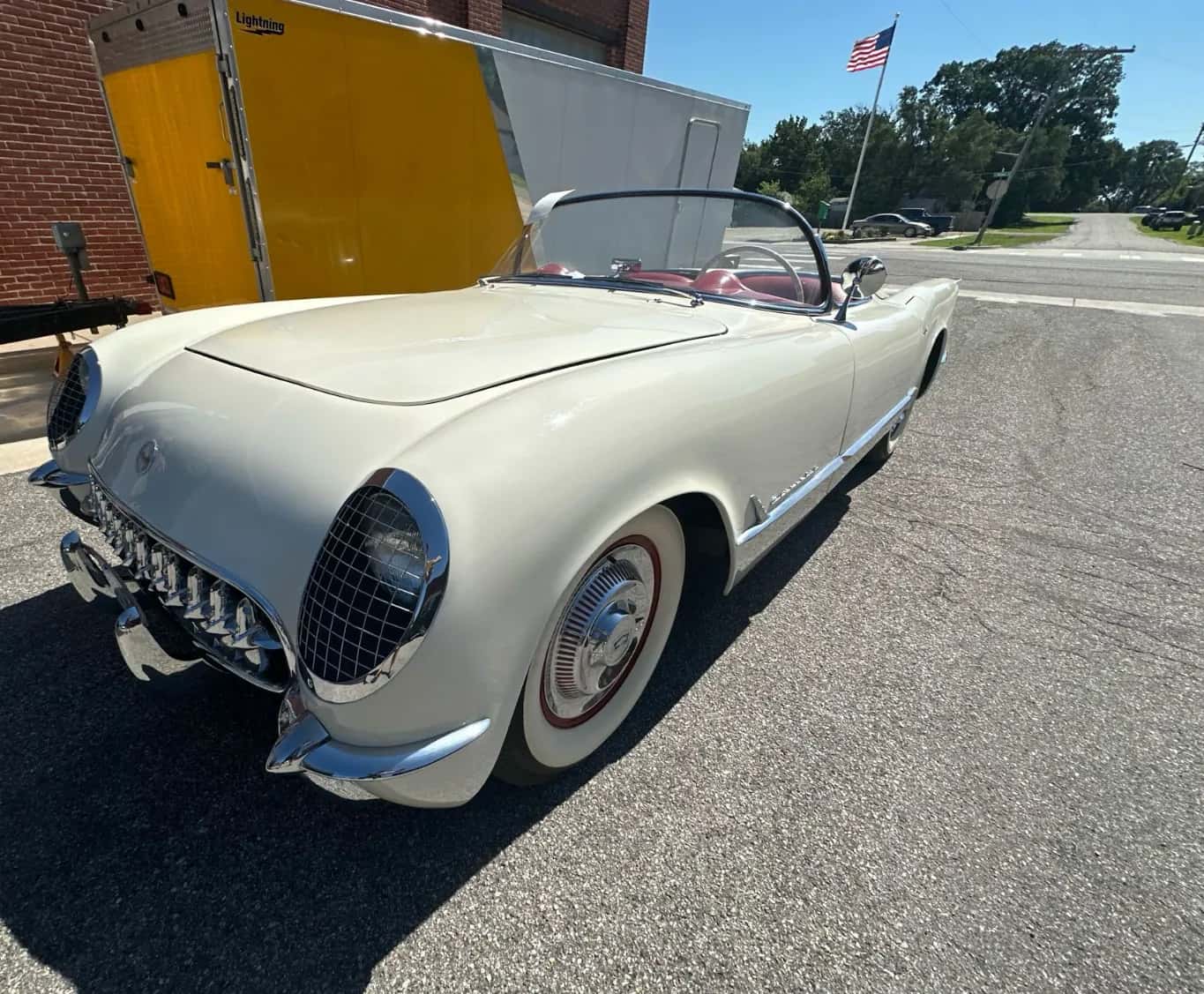
Which cars need enclosed
- Classics and collector cars, where the paint is original or the restoration cost more than the car.
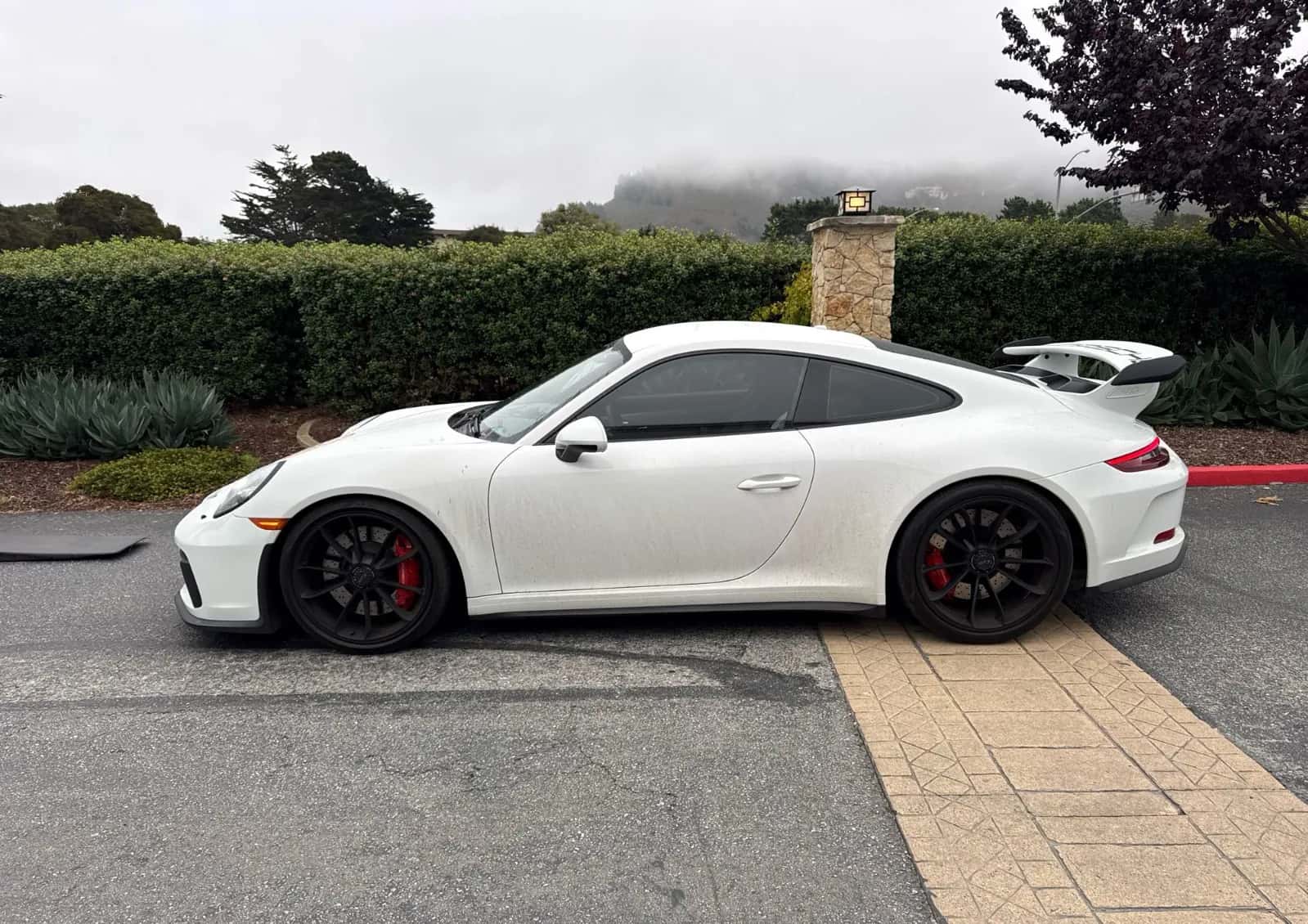
- Exotics and high-value sports cars, where one trailer of cars on an open rig would share the carrier's per-load cargo limit.
- New cars with delivery miles, or any car being sold where the buyer expects it to arrive as photographed.
- Cars with custom or soft paint, matte finishes and wraps, which road grit marks.
- Cars that sit very low, which need a lift gate rather than a ramp.
- Convertibles with soft tops that are not fully weatherproof.
If your car is on that list, choose enclosed. If it is not, open is fine, and the money is better spent elsewhere.
The price difference
Enclosed costs more because the trailer carries fewer cars, so each one pays a bigger share of the truck's day. The gap is not a fixed percentage. It depends on the lane, on how many enclosed trucks run it that week, and on the season.
The price screen shows both for your own lane, built from what carriers were paid on it in the last 90 days, so you see the difference for your car before you choose rather than a rule of thumb. On most lanes the enclosed figure is noticeably higher, and for the cars in the list above it is the cheaper insurance.
 Trustline CarriersLicensed broker · MC 1661496
Related services
- Open car transportThe two-level trailer that moves most cars. Costs less, picks up soonest.See how it works
- Enclosed car transportCovered, for classic, exotic, and low cars. If yours lives outdoors, open will do.See how it works
- Classic car shippingClassic and collector cars, documented in detail and usually moved enclosed.See how it works