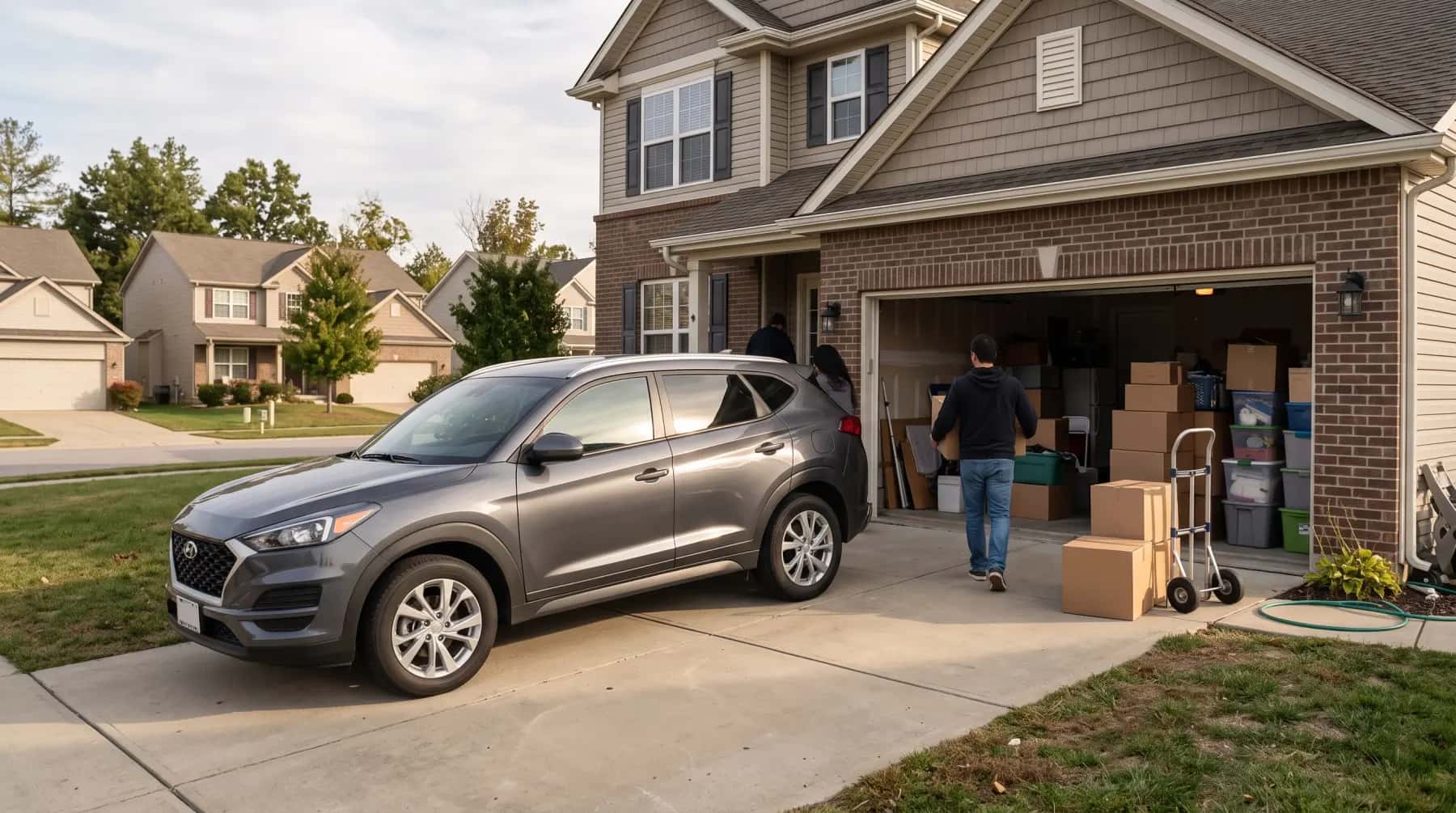
Most of getting a car ready is taking things out and writing things down. This checklist covers the fuel, the photos, loose parts and what the driver needs from you, then what to check when the car arrives.
Fuel, battery and fluids
Leave no more than half a tank of fuel. For Hawaii and Alaska, where the car goes on a ship, the port checks for a quarter of a tank or less. A full tank adds weight to the load and does nothing for the car, which is driven only on and off the truck.
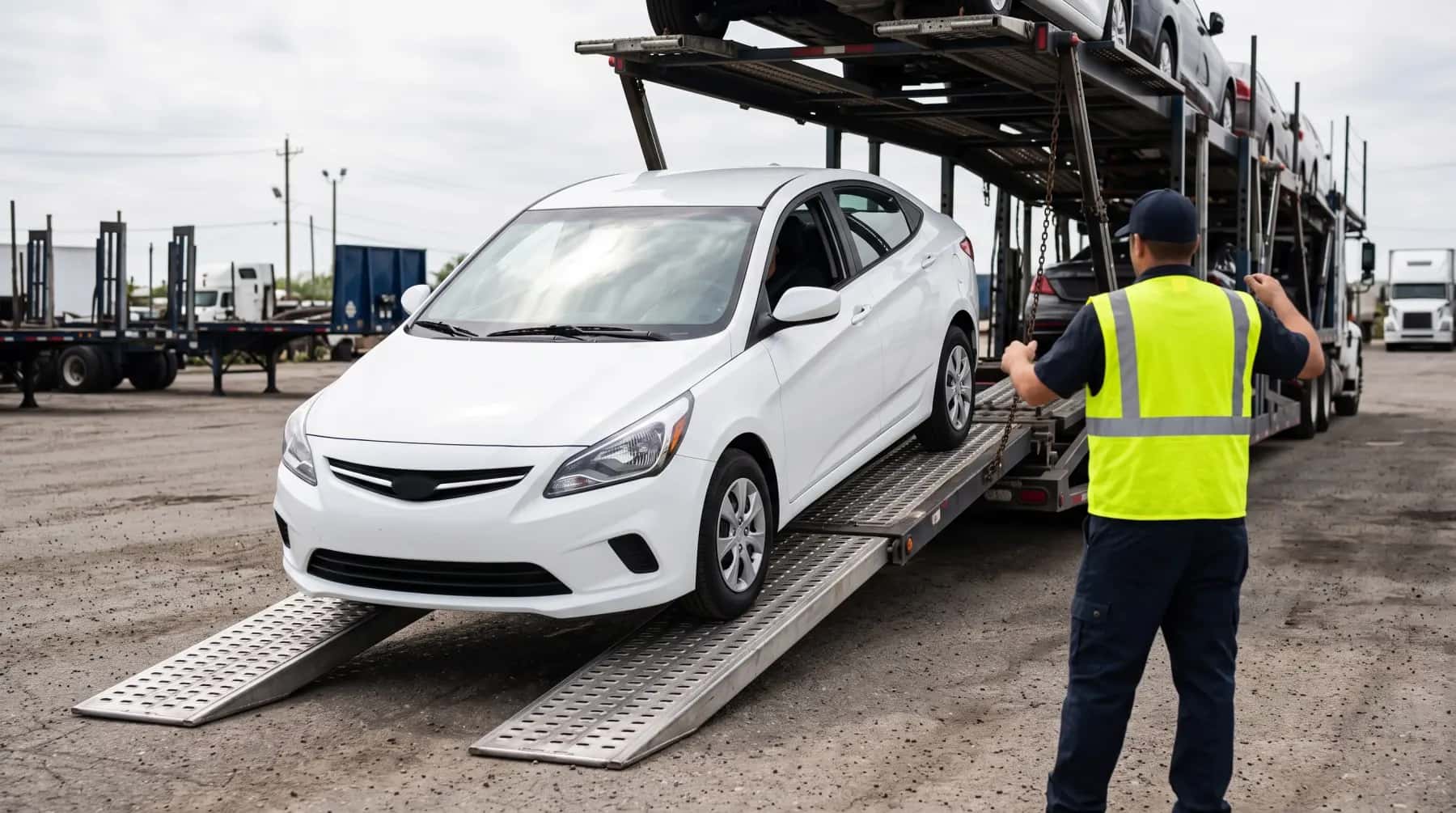
The car needs to start, roll, brake and steer. Charge or replace a weak battery, and check the tires are inflated, because a car with a flat is hard to winch and harder to drive up a ramp. Look under the car for leaks. A car leaking fluid can be refused, because it drips on the cars below it on the trailer.
If the car does not run, say so when you book. A carrier with a winch loads a car that rolls, brakes and steers. A car found not running at pickup, when it was booked as running, carries a $150 fee under the agreement, because the carrier has to handle it differently.
Wash it and photograph it
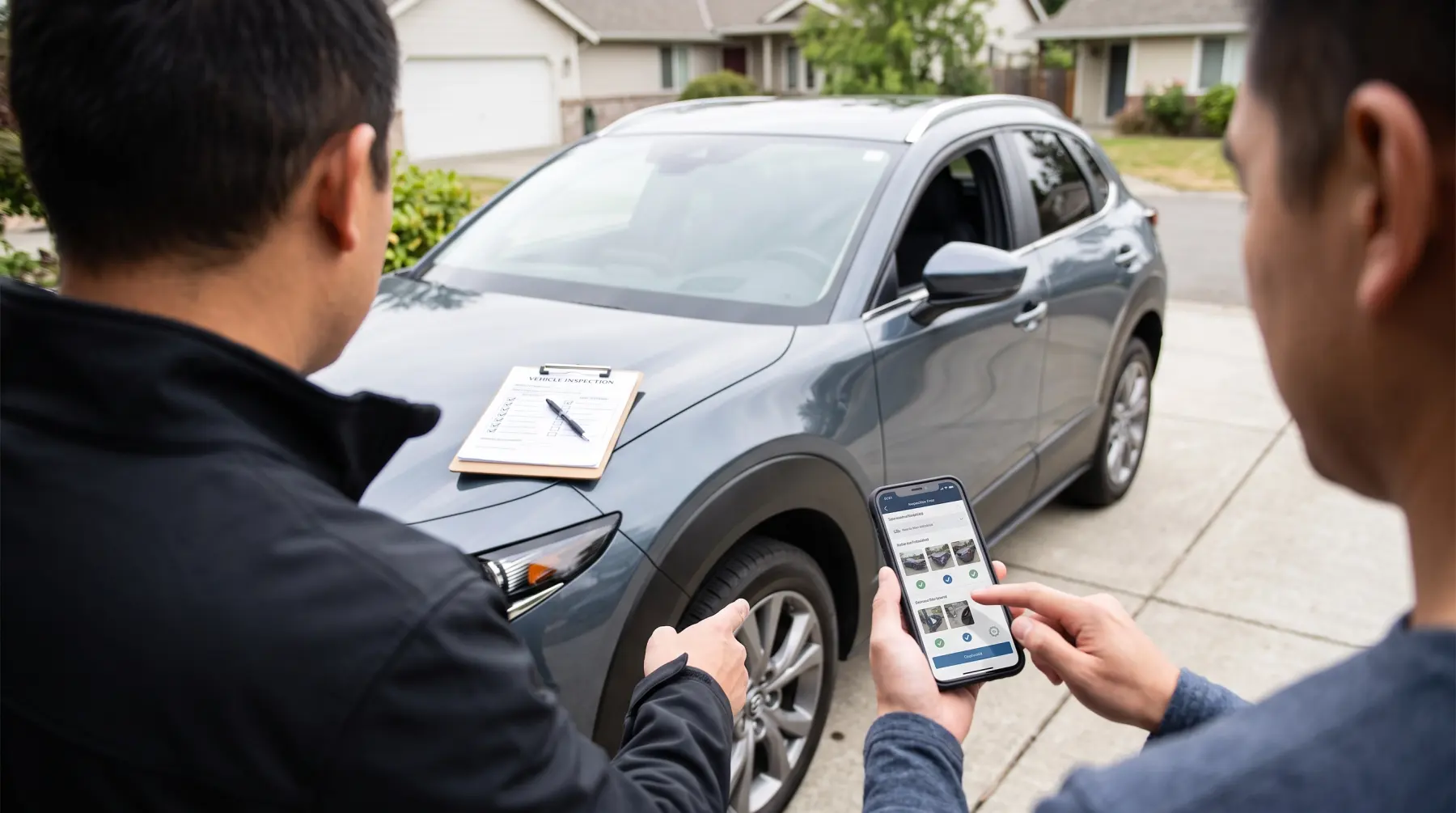
A clean car shows its condition. Wash it a day or two before pickup so the driver's inspection, and your photos, record every mark that is there and none that is dirt.
Then take dated photos all the way round in daylight. Each panel, each wheel, the roof, the glass, both bumpers from low down, the interior and the odometer. Your phone dates them for you. If a claim is ever needed, these photos and the driver's are what it rests on.
Take these out
- Toll tags. A tag left on the windscreen is charged every time the truck passes a gantry, on your account.
- Garage openers, parking permits and the key to your house, if it is on the ring you hand over.
- Loose accessories: bike racks, roof boxes, custom spoilers, dash cameras and anything that can be removed without tools.
- Anything valuable, and anything you could not replace.
Fold the mirrors and lower or remove the antenna if the car allows it. Switch off any alarm, or show the driver how. Personal belongings may ride in the trunk, up to 200 lb, and the personal items guide covers what may stay and what may not.
Keys and the person at pickup
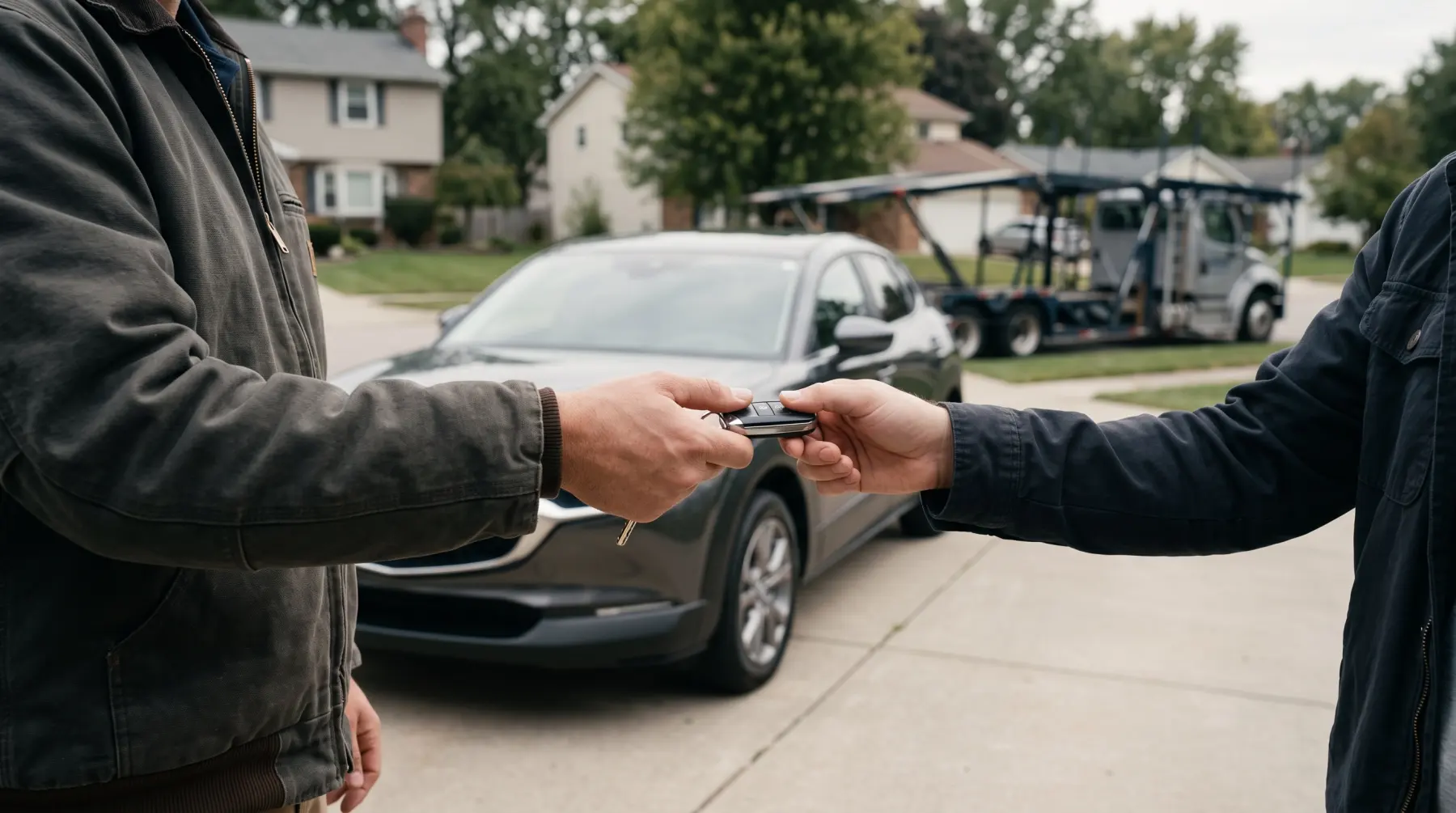
Have one full set of keys for the driver, including the fob if the car needs it to start, and keep your own set. For an electric car, hand over a key that works without your phone.
You, or someone you name, walks around the car with the driver and signs the bill of lading. The person you name can be anyone you trust, and the driver calls them ahead. Give us their name and phone when you book.
If the car is not ready when the carrier arrives, a $100 rescheduling fee applies under the agreement, because the driver has made the trip. If something changes, tell your coordinator as early as you can.
At delivery
Walk around the car with the driver in good light and compare it with your pickup photos. Note any damage on the bill of lading before you sign, because damage left off at delivery cannot be claimed later. Claims go in writing within 15 days.
The balance to the carrier is paid to the driver at delivery, in cash, certified funds, a cashier's check or a money order. Personal checks and cards are not accepted for it. Your order page shows the exact figure.
 Trustline CarriersLicensed broker · MC 1661496