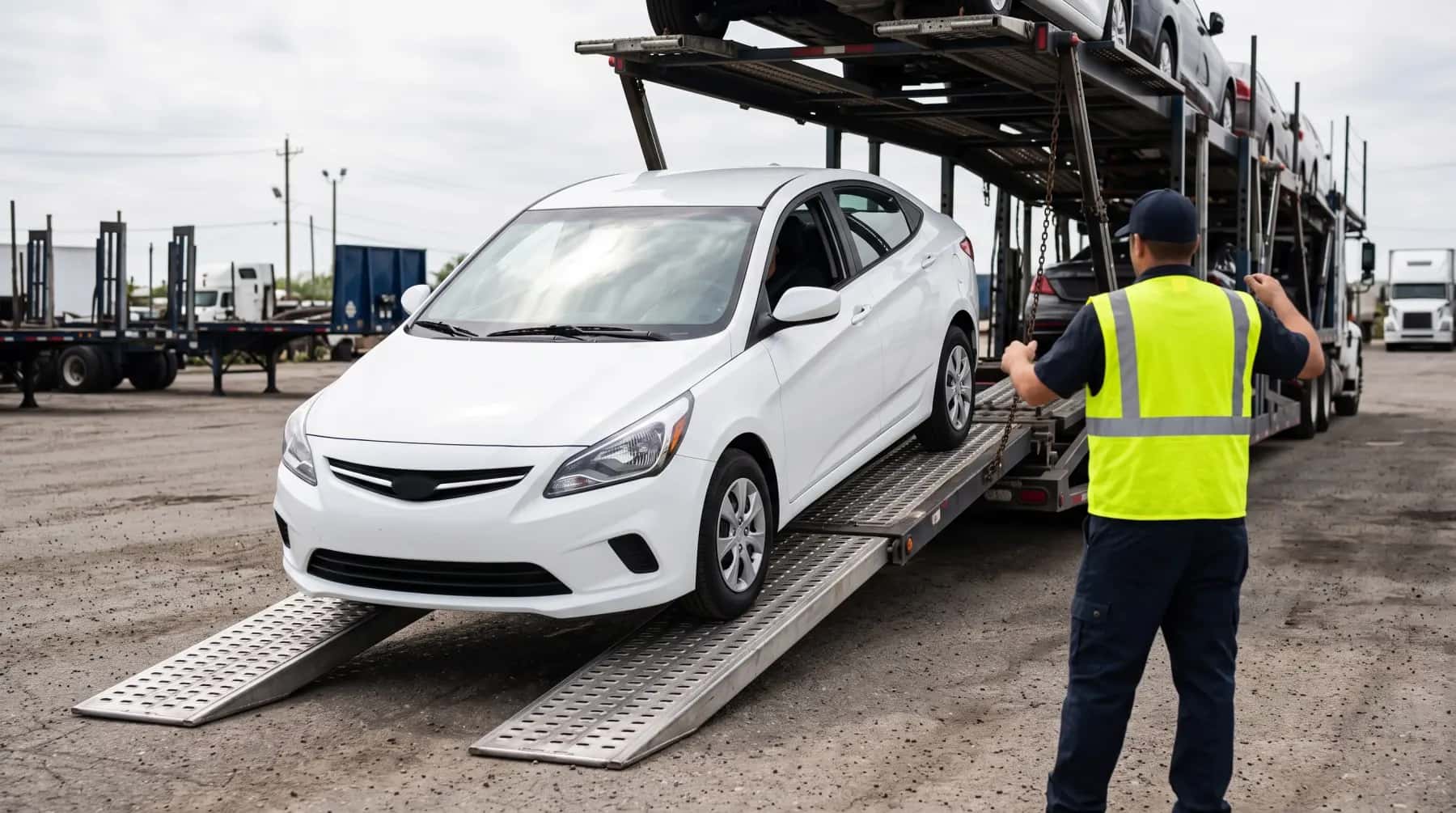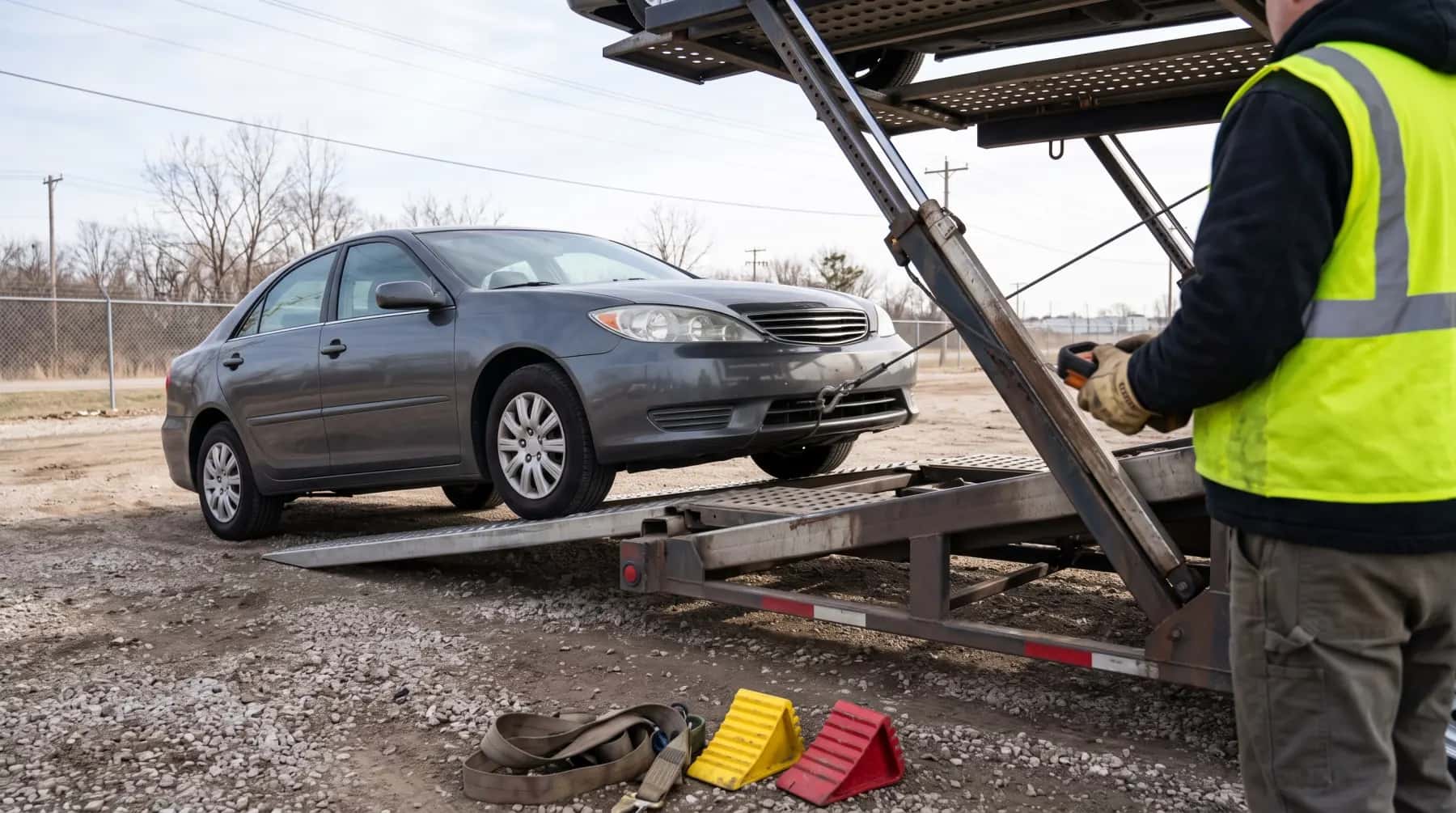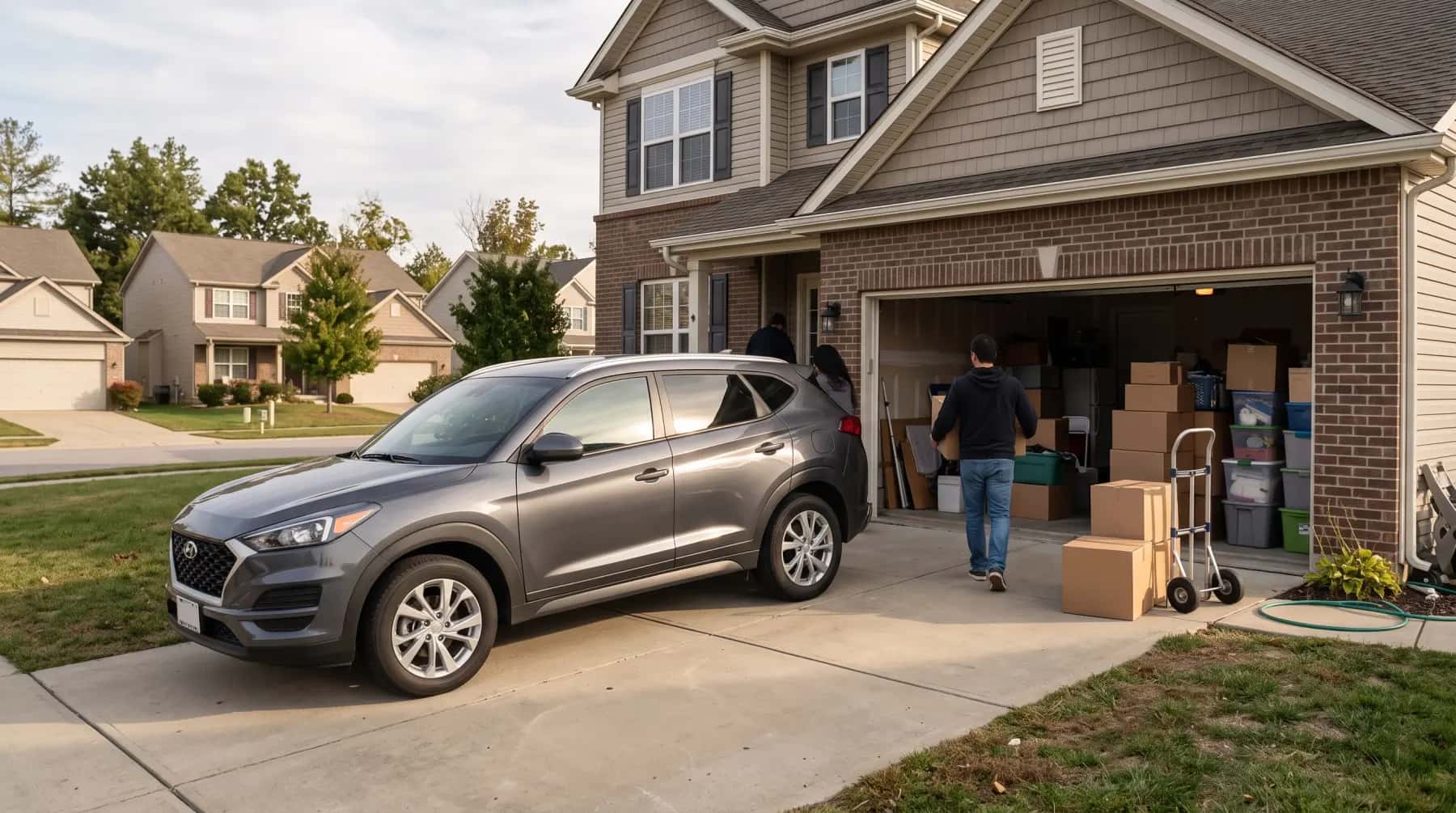
Yes, within a limit. Under our agreement, personal belongings may ride in the trunk only, up to 200 lb, with no heavy or hazardous items. For Hawaii and Alaska, the car must be empty apart from factory equipment.
The rule, in full
Personal items go in the trunk only, weigh no more than 200 lb in total, and exclude heavy or hazardous items. Nothing rides on the seats or in the cabin. That is section 3 of the agreement, and it is the whole rule.
On an SUV, a hatchback or a wagon, the trunk is the cargo area behind the rear seats, below the window line. Pack low, so nothing is visible through the glass and nothing can slide forward under braking. Two soft bags of clothes come to about 60 lb. A set of winter tires comes to about 100 lb. Furniture, boxes of books and appliances go with the movers.
Why there is a limit
A car carrier has a legal gross weight, and every pound in every car counts toward it. Carriers plan a load by the weight of each car, and a car that arrives 300 lb heavier than booked can put the truck over the limit at the next weigh station.
Loose items also move. A box on the back seat slides under braking and marks the seat back or cracks the trim. A heavy bag in the cabin can go through a window on a hard stop. In the trunk, packed low, there is nowhere for it to go.
The third reason is the inspection. A car full of belongings cannot be inspected inside, and the driver cannot record the cabin's condition on the bill of lading. An empty cabin protects you as much as the carrier.
What happens if something breaks
Items in the car travel at your own risk. Under the agreement, the carrier is not liable for damage caused by excessive or improper loading, and for Hawaii and Alaska anything not removed travels at your sole risk and expense.
The carrier's cargo insurance covers the car. Whether it covers what is inside the car depends on the carrier's policy, and most exclude personal belongings. Pack only what you could stand to lose, and keep documents, medicine, electronics and anything of value with you.
Never pack these
- Anything flammable or hazardous: spare fuel cans, propane, paint, aerosols, fireworks, cleaning chemicals. The truck is a commercial vehicle and hazardous materials on it are regulated.
- Firearms and ammunition. Carriers do not accept them, and a car crosses state lines with different laws in each.
- Cash, jewellery, passports, documents and electronics. They are not covered, and they are what goes missing.
- Plants, food and anything that spoils. The car may be on the truck for a week in summer heat.
- Anything that does not fit below the window line.
Hawaii and Alaska
For Hawaii and Alaska the car has to be empty apart from factory-installed equipment, and the fuel no more than a quarter of a tank. The port checks both, and a car that fails is turned away until it is fixed, which costs a sailing.
The ocean leg is why. The car is a shipping unit on a vessel, handled by the port and the line, and their rules on contents and fuel are stricter than a road carrier's. The spare tire, the jack and the floor mats stay. Everything else comes out.
 Trustline CarriersLicensed broker · MC 1661496