For a short move, driving is often the simpler choice. Over a thousand miles or so, the cost of the drive grows past the fuel. This guide adds it up for one lane, so you can do the same for yours.
What the drive costs
Fuel is the obvious cost, and the easiest to work out. Road miles divided by your car's real miles per gallon, times today's price at the pump. Hotels, meals, time off work and the flight home if you are not staying are the costs people leave out, and over a long drive they are bigger than the fuel.
- Fuel: miles ÷ mpg × price per gallon. Check the price the week you go.
- Nights on the road: 400 to 500 miles is a full day of driving, so a 1,200-mile trip is 2 nights.
- Meals: 3 a day on the road, for each person in the car.
- Time: each day driving is a day not working, or a day of leave.
- The way back: a one-way flight if you are driving a car to someone else, or returning to your old home.
- Wear: tires, brakes, an oil change sooner, and the miles on the odometer.
One lane, worked through
Take Chicago to Orlando, about 1,200 road miles. At 400 to 500 miles a day that is 3 days behind the wheel with 2 nights on the road. The figures below are assumptions to show the method, and the ones in brackets are the ones to replace with your own.
| Cost | How it is worked out | Figure |
|---|---|---|
| Fuel | 1,200 miles ÷ 28 mpg × [$3.50 a gallon] | $150 |
| Hotels | 2 nights × [$140] | $280 |
| Meals | 3 days × 3 meals × [$18], one person | $162 |
| Days off | 3 days × [your day rate] | [your figure] |
| Flight back | If you are not staying, one way Orlando to Chicago | [your fare] |
| Wear | 1,200 miles at a modest [25¢ a mile] for tires, brakes and service | $300 |
| Total before your time | about $890 |
That total leaves out your 3 days, which for most people is the biggest line. Set it against the price for the same lane, which takes about 2 minutes to get and shows open and enclosed side by side. The price also buys you the 3 days back and keeps 1,200 miles off the car.
The sums change with the car. A truck doing 18 mpg roughly doubles the fuel line. Two people in the car doubles the meals. A lease close to its mileage cap turns the wear line into a real bill, which the next section covers.
Miles on the car
A long drive adds miles, wear on tires and brakes, and an oil change sooner. On a car you own, that shows up slowly as service bills and a lower trade-in. On a lease, it shows up on the final statement. Most leases cap mileage at 10,000 to 15,000 a year and charge for each mile over the cap at the rate in your contract, often somewhere between 15 and 30 cents. A 1,200-mile drive on a lease near its cap can cost more in overage than the fuel did.
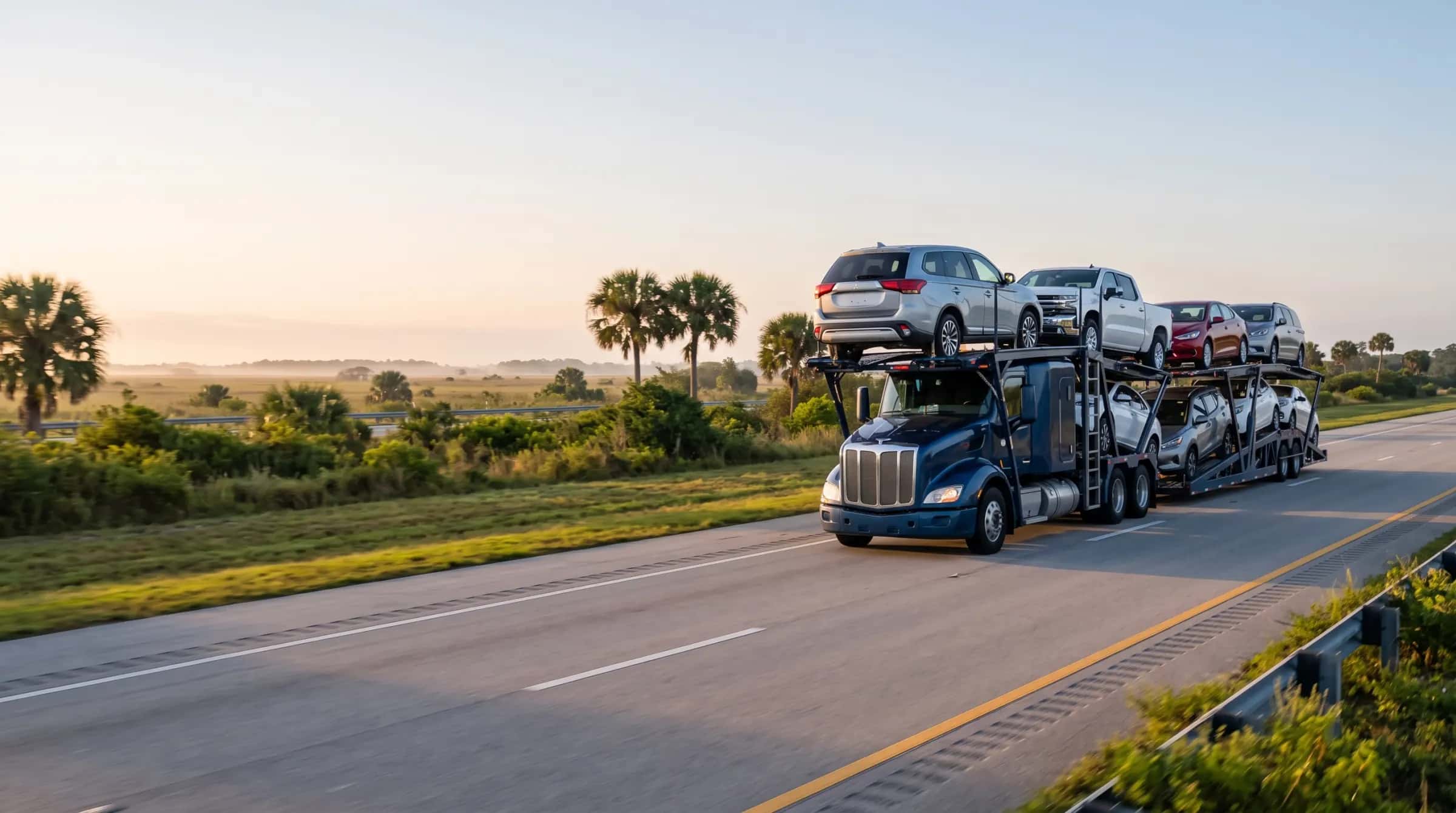
Shipping the car adds no miles. The driver drives it on and off the truck, and the odometer on the bill of lading at delivery reads a mile or two more than at pickup.
When driving makes sense
Driving wins for a short move, for a flexible schedule, and for a trip you want to make anyway. A 400-mile move is a day's drive, a tank of fuel and no hotel, and shipping it rarely beats that on cost. A road trip with the family, stopping where you like, is worth more than the sums.
If you have two cars, driving one and shipping the other is the common choice. The family and the luggage go in the car you drive, and the second car arrives a few days later without a second driver and a second set of hotel bills.
 Trustline CarriersLicensed broker · MC 1661496