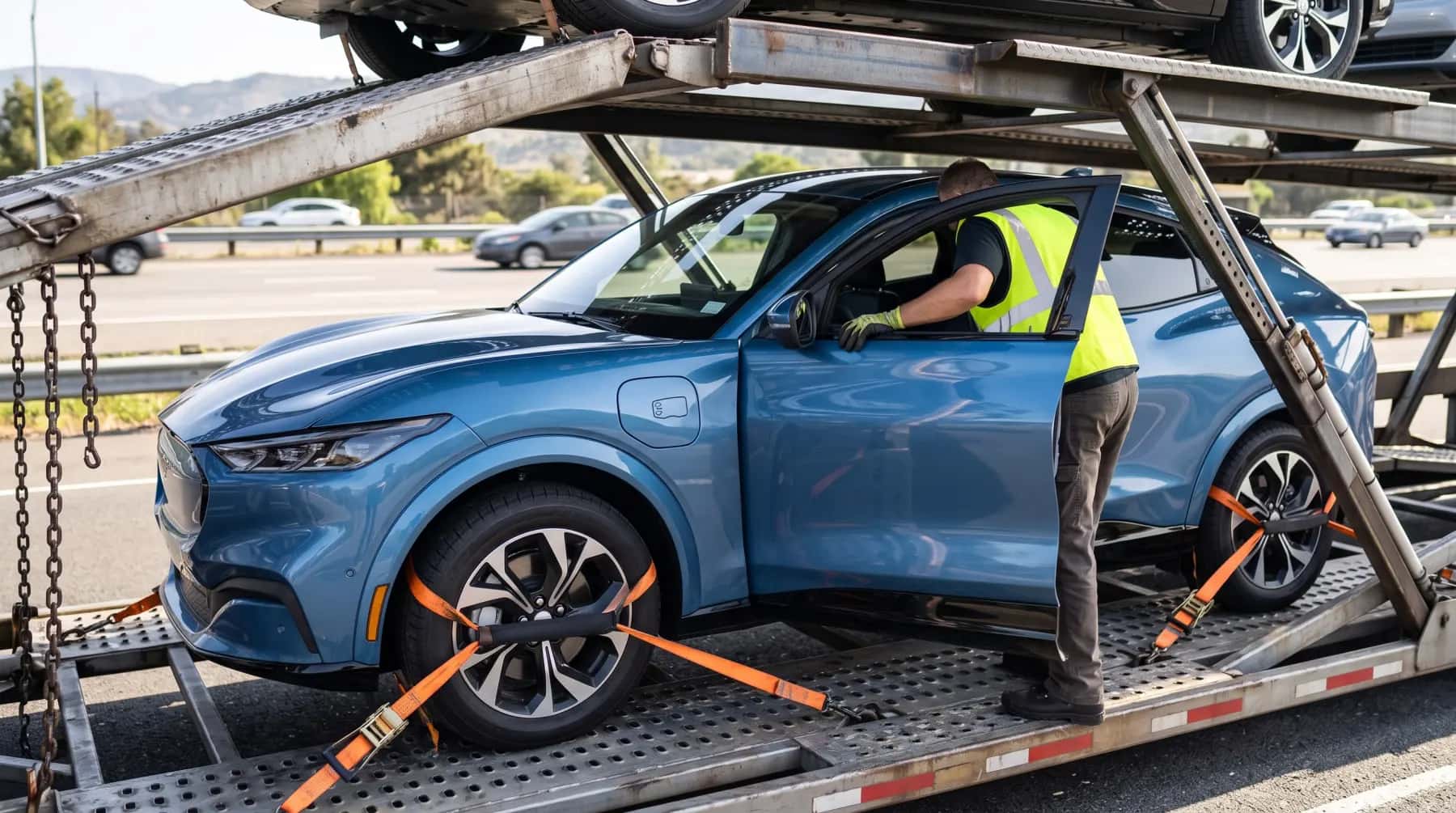
An electric car ships much like any other. A few things differ. It is heavier, it needs enough charge to drive on and off the truck, and some models need a transport or tow mode set before loading.
How much charge to leave
Leave between a quarter and a half. The driver drives the car onto the trailer at pickup, off it at delivery, and a few yards at each end, and that uses almost nothing. A full battery adds nothing useful, and some manufacturers advise against leaving a car at 100% for days. A flat battery is the problem. A car that cannot move under its own power is handled as not running, with the $150 fee the agreement sets for a car that becomes non-operational.
Electric cars lose a little charge sitting, more in cold weather, and a week on a trailer in January can take 5 to 10% off. Starting at a quarter leaves room for that. Hand over a key card or fob that works without your phone, because the driver's phone is not paired to your car.
Transport and tow mode
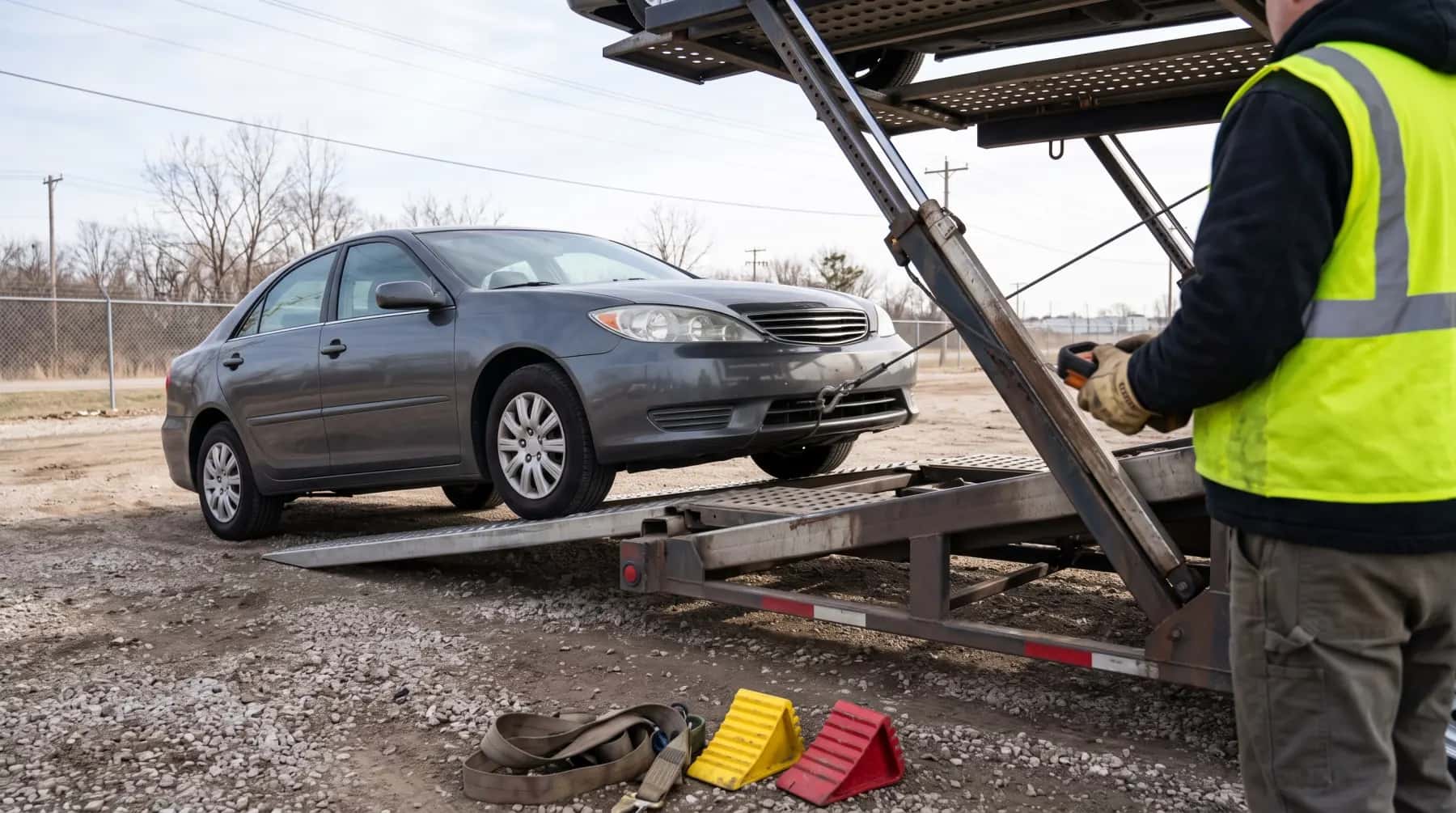
Some electric cars will not roll freely with the power off, because the motor brakes the wheels or the parking brake sets itself. For winching, the car needs its transport or tow mode. On a Tesla it is under Controls, then Service, then Towing on the touchscreen, with the car in Park, the brake pedal held and a key detected. The Model 3 calls it Transport Mode and the Model Y calls it Tow Mode. It is meant only for rolling the car a few feet at walking pace, and the manual says so.
Other brands put the setting in different places, and some have none and need the car driven on under power. Check your owner's manual before pickup day, and if the car has to be winched because it will not drive, tell your coordinator so the carrier brings the right equipment.
Weight on the truck
Battery packs make electric cars heavier than a gas car of the same size, often by 800 to 1,200 lb, and electric pickups and large SUVs can weigh over 6,000 lb. A carrier has a legal gross weight and plans the load car by car, so tell us the exact model and trim when you book. We assign a carrier with room for the weight, and the price reflects it.
When enclosed makes sense
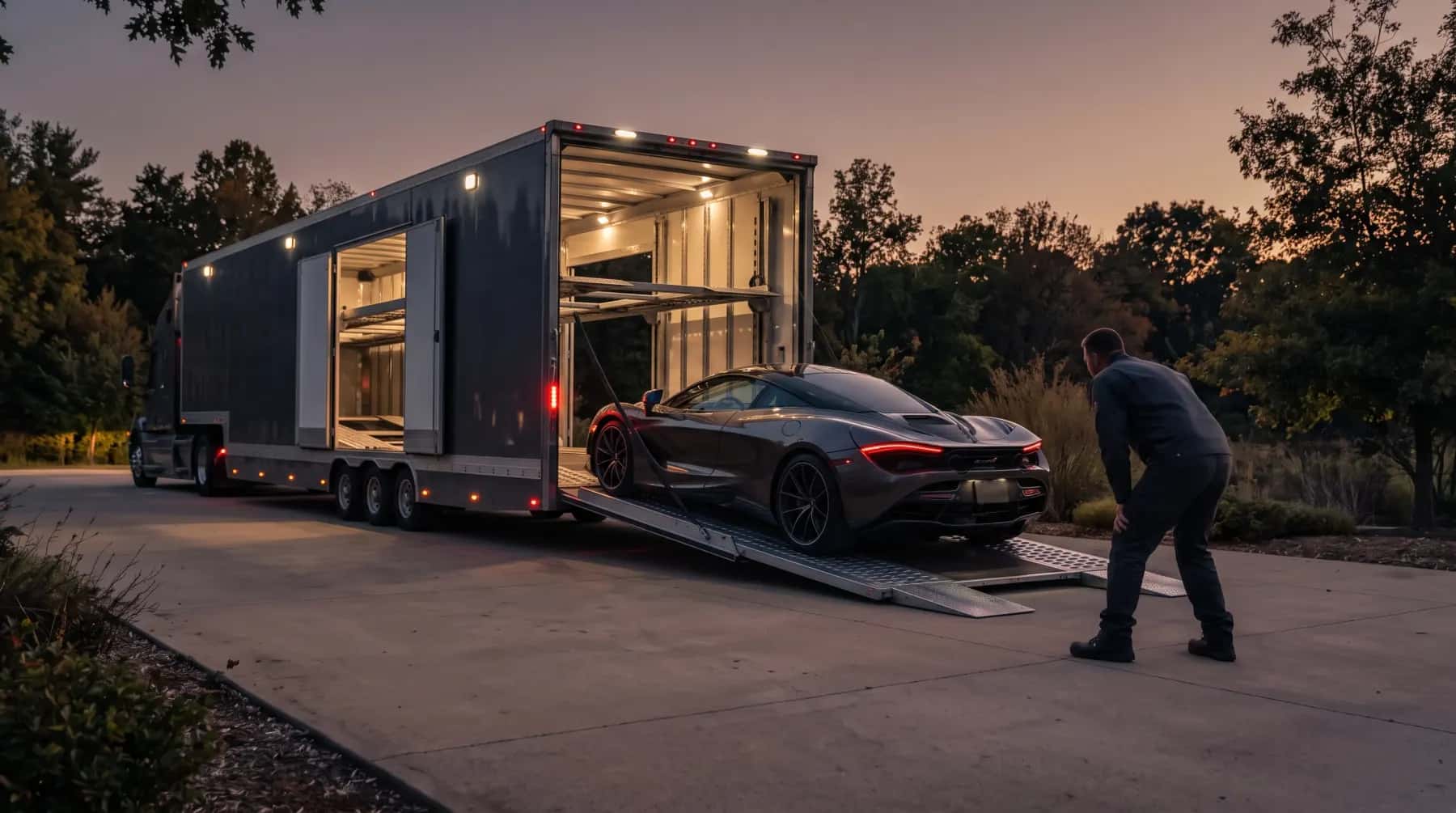
Open transport is fine for most everyday electric cars, the same as for their gas equivalents. New cars with delivery miles, high-value models and cars with matte paint or a wrap usually go enclosed, where fewer cars share the trailer and nothing touches the paint. The open-or-enclosed guide has the full list, and the price screen shows both for your lane.
 Trustline CarriersLicensed broker · MC 1661496