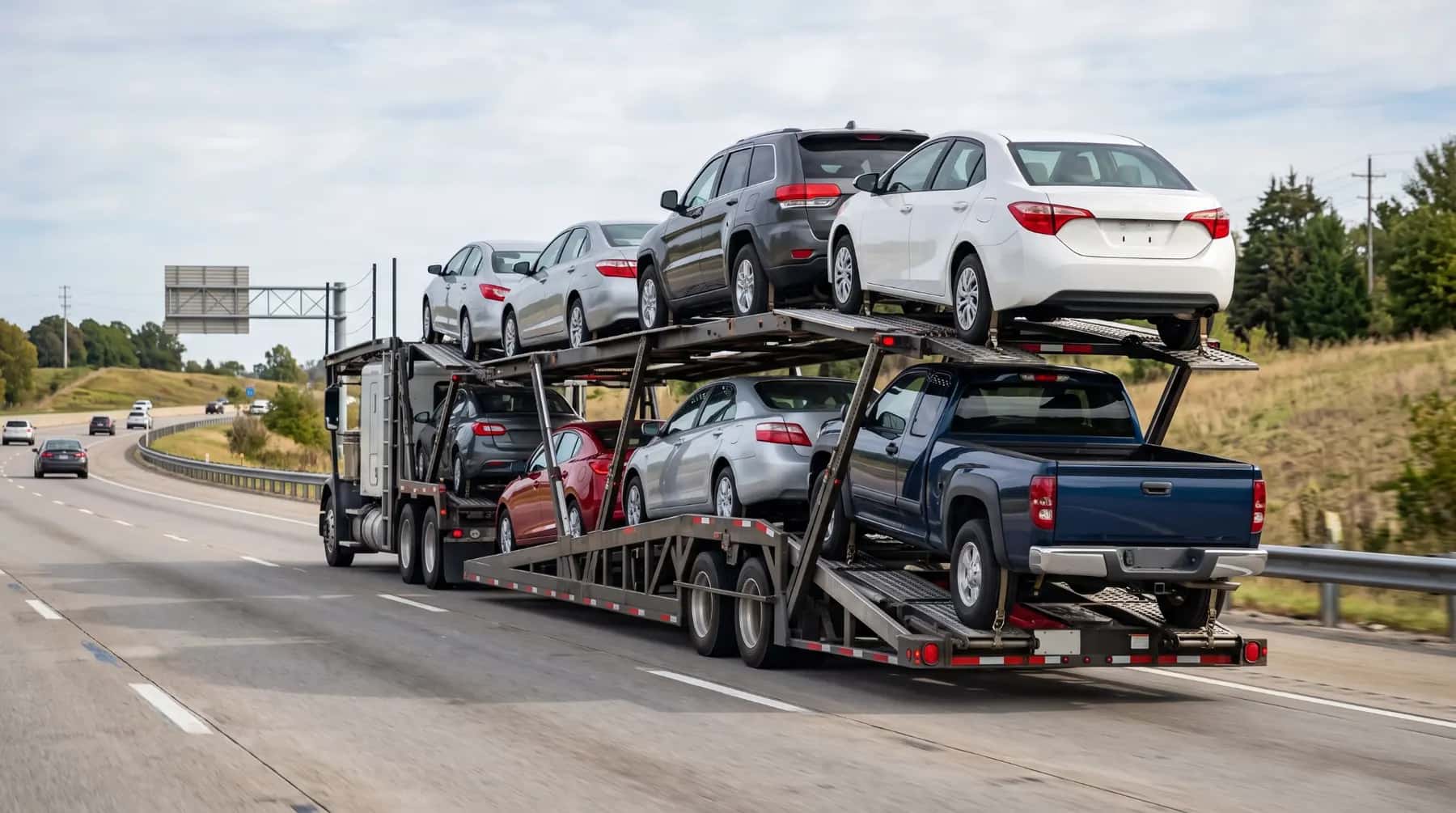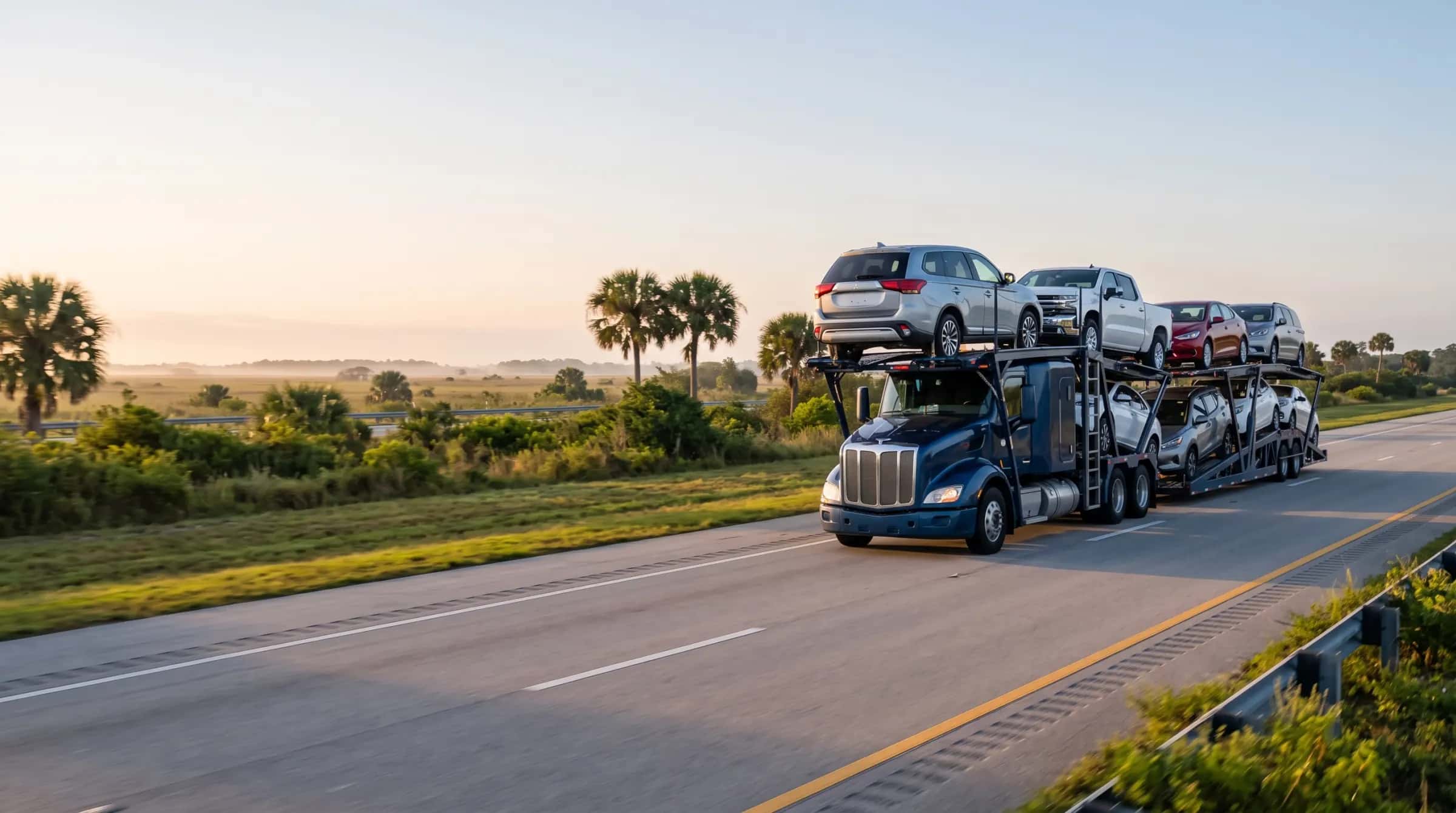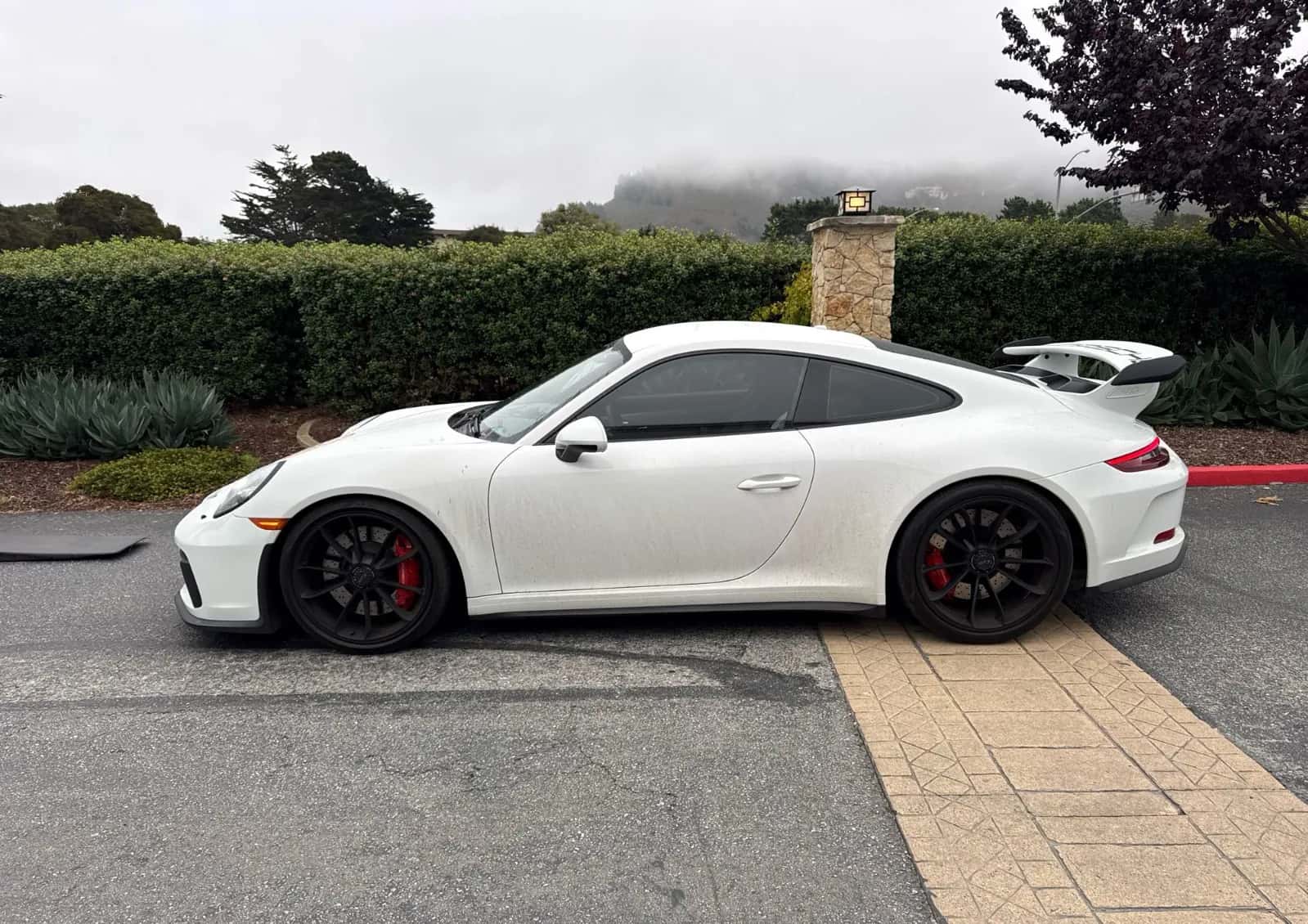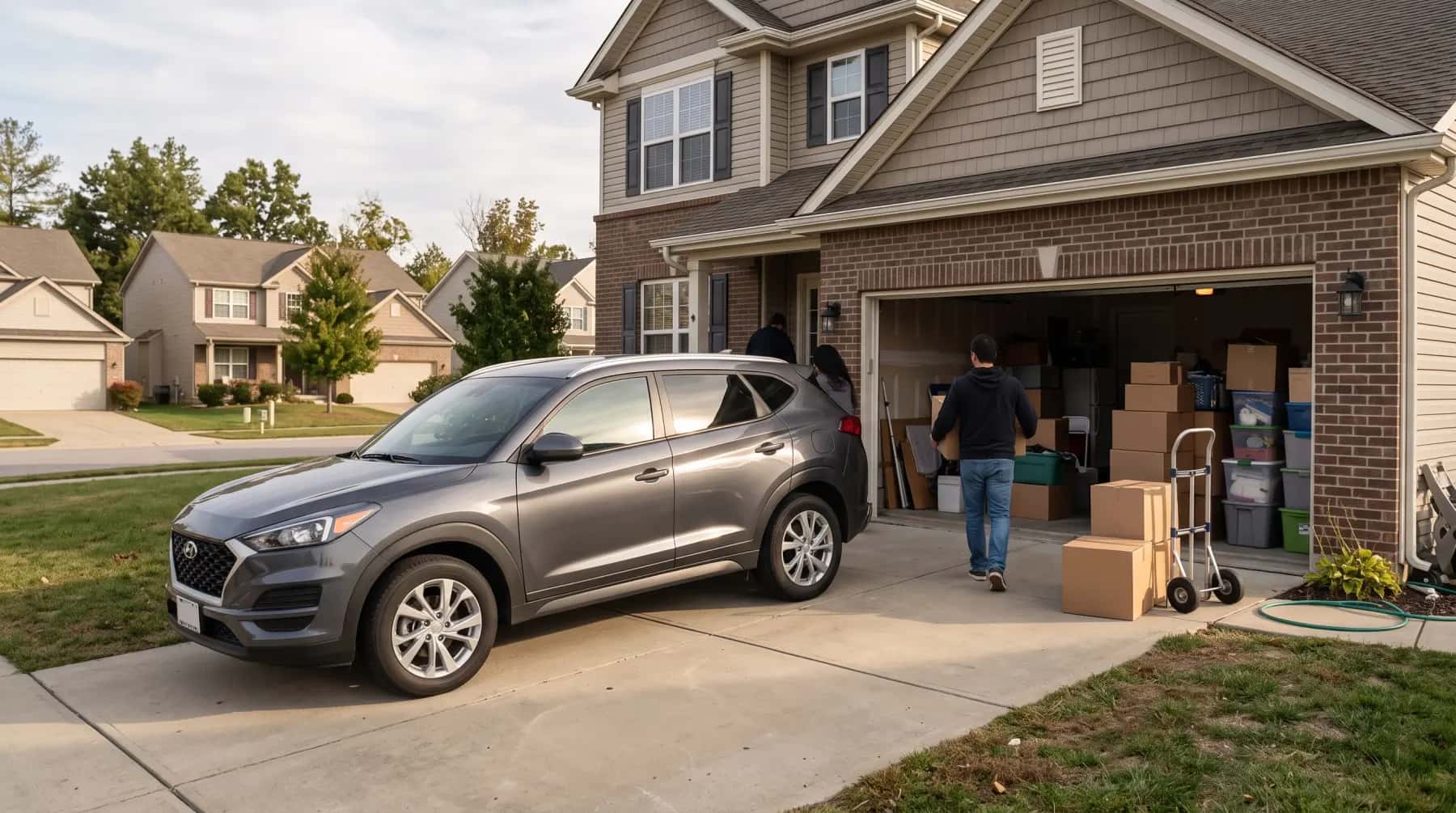
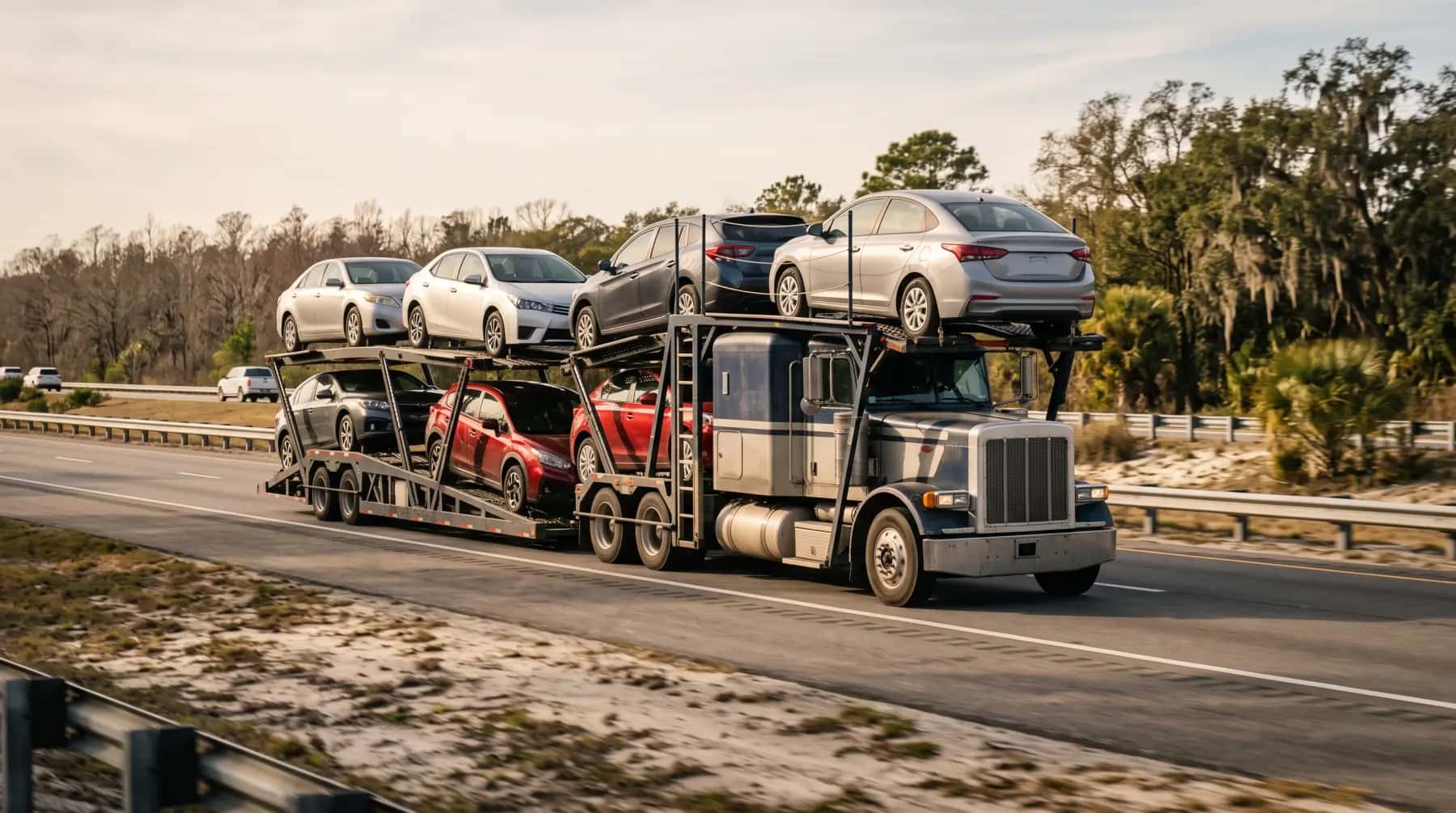
Shipping a car across state lines is one order with a few clear steps. You get a price, book, a carrier is assigned, the car is picked up and delivered. This guide covers each step, and what comes after the car arrives.
The steps
- Get a price. Give the route as two cities or ZIPs, the car's year, make and model, whether it runs, and the first day it can go. Then your name, phone and email, and the price opens with open and enclosed side by side and a realistic pickup window.
- Book and sign. Add the addresses and the people at each end, read and sign the transport agreement online, and save a card. About 5 minutes. Nothing is charged yet.
- A carrier is assigned. We offer the car to the carriers who run your lane, and the one we assign passes the Trustline Standard that day. Your order page shows the carrier company, the driver's name and the driver's phone, an email tells you, and the reservation is charged.
- Pickup. The driver calls ahead, inspects the car with you or the person you named, photographs it and signs the bill of lading with you. The photos go on your order page.
- On the road. You get an email at each change, and the order page shows the status. The driver calls ahead on the delivery day.
- Delivery. Walk around the car with the driver, compare it with the pickup photos, note anything new on the bill of lading, sign, and pay the driver the balance.
What sets the price
The price is built from what carriers were paid in the last 90 days to move cars like yours on your lane. Six things move it.
- Road miles between the two addresses. A longer move costs more overall and less per mile.
- How many trucks run the lane that week against how many cars are waiting.
- The size and weight of the car. A full-size pickup takes more of the trailer than a sedan.
- Whether it runs, rolls and steers. A winch load costs more.
- Open or enclosed. The price screen shows both.
- The season. Southbound lanes to Florida cost more from October to December, northbound ones from March to May.
How long it takes
A carrier is assigned in 1 to 5 days on most lanes. Then the car covers 400 to 500 road miles a day. New York to Orlando is about 1,000 miles, so 2 to 3 days on the truck. Chicago to Orlando is about 1,200 miles, 3 days. Los Angeles to New York is about 2,800 miles, 6 to 7 days. The how-long guide has the full table.
Registering in the new state
Most states give new residents a set number of days to register the car and swap the license, and the count usually starts the day you establish residence, not the day the car arrives. Your new state's DMV website gives the deadline and the list of what to bring, and that list is the one to follow.
The usual items are the title, or a lien letter if a lender holds it, the current registration, proof of insurance issued in the new state, your new address, and the car itself or its VIN for a verification. Some states add a safety inspection or an emissions test before they issue plates. Get the insurance sorted before the car ships, so the certificate is ready when you walk in.
Moving to or from Florida
Florida is one of the busiest states for car shipping, with lanes to the Northeast and the Midwest running all year and a rush in each direction with the snowbird season. Orlando, Tampa, Jacksonville, Miami and the Palm Beaches have trucks every week. The Panhandle and the Keys wait a little longer for a carrier going that way.
If your move lands in October to December heading south or March to May heading north, book as soon as your date is firm, because those are the months the lanes fill. The booking guide has the calendar.
 Trustline CarriersLicensed broker · MC 1661496